Showing posts with label educational goals. Show all posts

Thursday, December 23, 2021

#goals

A dear family friend asked me how I set goals. 

That's a loaded question, and maybe I'll write a few posts addressing different facets.

But one of the subquestions was about goals for my children. I've written before about educational goals but today I'm thinking about grown children. Two fifths of my children are grown.   

I don't have goals for my grown children. 

All I can have is goals for MY relationship with my children. Which is about how I'M going to behave. Not about them. 

My goals for that are pretty simple: 
  • That they enjoy spending time with me (which pretty much is about me keeping my mouth shut about their life choices and me being pleasant to them)

  • and that I don't dread seeing or hosting them because I've taken on food or housekeeping tasks that overwhelm me.

Thursday, January 9, 2020

Bar Mitzva dreamin' on such a winter's day

I often describe unschooling as a whole bunch of Sundays or vacation days.  We wake up, we do whatever.  There is no pressure, no "things that need to be done  or accomplished" and just that pleasant feeling of the day or days stretching out before you with no obligations.  In that space, we can be creative, enjoy each other's company, explore things that interest us.  There is a lot of relaxing, feeling close to each other, laughing, casual chatting.  Plenty of opportunities for "Hey, let's do this" and "Okay, why not."

When people start to homeschool, we sometimes ask two questions: What is your child's learning style and what is the homeschooling parent's style?  Take both into account. 

People think I'm relaxed because I unschool.  And I mostly am.  But I also have a part of me that adores lists, schedules, and checking things off.  That is draconian about time.  And about accomplishing.  And finds it exhilarating to juggle Lots of Important Things.

Overall, I haven't found that way of life a higher quality of life, either for me or for my children.  I won't hold my kids back if some of them want the High Achiever lifestyle, but I really like the modest, slow, relaxed lifestyle.

When I think about what I'd like Elazar to be able to do for his bar mitzva, all my High Achiever senses and bells and whistles go off.

Even though

  • Elazar is maturing and growing every day in body, thought, mind, maturity, and emotions
  • Pushing someone to daven or learn before they are ready or more or faster when they are on the path anyways seems foolish and counterproductive

(This is counterbalanced by the thought that sometimes people will do a lowest common denominator unless nudged)
(This is counter-counterbalanced by the philosophy that unschooling doesn't believe that about people.  People will learn what is interesting and what is valuable.)

  • My understanding is that 13 is still young maturity-wise, and many kids have a conceptual explosion around 15. (Which, uncoincidentally, is the age the Mishna brings down to start learning Gemara)
I've been davening out loud next to him so he gets some familiarity.  Then I sing the opening haftora bracha with him.  (He's almost done with that, so in another month we'll start with the end brachos.)

We have only one bracha left in shemona esrei.  This morning we learned
וכל החיים יודוך סלה
Everything alive praises You.
Elazar said: That's not true; there are people who don't believe in God
I said: You can praise without speaking.  For example, if you see a beautiful work of art, do you think, "Wow, the artist is amazing!"
Elazar: Yes
Me: So anything can "praise" the Creator in that way
Elazar: But this says "everything alive." What you are saying also applies to inanimate things.
Me: 
Me: You are right.  You stumped me.  Good question.  You unlocked a riddle in the Shemona Esrei!  I'll be thinking about it.  Thank you!

I want to work on his reading.  I want him to be able to bentch out loud if he's called on it.  (I really want him to be able to daven for the tzibbur, but before that comes "ability to daven at all" and "desire to daven.")

I want to learn Elazar's parsha with him.  I want him to be able to give a speech about his sedra if he wants.  
(This is counterbalanced by the idea that learning on a schedule with a specific deadline in mind frequently compromises the quality of learning and adds pressure)
(This is counter-counterbalanced by the idea that some people find a deadline motivating and encouraging)
(This is counter-counter-counterbalanced by the idea that Elazar certainly does not)

Friday, November 29, 2019

#goals

I've been davening about Elazar's chinuch and one thing is becoming clear to me.  When my fears and hopes are clarified via my prayers, I'm not hoping for things to get done on a deadline (ie bar mitzva).  I do want to learn his parsha with him.  It has a lot of topics.  Long topics.  Tough topics.  And it's hard for him to sit. 

But when I daven that I hope my learning with Elazar will be good, what ends up is that I hope he will love Torah.  That he will find it exciting.  Enlightening.  Guiding.

NOT that he will finish a certain amount by bar mitzva.

I've paused in learning his parsha with him and have been studying Shemona Esrei with him, since his chiyuv to daven will kick in at age 13. I think davening is going to be very difficult for him, and the thought of him mumbling words or even reading English without really understanding it seems pointless and agonizing for any kid, but strikes me as especially pointless and agonizing to someone of E's nature.  In theory he is amiable and willing to study and understand Shemona Esrei.  In practice, it is difficult for him to focus for more than 5 minutes, as it always has been. 

However, our five minutes of study time are something I am treasuring.  I always feel this way when I learn Torah with my children.  I love seeing how they think about things, how they approach the text, the questions they ask, the connections they make.  This morning we reviewed the main points of the first 3 brachos, noted they were "praise" and then next section is "requests" and did the first request.  I asked him what he would have designed the first request to be.  He said knowledge (which it is).  I said, "Don't you think it would have been something like food?" 
"Oh, yeah," he said. 
"So why do you think the Rabbis made it knowledge, understanding, and wisdom?" I asked.
And we had a nice little conversation about that.

Sunday, October 27, 2019

The following is my probably inaccurate memory summarizing our conversation

This morning we had a little parent teacher conference about some aspects of bar mitzva readiness.  Ari was considering buying siddurim for each kid.  Notwithstanding that we already have 2 children's siddurs on the shelf (and boy #3 is often still asleep when I do tefila in the morning) that the boys already don't use, I didn't think it was a good idea to have the kids follow along while I daven.

Right now, I daven out loud.  They play video games and sing along when they feel like it.  I feel that having them follow along (or I even considered Elazar just standing next to me for shemona esrei and me being motzi him that way) would be excruciatingly boring for them and not confer any actual benefit.  I suggested that during Avos U'Banim, when Ari has the kids for learning, he work on reading Shema, Shemona Esrei, bentching and other brachos achronos. (And Asher Yatzer, which I forgot to mention.) 

The question is, will E be able to daven 3x a day with a minyan and a full davening?  If not, what is the bare halachic minimum?  Ari asked what about birchas Kriyas Shema.  I am singing them out loud to Elazar every day. (Not maariv, but shacharis.)  So he is becoming familiar with them.  I don't know that making him sit with an open siddur would help, and it can definitely pain him and make him miserable.  And if, at bar mitzva age, E finds he cannot focus on the whole thing and have kavana, and he hates it, then what do we recommend for him?  Just Shema and Shemona Esrei 2x a day.  Mincha just Shemona Esrei.  Bare minimum halachic requirements. 

Ari wants to make sure that E can count at a minyan.  To that end, he will need to know how to respond (amens, kedusha, kaddish, etc).  I suggested Ari go through that with him.  Is it better to do that at the minyan or outside the minyan?  (As I don't know, I leave that to Ari's discretion.)

Ari also felt that he had pushed E too much during Avos U'Banim.  I told him that I had discovered from my learning with E that he enjoys learning trope outside the context of reading and translating.  And he enjoys translating when he doesn't have to read (meaning you read the word to him and he translates) and he enjoys understanding the pesukim when you tell him the general translation but it loses enjoyment for him when he has to sit and decode a lot.  He'd rather each word or phrase in the pasuk be read to him, ask him what the words mean and have him answer/guess, then tell him generally as a whole what the pasuk means. 

I said that I think that not pushing reading and translating makes sense.  Because he enjoys other aspects of learning Torah.

  • If you read it to him, he likes translating some of the words if he knows them
  • If you sing him the trope, he likes learning and repeating the trope
  • If you tell him what the pasuk means, he enjoys thinking about it
He does NOT like reading.  He does not like going slowly and translating it.  Will having him do that increase the likelihood that he will learn Torah in the future?
Will having him read and decode increase his future ability to learn Torah because he will have the skills?

These are important questions.  (Wish I knew the answers!)  It seems to me that focusing on the parts he enjoys and not pushing the parts that pain him will keep his learning positive and enjoyable.  This will increase the probability that he will learn Torah as an adult.

But what about his lacking skills?  Either he will be motivated to gain skills, or he will learn using translations.  My sense is that pushing the skills will more likely end up (in E's particular case) with him avoiding future Torah learning.

I said to Ari that I think focusing on the 3 types of learning that he enjoys above and avoiding what he dislikes will make him more likely to learn Torah by himself at age 25.  Ari said, "Really?"  

It's kind of scary to not do the "classic" educational stuff.  Will we be providing him with the education necessary to be a ben Torah?  

On the other hand, traditional education would be a disaster for this particular child.  We are already out of the box.  It's a tough line to figure out what is "pushing too hard" and what is "avoiding our responsibility to make sure he is capable of fulfilling his responsibilities."  What is he capable of and what is he truly not capable of?  What will foster a joy and love of Torah and what will push him away?  What can he really handle and what is a good idea for him to handle?

With so many kids who have gone through the school system being disinterested, not halachically observant, not having a strong emotional and spiritual relationship to Torah, and lacking skills, at least I feel I can't do worse than that with alternative education.  That's not a very high bar, though.


Monday, September 16, 2019

Loving What Is: Upon Thinking Fish Should Be Taught to Fly

It's a blessing that somehow, I consider Chen's rebellious nature to be a blessing.  We've had so many talks about why there needs to be rebels in society, how it's useful evolutionarily for groups to have rebels, how rebels help change things that need to be changed.

It's a blessing that I came across Susan Cain's book Quiet and learned that Jack's cautiousness and hesitation and need to be very comfortable and secure before he can relax is not something that needs to be "fixed."
Quiet: The Power of Introverts in a World That Can't Stop Talking

This past year Chen tested all the kids to find their love language and it turns out Jack's is gifts. This has radically altered my attitude.  Practically, I am trying to make sure to give him small gifts every day--little drawings, shells I've picked up on the beach.  And I noticed he either makes special food for himself with friends--sushi, bakes, french fries--or he asks to be taken out to buy a slurpee if he doesn't get a gift that day.  I also noticed that he is extremely focused on tracking when his packages are coming. 

The important thing to note about the gift love language is that it's often mistaken for an inappropriate or unhealthy focus on materialism.  I've found it helpful to think of it as a small gift is important every single day just as a kid whose love language is touch needs a hug every single day (or even numerous times a day).  If he doesn't get a small gift, he doesn't feel loved.  This affects his mood, his sense of things being right with the world, his equilibrium. 

You can see me wrestling with this and not realizing what is happening here and here. I'm not saying that I handled those situations badly per se, but look at them through the lens of gifts being his love language.  There is a whole layer of understanding missing that part of what is paining Jack so badly is that his cup was not filled, and he was "itchy" (so to speak) from the feeling of needing love (via gift).  Once you see that, you can see his mood and his reactions in a different context. 

And that's a context I'm totally missing at that point.

What does it lead to?  Less compassion, less understanding, less creative problem solving, less giving him the small physical gift he needs to feel loved.

I also was mistakenly looking at it through the lens of middos improvement, as if his desire for material things is a character flaw.  It's a nature and it's a way he feels loved.  This is something I'd like to help him be aware of and help him learn to satisfy in a way that is not overly expensive.  It's not something to fix.

I'm in the middle of a similar revolution of understanding regarding Aharon.  I'll make that its own post.

Thursday, August 15, 2019

college

I'm a member of an unschooling group, and they were discussing what makes someone an experienced unschooler.  Among disqualifications:

  • your kids are young
  • you unschool "except" a subject
  • valuing one type of learning over another
And then the line that hit me between the eyes: If you are not worried about what your 18 year old will do with their life, you are experienced.

Ha! That's right where I am right now.  (Except I am worried, and I'm not experienced.)

So I've been "deschooling," which means working to get out of the schooly mindset.

Among the schooly mindset:
  • college is vital to get a good job in life
  • college must be done at age 18 (or after the year in israel/gap year)
  • college must be done full time
Chen has a confluence of personality quirks and learning disabilities (or neurodivergences, as makes more sense to me) which led us to unschooling.  

She's been saying that she wants to take a gap year before college.  Why?  Because she doesn't learn well via lecture, or reading, or auditory listening.  She learns best as an autodidact plus someone to ask one on one questions to.  That is not college.  And she'd like a year off to...drumroll, please... learn what she wants to learn.

Yes, ladies and gentleman.  An unschooled child would like to take a year off to learn.  

She's spent the summer learning.  Math, science, art, business, who knows what else.  We went to the doctor to get a refill of her ADHD meds, and he said to come back when she knows her fall schedule so they can work out the dosage.  We said but wait, she's almost out of pills and what about the next two weeks of summer.  She's been studying for two to three hours a few times a week.  

He couldn't even comprehend that someone would be studying for no reason.  Not for college, not for high school requirements, just to learn.  (This is the same doctor who for years quizzed my children on things they did not know--math, history, etc.).

I always used to say that homeschoolers (kal v'chomer unschoolers) tend to play more when they are young and get more serious about studies when they are older.
Now I would say that playing is a form of learning.  And it often isn't until 11th and 12th grade (or even beyond) when they start learning the way society recognizes learning.  But they are always learning.

So I've been trying to settle down and mentally give Chen the space to take the next four years to continue her studies as she wishes.  Don't go to college?  Okay.  Take only one class?  Okay.  

I've been sitting with this for about four months and I'm a lot calmer now (though surely there is more to deschool) and it almost becomes difficult to understand why I was pressuring her.  Why, when she has always been very on point about recognizing her abilities and what was too much for her, would I not trust her now?  Why, when she has researched and found options and taught herself and requested testing and requested medication and found resources and asked for her needs, would I doubt her abilities and assessments at this point?

So I backed off and supported her.  If she wants to defer, let her defer.  I began to view college as an opportunity for her to explore interesting things.  They have a new program this year--QCin4: to help students stay on track so they graduate in four years.  

I applaud this program for neurotypical students and I'm glad the school is helping college students stay on track to graduate.  But that route is not for Chen.  Maybe in the future, if she wants it.  But right now, college has many wonderful classes and opportunities.  It's a chance to explore a range of subjects.  There are athletics, art and drawing (there is a class on writing and drawing manga!), writing, business, math, science.  History, anthropology.  Once I relaxed, I began to see how many interesting things there are in the framework of unschooling, as opposed to trying to get a degree.

I was curious to see what Chen would decide to do.  Once I got out of my own way and stopped worrying about her choices, I became much more relaxed.  Would she defer?  Maybe.  Would she take Bio?  Chem?  Calculus?  How would it be in college?  Would it work for her?  I am looking forward to seeing.

Yesterday was registration and although Chen was adamant about either deferring or taking only one class, the advisor was great and she is taking two classes and looking forward to them.  Pre-calc so she can stop seeking an online curriculum that will fill in her gaps and microeconomics so she can learn more about entrepreneurship.  They are 2 days a week, giving her recovery days.

She also made an appointment with student services to get extra testing time, and hopefully a copy of notes and breaks during tests.  They offer counseling to help students stay on top of studying and work organization.  Hopefully her accommodations will be in place after next week, which will be helpful in whatever she ends up doing in college.

Homeschooling neurodivergent kids is great because you can really give them the focused attention they need and tailor their education to their learning differences.  But it's a worry about whether or not they'll be able to get accommodations in college, if they haven't gone through the system and have alternate documentation.  I'll feel better once that's in place.

But the cool thing about unschooling is that it's not fraught.  If it doesn't work out, no big deal.  There's always another approach.  It's tremendous freedom.


Sunday, May 12, 2019

Davening Goals

Davening has a way of clarifying goals.  I've been trying to figure out the easiest way for Elazar to learn how to leyn.  He'll be 12 soon.  I started learning his parsha and the first aliyah is SO MUCH more difficult than the last 3 pesukim of maftir.  I started focusing on the trope because he wanted to go to the ice cream store.  I said I'll take him every couple of weeks and we'll learn the trope.  All the boys are doing it together and we've been enjoying ice cream.

One of the things I've been davening for is that Elazar should have an easy time grasping and remembering the trope, and that it should come easily to him.  That's not something that's in human control.

I realized as I was davening about it this morning, that if I could fast forward fifteen years into the future, and see that Elazar loves to learn Torah, is shomer mitzvos, can make parnassah, and has the promise of a loving and healthy relationship, then I wouldn't care a whit if he could leyn or not.

My 2010 educational goals (seems like it's about time for a conscious re-evalution; a lot has shifted in almost a decade) already need a reboot because I discovered via the turbulent teen years that I had focused on love of learning and shortchanged love of mitzvos.  One of my most frequent tefilos is that my children should love Torah AND mitzvos. 

This doesn't just work by invoking Divine Intervention (though tefila acknowledges that human efforts are essentially insufficient for success).  It focuses me every day.  When I daven that my children should love mitzvos, it affects how I speak about mitzvos.  It affects my relationship with mitzvos.  It helps me pay attention to how mitzvos are good and useful and keeps my attitude more positive.  It frames how I speak to them about mitzvos.  Basically, davening strongly affects how these conversations and interactions go--in a laws of nature kind of way.

Davening about leyning this morning was a weird experience.  I've davened for it before, because I find that davening helps ME keep a value or goal in the forefront of my mind.  It's easier for me to keep motivated about practicing the trope with him when I davened for it that morning.  Years ago my Rabbi mentioned that when asking God for something, the first question to ask ourselves is, "Have I done everything possible according to the laws of nature to achieve this?"  It's kind of chutzpadik to lie in bed staring at the window and davening that Hashem should open the window for me.  Get out of bed and open the window! (If you can't, have physical disability or emotional resistance, then of course davening is not chutzpadik.) (And [sidepoint] it's also okay to be chutzpadik in davening, too.)

This time, while davening, I was just hit with the feeling of What If I were to know that leyning wouldn't work out for him, but I got my usual tefila answered--that he loves Torah and Mitzvos?

It was clear to me what the answer is.

Not to say that I plan to stop trying to facilitate his leyning.  I think if it's not too painful or too stressful*, participating in minyan in the fullest way possible is an important part of being grown up and being part of the community.
(*Big IF)

But it's an important perspective.

Thursday, January 24, 2019

How is Unschooling Going? Age 11

I'm on a group and someone new asked: Does anyone have any ideas on how to motivate a 2e kid who isn’t?! 10 yo boy...

I wrote an answer and I figured I'd share here.

My 11yo is severe ADHD.  I've pretty much given up trying to teach him anything (he starts getting tics or destroying things if he sits for five minutes).

I give him unlimited video games--he learns a ton from there.  Access to youtube--he looks up lots of things he wants to know and watches a lot of science and social studies [and a lot of other 'nonsense' but he ends up being well "read" with a fantastic vocabulary].

I'm always hanging about if he wants to tell me things and discuss what he's watching, doing or thinking about.  A ton of his learning comes from me just sitting around doing my own thing and pausing when he comes over and being a person to bounce things off of or for him to share something he just watched that he's very enthusiastic about.

I daven out loud sitting next to him every morning while he plays video games.  Some mornings he sings along with me.  Very rarely.  Sometimes he hums the tunes to himself as I walk away.  Some mornings he decides he absolutely must go visit the neighbor right when I start davening.

I also have a ton of art supplies for him to tinker around with.  Glue gun.  Duct tape.  Paper, scissors, stapler, lots and lots of cardboard (he collects that himself on recycle day).  That's pretty much his day every day (we also do parkour outside the house 2x a week).

He's a happy kid and is thriving.

Also we eventually discovered that a mishna is great because it's very, very short.  He learns one mishna most nights but that's after years and years of really not doing anything official--and he chooses to do it.  If he's resistant, we don't do it.  He gets tics.

My husband takes him to avos ubanim motzei shabbos and he reads a page of reading and hears parsha.  He can still barely read hebrew.  His English he somehow learned (from minecraft) but he doesn't love to read.  Just enough to navigate the internet.

I have him read about 2 lines of bentching after bread if he doesn't scamper off too quickly.

Little bits, here and there, very relaxed.  Me always around for conversation.  We take walks where he asks deep philosophical Torah questions.  He asks halacha questions very very frequently.


All in all, seeing how much anguish parents go through when their kids have trouble in school.  And seeing how much the kids suffer--aside from the actual pain of sitting still, many of them suffer from anxiety and crushed self esteem.  I mostly feel a shaky sense of relief and delight that Elazar is a happy, thriving, confident kid who loves learning and loves his life.

Tuesday, January 15, 2019

How Things Roll

Last week, Ari brought in groceries and it's the kids' job to put the basement fridge ones in the basement.  We had a new gallon of milk.  I called the kids to put the milk away but 3 of them were playing a game. 

Image result for one does not simply pause online game

I don't like the milk being left out, and I was getting agitated.  It wasn't such a big deal for me to put it away, but I think it's important that I get help, or else I become a resentful, nasty person.

I asked where E was and he was outside playing.  I kept asking them to do it and they kept being in the middle of the game, and finally I got all huffy, snapped at the room at large, and stomped down with the milk.

When I got up, E had just walked in.  And I said, "NOW you walk in?"  He was utterly bewildered.

I was thinking this morning how glad I am that I'm not normally like this.  It's really unpleasant to live with a mom who is resentful, can't get her needs met, yells, stomps around, and gets angry like that.  I remembered a few major times over the course of my parenting when I did that, and different techniques I've used to change my habits.  (Including but not limited to: practicing controlling my temper, decluttering, changing my parenting style, reframing expectations, practicing straightforward and direct communication, simplifying my life so that I'm not overwhelmed, streamlining processes, thinking about long term affects of my behavior...)

This morning, Chen (teen) sat me down somberly and told me that she saw that E reacted with some shame when I yelled at him, and she felt that was unfair, since he did nothing wrong.  She told me she thinks that in general when I get intense he's particularly susceptible to feeling ashamed, and therefore she thinks I should make an extra effort around him to avoid speaking in those ways.  (Even though obviously it would be good if I could avoid doing it to everyone else, too.)

This is part of the trying to stop blaming thing that I've been working on since Rosh Hashana/Yom Kippur this year.  I particularly noticed that it's been affecting Elazar. 

I thanked Chen (I'm blessed that she has a real gift for speaking to me about things in a way where I don't get defensive.  I think part of it is she watched me and Sarah during Sarah's teen years work so hard to de-escalate, and part of it is her natural ability and personality).  And she's going to point it out to me when she sees me do it in the future, and I'll try to cut down more.

I was thinking afterwards about how the unschoolers would approach this.  (Assuming they would agree that kids "should" help with the groceries, which they do not.)  The radical unschoolers have a way of looking at things very creatively.  So I realized if I absolutely wanted them to take the milk down later, and I absolutely could not let the milk stay out the 3 minutes until their game was done (which I could have, but I'm anal about milk in the fridge, which is my issue, and not the kids' problem), I actually could have stuck the milk upstairs and then when they were available, they would have been happy to run it down.  That would have been a decent solution.  Instead, I got resentful and mean. 

I'm glad I've been exposed to the radical unschooler way of thinking, even if I only could think of it after the fact.  I've had a lot of success running through scenarios in my head that went not well and figuring out what I could have done that would have worked better for me.  (Stick that on the list of techniques I use to change my habits..)

Best Use of My Time

I have to remember that conflict resolution is one of the most important things to me as a parent and homeschooler.  

Way back when my oldest was homeschooling, and I was trying to figure out how to manage my time and make decisions about what to teach, I did a "begin with the end in mind" approach where I thought about what things I wanted my adult children to have.  And then planned their education with that in mind.  

To recap, it was 4 things:
  1. Basic reading, written communication, and math (I've since dropped math--they seem to figure out the basics of a calculator pretty easily)
  2. A sufficient sense of responsibility that allows a person to hold down a job; i.e. show up on time and do your work diligently.
  3. The capacity for satisfying and emotionally healthy relationships with a spouse, children, and friends.
  4. A non-superstitious relationship to Judaism and Torah (I've since changed it to a love for Torah AND mitzvos, after some missteps in parenting during the teen years)
I've mentioned that physical fighting has gone down and we are seeing a lot of verbal disagreements with raised voices.  One of the things I've always loved about homeschooling is that there is time to slow down and handle these issues.  And what I love about unschooling is it seems like that IS the job.

So now I'm reminding myself not to get swept away by my own projects and the minutiae of running a fair-sized household and not to forget that when I hear the voices raised, I have nothing better to do than to go over to them or call them over to me, help them talk through the conflict, and learn and practice the tools to resolve it.

Tuesday, December 11, 2018

Classic Conflict

When I named the previous post "Zos Chanuka" I had in mind to write this one.  By the time I sat down to write it, it slipped my mind.  Although life's pace is slowing down, sometimes I have a dizzying amount of things on my mind.  Getting Chen's college application in was a huge relief, but there are still things to follow up on, play practice to drive to, doctor's appointments, and Jack wanted baseball cards so to earn them I said he can learn for $1 per session and now he keeps wanting to learn.  (מתוך שלא לשמה, בא לשמה, I keep saying to myself as he listens with half an ear and dreams of baseball cards.)

So on the last day of Chanuka, I davened before the boys were awake (that's been happening, so my grand plan of davening out loud has not been working as frequently as I like, and I prefer to daven before I start my day or it doesn't happen) but held off hallel until they were all around. 

(BTW, Elazar just came over to me and asked me to edit his story with him, but I had to refuse him because I have something scheduled in a few minutes.)

So I start singing hallel, and just as I start, Jack gets up to go play with the neighbors.  I gesture for him to stay for hallel.  The other two know that I like them to be around when I daven out loud, because they were usually awake when I did it.  But Jack sleeps late and rarely was around (which is ok, because out of the 3, he's most likely to go to minyan for social reasons and also pretty likely to have the zitzfleisch to learn the davening).  So he didn't know the protocol.  So he's getting annoyed that he has to stay there when he wants to go play.

So instead of davening being a fun, quick, singing hallel that kind of gets in their head that they hum later, hallel is turning into a sulking child and a frowning, chastising mom kind of a hallel.

Then I think: well, the idea is for them to have a positive association with tefila and want to do it.  And now he is getting upset and resentful.  So I'm actually accomplishing the exact opposite of my goals. (My other goal is for them to be familiar with davening, but at the expense of him resenting it?)

From an unschooling perspective, obviously no question--Jack should leave.  But I started it, and maybe I should demonstrate that it's important to me by insisting Jack stay?

Ultimately I shooed him out.  I didn't think it was worth having him there and being upset he had to be there.

I think in homeschool, we often end up choosing the relationship over pushing the lesson.  Either the relationship between parent and child, or the long term relationship to learning.  The child ends up learning less, but hopefully has more positive relationships.


Monday, November 26, 2018

Decision

I decided to do it.  Chen is understandably trepidacious (it is a word) about doing anything for 1.5 hours a day.  Kal V'chomer something that is reportedly "grueling."  But she agreed to try it, mainly because of the seductive possibility that she'll be able to read without rereading 4-7 times, and the possibility that she won't be mentally exhausted from reading, and that maybe she might actually be able to go to college full time.

They agreed that I don't have to commit to the full six months, since they themselves are not sure she is a candidate.  The program manager sounded pretty excited and seems to think she is a good candidate, and is extremely interested to see if the program will help.

So here we go. 

I was thinking how homeschooling (and unschooling especially) tells parents to pay close attention to kids' cues and to adjust the learning to the child.  All these years that Chen has been refusing to read have not been stubbornness, was not a personality thing.  It's neurological. 

Chen wants to start in a couple of days.  Today, when the program manager called to speak to us, Chen was at Dance.  I arranged for her to call back later.  When Chen came home and I told her, Chen was upset because she wanted to take her medication immediately and have two solid hours to work on trigonometry. 

Can you believe that?  My unschooled child, who dropped math in 2009 or so and later told me not to get involved in high school math--she's handling it herself.  Everyone always thinks: If I unschool, they'll just play video games all day.  Even kids themselves think: If I unschool, I would watch youtube and play video games all day.

And yet that is not the case.  Chen, age 17, is raring to go and is so jealously guarding her math time that she was reluctant to interrupt it with a five minute conversation.  (Instead of waiting for the call, she called the program manager right then, and was pleased with the conversation.)

I never cease to be astonished at the magic that is unschooling.

Thursday, November 8, 2018

My, How Things Have Changed

Things are different now than they were fifteen years ago.  I signed my kids up to go to an Archaeological Dig.  Both the girls attended this program back in the day and thought it was fabulous and so much fun.  It's a great concept: A guy who has actual artifacts from real archaeological sites comes and digs up a backyard, buries his artifacts, and the kids dig them up and learn about that time period.  It's an incredibly hands-on way to learn history.  It was one of the homeschool highlights that my girls enjoyed when they were in the elementary grades, and when I saw it listed I immediately signed up the boys who were the right age for it.

Well, a kid who can't sit through five minutes of talking and another kid who is uncomfortable in new places without his mom are not exactly the best candidates for a week-long drop off program.  I remembered it being pretty hands-on.  But apparently any bit of talking doesn't work for some kids. 

11yo came home furious after the first day that it was boring.  And also, why was it all about avoda zara?  (They were studying Ancient Greece.)

I had to pack them lunch every day.  Ari was kind enough to drive them (and ended up being pretty unhappy about it), and after the first day, they started complaining that they didn't want to do it.  E was pretty much crying today that he didn't want to go.  (Just like real school!)  That it uses up all the time in his day, and it's boring.

Every day they spoke a lot about different things they learned.  Elazar unearthed an entire horse jaw.  He said it was really big.  He asked me about Plato.  I think they learned a ton and will be thinking about a lot of things. 

Overall, though, I'd say יצא שכרו בהפסדו, that the loss cancels the gain.  Elazar was pretty miserable.  And even Jack wasn't overly enthused.

It's kind of shocking that with an unschooling mindset, classes that used to seem amazingly educational and fun in the beginning of my homeschool years, when I was in a more "schoolish" mindset, are really not very enjoyable to my hardcore unschoolers, who are used to not having any sort of learning shoved down their throat whatsoever, and drop any bit of "education" when it is boring or not appealing to them.  Our standards have shifted.


Monday, October 15, 2018

Letting go

Jack doesn't seem all that enthused about learning Chumash.  I have to ask him every day.  And I am really not sure how much he's understanding conceptually.  It makes sense to me to stop for now unless he asks me to do it.  So I've decided to not ask him to learn anymore.  Of course I will learn with him if he asks to do it with me.

Chen finished up her bio course and is arranging a proctored test so she can get credit.  She just signed up for neurology from Coursera starting in a couple of days.

She is applying to college soon (not sure if she wants to go or not) and getting all the ducks in a row for college application is tricky.  I'm not sure everything will be ready in time.  I wanted her to apply next year instead, but she spent a lot of time on her essays this summer and doesn't want that to go to waste.  So I'm getting good practice in trying to stay calm and just do the parts that are up to me and not making myself crazy in the process.  I don't like to do things last minute, but Chen is more sanguine about that sort of thing than I am.  I'm doing my best to remain cheerful, positive, helpful, and follow up on all the paperwork that needs collecting.  If it gets done, great.  If not, not. 

The good news is that Chen is happily doing college level work now.  She has so many backup possibilities.  If we don't get her application in on time for the scholarship, she can still apply later not for scholarship.  She can apply next year for scholarship.  She can continue doing college work as she's doing now for a while.  She can apply to other types of training.  She is so young and there are so many opportunities and options.  I am curious to see how this all turns out.

Monday, September 3, 2018

limudei kodesh 4th grade & Hippocratic Parenting

My 4th grader really wants a phone. It's my policy that my kids earn their electronics.  This is against radical unschooling policy, which promotes abundance mentality.  I'm reminded of advice that my mom gave me about 17 years ago, when I had no idea what to do with my infant: "Jessie, it doesn't really matter much either way.  Just make a decision and go with it."

There are a lot of bad decisions I can make as a parent.  Sometimes it takes all of my energy to be what I call a Hippocratic Parent*: a parent that First, Does No Harm.  To simply be kind, to not be aggressive or furious or tense or impose my emotional issues on them.
______
*
which is different than a hypocritical parent, which is what I always associate to :-P

But a while back I read an interesting study that moderate parents who incline more towards permissiveness or more towards strictness don't actually make a difference in long term outcomes.  So the choice of raising children with an abundance mentality which inclines them to generosity, vs. the choice of raising children to earn what they get, which inclines them towards appreciation and responsibility, is really just a matter of preference. (Radical unschoolers disagree, and I respect that.)

I'm not an unschooler purist because I do want my children to learn Torah and appreciate Torah. 

And although I can appreciate that radical unschooling has a different attitude towards money and gifts and earning privileges than I do, and it makes a lot of sense, there are things that I like about having kids earning their tablets and phones and laptops.

So Jack wants a phone.  Both girls earned their phones when they finished Chamisha Chumshei Torah.  I have told Jack for years that when he finishes Chumash, he can have a phone. 

The issue is, he doesn't read Hebrew very well.  We haven't done L'shon HaTorah workbooks.  So having him read and translate isn't really an option.

But last week, late at night, he asked me to start learning with him.  So yesterday we did.  I read the first page of the Stone Chumash in Hebrew and translated (mostly Biblical Hebrew to Modern Hebrew, with a few English words thrown in like "hover" for "merachefes").  We asked a lot of questions, like What is Tohu Va'vohu?  How does one divide between light and dark?  What does it mean that the spirit of Elokim was hovering over the deep?  What deep?

I told him that these questions are like riddles and as he gets older, learning Torah is looking for answers to these riddles.  Right now we are doing a first reading.

I forgot how much fun it is to introduce someone to the joy of learning. 

I don't know if he'll keep up with this or not.  I think it probably makes more sense to not push and to let him do it when he wants.  I go back to all throughout High School, I tried doing Bio with Chen.  And we did have quite a few enjoyable Bio learning sessions, even though we never quite learned it as thoroughly as I wished.  But now she wants to take Neuroscience and Bio is the prereq, and I found her an online college level Bio course and she's learning it herself. 

So I don't know how this will play out.  Unschooling continually surprises me and never looks like I thought it would. 

Sunday, March 4, 2018

What would you have done differently?

I came across this post today.  Seasoned unschoolers were asked what they would have done differently. 

The whole thing is worth a read.

http://sandradodd.com/hindsight/


  • I would have responded more kindly and with less blame to my kids
  • tell myself to relax, that the influence that matters most in those early years is mine and Doug's generous and open support of Ethan's wonder at the world around him,
  • I'd tell myself to calm down and worry less, not pander to anyone else's ideals and I'd trust my kid a lot more.
  • I'd have worried less when the kids were younger (like 3-5) about "introducing" things like music or art or going to museums
  • relax and accept the moment more. I'd use my calm voice more, rather than my frustrated-and-fed-up voice, especially when *I* was the tensest one in the room
  • While I did let my son learn to read in his own time, I stressed for years about whether I was doing the right thing...So I'm glad I forged through, but the stress was a waste...
  • I wish I could have enjoyed the moment...I would have made my choices based on love not worry or guilt.

Friday, December 29, 2017

Roblox is a great game. & internet safety

Aharon, first grade, is playing Roblox and is manager of a pizza store.  He plays this for hours a day.  Apparently, he just wrote this sign for all his employees (who are other real people; it's a multiplayer game):

We need more cashiers and cooks
less suppliers


So in addition to spelling and written communication, he also is practicing employee management and economics.

He tells me that after he wrote this, people stopped being suppliers and staffed the jobs he needed.

I was going to end there, but after a conversation I had recently, it's a good place to discuss my approach to filters and internet rules.

We have no filters on our computers or tablets.  I (at this point in time) really appreciate access to information and value their ability to search online for all sorts of things.  I think that access to information is important.  And I hope to discuss moderation and self regulation with them as the antidote to multimedia issues.

All desktops are in the main area of the house, for easier adult awareness of what's going on.  At this age, no tablets or laptops are permitted in their rooms.  My daughters began having their devices in their rooms at around 14, which is also when they began choosing to watch content that I thought was a little too adult for them and they disagreed with me.  I don't know what will be with the boys at that age because of the pornography issue, and we will have to give some thought to an approach.

We allow unlimited screen time and if they watch something where I feel uncomfortable, we talk about it or I ask them to please turn it off (if the content has a lot of cursing or sexual talk).

Regarding Roblox or games where they can chat with other players who are not known to them in real life.  (And now we just got an xbox live account so they can game with their uncle.)  Basic internet safety:
  • don't tell your real name
  • don't tell your age
  • don't tell your location
  • don't tell your time zone (this can give them hints about your location)
  • assume that the person you are talking to might be a 35 year old man, even if they say they are a little girl or a little boy
  • if someone says something, does something, or shows you something that makes you feel uncomfortable, walk away and tell me immediately
  • don't put people on your xbox friends list (or facebook, back in the day) if you haven't met them personally (as kids get older, they do "friends of friends," but we talk about the risks that may be involved in that)

My goal is not to prevent them from being accosted or shown uncomfortable or sexual things.  My assumption is that they will come across that on the internet, and they should be comfortable and confident about what to do when it happens.

Sunday, December 24, 2017

When Strangers Quiz Your Children

I just drove a half hour with my three boys in the back seat.  They got along pretty decently, no major fighting.  Lots of arguing and tussling.  Why don't regular cars come with that limo glass panel that slides open and closed so the driver can't hear what's going on in the back!! 

Last week, I took Jack (2nd/3rd grade) to an allergy doctor.  The doctor was a frum guy, and when he saw me speaking Hebrew to Jack, he spoke to him in Hebrew, too.  Happily, it was one of those situations where my kids actually understand Hebrew--he spoke with a strong American accent. 

Upon discovering that Jack was homeschooled, he proceeded to do what so many doctors have done--he began quizzing Jack about what he learns and knows.  Jack can actually read and do math somewhat on grade level--which has not always been the case with unschooling.  He hesitated about Chumash, and actually blanked on the question "Do you know how to say elephant in Hebrew?"  (It's so much easier to translate "pil" than to be asked to produce the Hebrew word...)

I let most of it play out, keeping a pleasant smile on my face.  Afterwards, I asked Jack how he liked the doctor (he's introverted, so the major achievement here was looking the doctor in the face and answering his questions in a decibel the doctor could actually hear) and Jack commented on how the doctor asked him so many questions.

And it's true, as a homeschooler, I've found that doctors often ask my children questions.  They want to "make sure" my kids are being educated.  Or maybe they are just curious.  And, since I unschool and the younger grades are frequently spent mostly playing, my kids very often don't know the answers.  I've sat there placidly as my children didn't know Judaic bekius, simple math problems, geography, history, science, you name it--and my kids have not known the answer to it.

The only time we had slight vindication was when Chana told the pediatrician she was planning to go to Japan in the summer and he asked, somewhat satirically, how her Japanese was.  And he was absolutely floored when she said, "Well, it's mediocre; not as good as I would like, but I hope that the trip will improve it."

I used to be incredibly stressed out when my kids were being quizzed.  I worried that they didn't know the answers.  I worried homeschooling was failing.  I worried they'd feel bad about themselves for not knowing.

As I got more confident about homeschooling, I trusted that it was OK that they didn't know the answers at age 10.  I also felt that if I didn't exude stress that they don't know the answers, the kids probably wouldn't be unduly disturbed that they don't know the answers.  (And the doctors always told them the answers, so it was kind of like having a mini homeschooling tutoring session thrown in for free in addition to the doctor appointment.)

Tuesday, October 24, 2017

On Agenda vs Agenda-less Strewing

One of the very nice things about unschooling is that I'm no longer trying to get anyone to learn anything.  Any parent, but perhaps especially a homeschooling parent, feels a constant underlying stress of being responsible for how their children "turn out." 

So a lot of interactions that could just be nice interactions where we enjoy each other's company end up being colored by a sense of "let me use this opportunity to teach xyz" or "to explain abc" and then there is an agenda. 

Schools and educational philosophies have agendas.  When I took an education course, it was full of educational goals and "the learner will..."  And knowing our goals gives us the most chance of achieving them.  I have advocated and still believe in taking a lot of time to think about what your goals are with regard to your children so that you can prioritize your time, energy, and educational efforts effectively. 

But I admit it is mentally exhausting to be agenda driven when interacting with my children, and ironically, it's usually the times when I have no goals at all other than being fully present and spending time with my child that things go best.  That is one of the points that unschooling makes (called "deschooling").  Quote: "Look directly at your child. Practice watching your child without expectations. Try to see what he is really doing, rather than seeing what he’s NOT doing. If you hold the template of “learning” up and squint through that, it will be harder for you to see clearly. Just look."

Strewing. When I first started unschooling, I read about this thing called "strewing" which means that you place educational objects around and the kids end up picking them up.  I thought this was brilliant, because the kids learn when they want to.  And strewing is a big part of unschooling. 
But.  It also can be agenda driven.  And if I'm trying to relax and see what my child is interested in and not be subtly trying to direct his energy into "productive" and "educational" places, then strewing has the potential to mess with that vibe.  So I did put up maps when they were requested and the Periodic Table when requested.  And I put up body systems because I love that stuff.  And the names of the Parshios.  And a Jewish History timeline that keeps falling down for some reason.

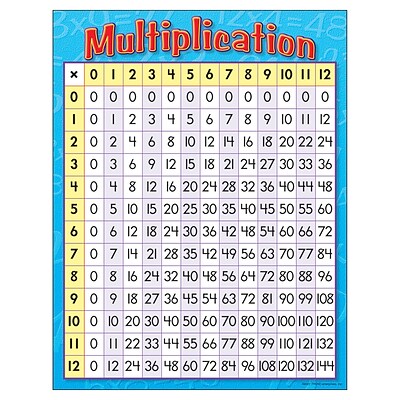
Recently I bought a multiplication chart poster
because I felt the boys were interested in multiplication and their brains were kind of yearning for it.  (Although I deeply, deeply believe in rote memorization of multiplication, it is not going along with unschooling and I think they are going to end up with their calculators.)  I do find the kids clustered around, studying it.  They call me over and ask me questions.  They notice patterns. 

Friday, August 11, 2017

unschooled kids don't learn what they don't want to learn

I got this great book out of the library.  Historical fiction, all three boys can read it, it explains about American History and the minutemen.  I had it in the house for weeks, all of them refused to read it and said it was boring.  I gave it to K, and she also declined.


I'm off to return it and I'm giving myself a little pep talk that when they are interested in the American Revolution, they'll learn about it.

A lot of made-to-be-educational materials don't go over that well here.  They are already out of duct tape and almost out of stuffing, though.