Showing posts with label sibling rivalry. Show all posts

Tuesday, January 15, 2019

Best Use of My Time

I have to remember that conflict resolution is one of the most important things to me as a parent and homeschooler.  

Way back when my oldest was homeschooling, and I was trying to figure out how to manage my time and make decisions about what to teach, I did a "begin with the end in mind" approach where I thought about what things I wanted my adult children to have.  And then planned their education with that in mind.  

To recap, it was 4 things:
  1. Basic reading, written communication, and math (I've since dropped math--they seem to figure out the basics of a calculator pretty easily)
  2. A sufficient sense of responsibility that allows a person to hold down a job; i.e. show up on time and do your work diligently.
  3. The capacity for satisfying and emotionally healthy relationships with a spouse, children, and friends.
  4. A non-superstitious relationship to Judaism and Torah (I've since changed it to a love for Torah AND mitzvos, after some missteps in parenting during the teen years)
I've mentioned that physical fighting has gone down and we are seeing a lot of verbal disagreements with raised voices.  One of the things I've always loved about homeschooling is that there is time to slow down and handle these issues.  And what I love about unschooling is it seems like that IS the job.

So now I'm reminding myself not to get swept away by my own projects and the minutiae of running a fair-sized household and not to forget that when I hear the voices raised, I have nothing better to do than to go over to them or call them over to me, help them talk through the conflict, and learn and practice the tools to resolve it.

Wednesday, December 19, 2018

Quality of Life

Despite unlimited multimedia, I saw Elazar playing with these earlier today.  When I walked by later, I noticed he had left a little design.  Every time I walk by it, I smile.

I realized this morning that hassle of getting Chen's paperwork in to apply to college aside, my life is pretty calm these days.  Around three or four years ago, when my youngest was leaving toddlerhood, life took a turn for the easier.  The constant, unrelenting childcare began to ease.

But today I was thinking that I can't remember the last time one of them cried.  In fact, I think I've cried more recently than they have.  Considering that most of my day used to be spent with little people crying and throwing things at me.  I remember when the first two hours of my day, from 5:30-7:30am, were of my two little ones tag teaming me crying. 

Even when the older two boys edged out of the constant crying, my youngest was quite a crier.  Walking to shul always entailed him collapsing in the middle of the street screaming.  We thought of him as the hulk--usually pretty even tempered, but "you won't like me when I'm angry."  I couldn't understand how my youngest child's temper tantrums were wiping me out when I could remember juggling three (sometimes four) tantrums at the same time.  But after age 4, his tantrums became more...robust, I guess.

Then there was the stage where the older boys went to bed late and the little one just couldn't keep up.  Either bedtime was excruciating as he fought it, and/or the next day was difficult as he was too tired, and thus more prone to irritability (read "the Hulk"). 

Then, one day, he grew up.  He could tolerate going to sleep late.  He began sleeping later in the morning.  I let him go to bed when he wanted to and many days he put himself to sleep when he was tired, knowing if he wants to, he can stay up with everyone.  Even if he was tired, he functioned the next day.

Like I said, I haven't heard them cry in ages.  They have disagreements.  I try to be there on hand to help them talk through it.  The tactics we use are:

  • Eye contact.  Look at the person as you express your complaint
  • Take turns.  Don't interrupt.  Wait until the first person has completely expressed everything he wants to say.  Then it's your turn
  • If someone says Stop, or Don't do that--respect that.  (That often doesn't happen in the course of roughhousing or teasing or sublimated aggression.  When they bring me into it, I am the superego who reminds them that verbal communication is ideally listened to on the first try.)
  • פשרה, Compromise.  A lot of times the solutions they come up with are not what I would have thought of.  I'm thinking "fair" but they think about working it out.  
  • Don't leave the conversation until both parties are satisfied
My main point?  Life is more pleasant when you're not being cried at all day long.  Perhaps this is an obvious point.  But a stay-at-home mom with small children may not even realize how much emotional energy is sapped by being cried at constantly.

(Irony--as I was writing this, Elazar started crying because his plans for buying a sushi making kit [which he'd been planning for a few hours] didn't work out.)  
(Update--he sobbed in my lap for 5 minutes, then went out of the room and figured it out.)

Wednesday, November 7, 2018

Full Steam Ahead

Aharon, age 7, has been asking to read the aleph bina every night. He's making good progress. I think his motives are to catch up to or be ahead of his older brothers, who only read at avos u'banim. Elazar still dislikes reading at age 11. Moral of the story: unschooling seems to work if you are a little brother in competition. Can't speak about the rest at this time.

Wednesday, May 2, 2018

You Cant Always Get What You Wa-ant

Today we went to the Bronx Zoo.  Another homeschooler had a birthday party there, and the boys agreed to go.

"Let's get going!" I called.  "Put on shoes."

All of them put on shoes. 

"It's very hot out.  Elazar, change out of your sweater.  Jack, leave your sweatshirt at home."

Then I rushed around grabbing some food and put on some sunscreen.  "Anyone want sunscreen?"

"No," Aharon called.

We got to the zoo and it was hot.  Jack tried to hand me his sweatshirt.

"Nope, I'm not carrying it.  I told you not to bring it."

"So I have to carry it?" he said.  I offered him the bag of food and he put it in there.  He soon began crying about how awful it was to carry his sweatshirt. 

A minute later, the water bottle had spilled all over the bag and it was full of water.  At that point, I had not taken a map and was already lost.  Note to self.  I have a horrible sense of direction.  Get the darn map.  Luckily, the water did not get on his sweatshirt.

We went to the birthday party, which was nice, and pet a peacock, which was cool.  They didn't want to see any animals.  (I had in mind that I had zero educational goals for this trip, so that I wouldn't get frustrated when that happened.)

Then I got lost getting out.  Then I got lost again.  Then Aharon started crying and saying he can't breathe.  Then we saw flamingos and Aharon said he didn't want to rest after all.  Elazar was sweltering; it turns out he didn't hear me tell him to change out of his sweater.  He started complaining that this was a terrible trip.  Yes, he mused, perhaps even worse than the whalewatching one (where he vomited the entire time).  When we got to the car, it was so hot, he started crying.

I turned on the AC and everything calmed down.  Then Aharon and Jack began fighting, physically.  Pinching, screaming, kicking.  A croc soared into the front seat.  We were in traffic.

Right at that time, the Rolling Stone's You Can't Always Get What You Want started playing, like the perfect soundtrack to my life.  I turned it up. 

So in summation, our first field trip in a veerrrrrrrrrrry long time was excellent insofar as getting them from one place to another.  They all follow alertly, I don't have to keep track of them, they walk themselves, they don't complain about walking (except Aharon, but he's edging out of that age, too). 
However, there is still crying.  Lots of crying.  And fighting.  I still came home thinking perhaps it was not worth it. 

But it's definitely improving. 

Chen wants to go to the museum of Natural History next week.  I had been looking forward to taking the boys to see it.  But it will be optional, as they all loudly proclaimed: they are NOT going on any more trips unless they choose to.  We are supposed to go 20 minutes to roast marshmallows tomorrow and they are not sure they want to go. 

So we'll see who joins me and Chen next week.

Sunday, December 31, 2017

Every day is vacation when you unschool

No automatic alt text available.
This was a funny one.  Since we are unschoolers, and I've often mentioned that every day is like a Sunday or vacation day, this is our every day!  Haha.  Also no Santa.  And no early bedtime, since I've somehow lost the grip on bedtime and it's around 10:30pm these days.

We actually don't have a tremendous amount of fighting these days (As long as I don't try to leave the house with them.  Still building up to that trip to the Museum of Natural History with K and the boys that I think we might be ready for this year).  I was trying to decide if it was because we homeschool and we have lots of time together and the days are relaxed and peaceful, or because we are just lucky based on the different developmental levels that they haven't been fighting so much.  I think b.
For example, 6yo just shrieked that 10yo should stop singing.  And 10yo did.  And there was no physical eruption of violence.  Weird, right?

I note that there is no dinner on this list.  Just like my house!  I have actually been thinking that I have to set up some type of dinner plan.  What I used to do with the girls was have them tell me 5 meals they were willing to eat for dinner and then I would either have them available or actually make them.  Jack is getting hungry every night (I know, shocker--but since my other kids eat like birds or live on lebens or make their own food this is an adjustment) and asking for 2nd and 3rd dinners.  I'm wondering if it's time to move out of wacky macs and pizza bagels and over to real people food.

Thursday, September 28, 2017

Sometimes it's nice to acquire more tools for the toolbox

So you think you settle on an approach, and then kids change, or what worked for one kid isn't working for the next, or you change, or you understanding things differently.

Lord knows I moan about being conflicted about unschooling vs teaching until even I am sick of hearing myself.

I want to talk about sibling rivalry for a bit.  When my kids were 5 or 6 years apart, there wasn't that much sibling rivalry.  When my kids were 2.5 yr and 17 months apart, sibling rivalry became part of my daily existence.  I've waxed eloquent about the bullies2buddies methods and how useful they are.  He gives actual scripts to use, which have been very helpful.  I've even written to him with questions and he has helpfully written back.  I stand by this method and I really love it.  I combine it with playful parenting, which means that I try to take aggression as a cue that they need active and playful wrestling/roughhouse type attention.

I have found this to be more robust and more fun and efficient than what I used to do in my twenties, which was to sit the kids down and have them make eye contact and share their feelings and take turns speaking and make sure they both have a chance to talk and feel they are being heard and brainstorm for solutions. (It even is exhausting to type that up.)

And then.  

I'm in a radical unschooling group.  You think I'm unconventional? :-D I don't qualify as a radical unschooler.  These people are fully committed to unschooling not just academically, but as a way of interacting with their children in every way.  This affects bedtime, meals, discipline, and all sorts of areas.  Some of the underlying principles are abundant generosity and respecting your child as a human being.

So I'm reading with interest, and they start talking about sibling rivalry.  Here is a link (with further links on the bottom of that page).  What sparked my interest is how many of them expressed that leaving the kids to deal with things on their own was not something they would do.  A lot of unschooling (contrary to popular assumption) has pretty hands-on parental involvement, having the parent there coaching, helping, empathizing.

Since this is exactly not what bullies2buddies advocates, and since I am apparently exceedingly defensive and a glutton for punishment, I kept reading.

The truth is, even using bullies2buddies I do keep a fairly close eye (looking for these factors).  But I have heard many people speak about how they felt that they were brutalized by unequal sibling situations (my own sister included, with me being the manipulative and obnoxious older sister), so I wanted to see what advice there was.

What I got from it (though it generally astounds me how much I don't grasp in the first few readings of things) is, like the other radical unschooling principles, to approach their conflicts with a genuine desire to hear both children's needs and a strong desire to help them get their needs.

Obviously, in a sibling rivalry situation, two sets of needs are in conflict.

And I still use bullies2buddies in the sense that I don't go to them or stop them while they are fighting.  I'm usually sitting in the same room or close by, and they know they can come to me.  I still use a lot of the same scripts from bullies2buddies.

But now there is an added component.  I really try to understand what is deeply upsetting to each child (as opposed to in the past, where I was mainly focused on finding solutions.  Yes, I empathized, but I never get really worked up about lego like they do).  I hope this attempt to understand naturally gives them the sense that their needs are valued by the family.  I think it gives a different tone to the arguments.  There is a sense of "both of your emotional/practical needs are important.  What can we do?"

This played out a bit yesterday when (naturally, just about 10 minutes before I had to get ready to go to work), Jack came in screaming that he had a lego set that he couldn't build last year, but THIS year he can, but Elazar made a fidget spinner with an important piece.

Basic bullies2buddies script, I didn't get involved, I agreed with Jack that he has rights over that piece.  Jack left.

In comes Elazar, blazing in fury that Jack just took his fidget spinner and broke it.  No warning, no discussion, just grabbed and broke.
Well.  I agree with Elazar that this, too, is unfair and upsetting.

Looking at this in the framework of the radical unschooling, I perceived that both of them make perfect sense.  Both of them have claims.  Our goal is a peaceful, happy home for all members of the family.

Perhaps this is obvious.  It was not obvious to me.  It was not clear to me to view conflicts or sibling rivalry in the framework of a goal of having a peaceful, happy home for all members of the family.

As I said before, obviously not all members of the family can be peaceful and happy at all times.  By definition, if there is more than one person, then there will be conflicts.

But I don't know that it was ever so clear to me to enter conflicts with the idea that each person's peace and happiness is a priority to us.  So if there is a way to work it out and that increases your peace and happiness, that's what we are trying for.

When that is the goal, peace and happiness becomes an abundance mindset, not a scarcity mindset.  Everyone becomes more generous because there is a security that the family goal is as much peace and happiness for every individual as we can work out.

So Elazar agreed that Jack had the rights to take the piece back.  He objected to the manner in which it was done.  I asked Jack to look at Elazar and for Elazar to say how he feels while looking at Jack.  Because Jack knew that his claim of the piece was protected, he was able to look at Elazar and hear his pain and see the effect it had on Elazar that he took the piece so abruptly and without discussion.

Part of the abundance mentality is that Jack readily agreed to rebuild Elazar's fidget spinner.  And to even improve on it so that it worked.

A follow up blow-up occurred when Elazar was not satisfied with how Jack fixed it.  (I even overheard Elazar say to Jack, "Should we work this out later?" because they were in the middle of cleaning up the neighbor's playroom when this argument went on.)

Again, the goal of peace and happiness for everyone is such that Jack agreed to keep trying until he found something that satisfied Elazar.  But it was also agreed by everyone that the original piece--belonging to Jack--was not an option and if that was the only piece that would satisfy Elazar, Elazar would have to compromise.  Jack did try and Elazar did graciously accept a lesser vision of his fidget spinner (albeit one that functioned better).


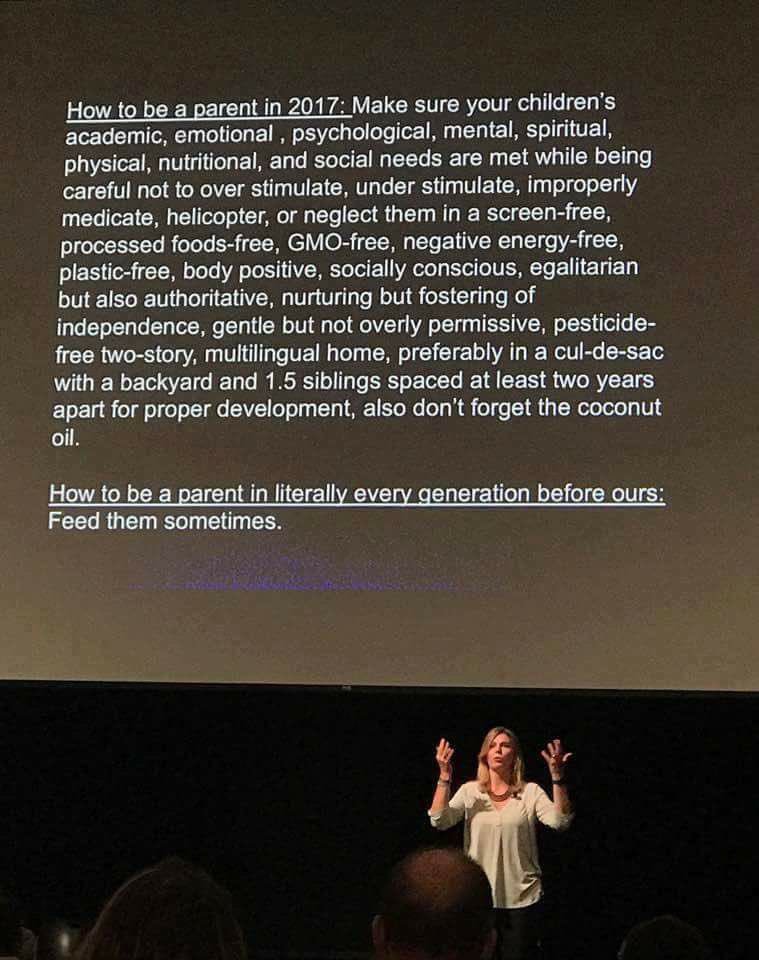

Friday, May 12, 2017

Scraps of thoughts

I've been grouchy.  The kind of grouchy where I get snappy when the boys jump on top of me, instead of being glad that they are seeking contact and interaction.  They've also been fighting a. lot.  I don't know if they are fighting because I'm grouchy or I'm grouchy because they're fighting.

****

Elazar has expressed a couple of times that he's concerned that he won't be able to read by his bar mitzva.  I'm actually not that concerned about that.  (Just a smidge, in basic paranoid anxiety-ridden unschooling, but not really.)  But the second time I told him it won't take him that long to learn to read.  And I told him that I'm sure when he wants to, he will be able to.  But I feel like he was dissatisfied and I'm not sure what he's telling me and what he is looking for.

****

Jack asked a couple of times to start learning Torah.  He wants a siyum so he can get a big present. (That's how the girls earned their phones and computers.)(Not unschooling!  Using incentives!  Small inner conflict about which way is ideal!)  I keep saying, Sure, let's do it.  But then we don't.

****

I'm thinking that decisions such as whether or not to unschool or to teach formally.  Or whether or not to incline towards permissiveness or strictness.  Or whether or not to do xyz approach or abc approach.  None of those actually matter.

Oh, sure, they may affect things like what inclinations the child has--scientific, musical etc.  Interests or philosophy or way of looking at the world.  But in terms of the essence, in terms of will the child be well-adjusted and emotionally stable--it's beginning to seem to me that there is a lot of wiggle room and particular decisions don't matter as much as we might think.

****

I had a whole methodology for teaching Chumash: start with speaking Hebrew.  Then, when they learn to read, do the R' Winder books for a few years.  Then, start Chumash when they have basic vocab and prefixes and suffixes.  That's what I used for the girls and it was great.  But it doesn't seem to be going that way with the boys.  I used three different methods for teaching them to read, so doesn't it make sense that they will learn Torah differently?  It's wrenching to be flexible.  I think, at heart, that I love structure.

****

You put your heart and soul into your kids and you care about how they turn out.  Then they become teenagers and it turns out that caring how they turn out is counterproductive and causes conflict.  Because they are individuals fighting to be their own people.  Especially not what their parents want them to be.  So you have to adjust to parenting and putting your heart and soul into it but not being invested in the outcome.  Like all of life, I suppose.  You do hishtadlus but the outcome is not in human control.

Wednesday, September 7, 2016

fighting to completion

We went on a homeschool trip today.  It was a walk through a wildlife preserve, a marsh.  We had enough Jewish homeschoolers for two groups, littles and bigs (so exciting how our homeschool community is growing), and everyone got binoculars.

(As a sidenote, I am still not able to comfortably go on trips with my brood.  In the 20 minute, blissfully short drive home, my little ones managed to dump the entire garbage bag on the floor of the car.  All the carefully collected orange peels and squeezed oranges and spit out parts.  And wrappers...)

We were on the littles walk, and I'm not sure what happened exactly because I was looking at an egret, but Jack (6) suddenly started shrieking.  He had dirt on his face.  He and Aharon (5) were screaming at each other and crying and hitting each other.  There was a fight over a fruit roll up and someone was throwing dirt on or putting his finger on someone's eye or touching someone or taking something.  Lots of screaming.  They started chasing each other around, smacking each other, kicking each other, etc.

I eventually realized they were arguing over whose fruit roll it is, assured them that I had packed one for each of them as per their requests when I had asked them the night before what to pack, and that I had packed each child's food in a separate bag inside the large bag I was carrying.

Despite Jack being reassured that his food was safe, he was still upset at Aharon.  Or was it Aharon who was still upset at Jack.  They kept attacking each other.

Everybody stopped and turned to look.  I'm kind of used to this going on in the home, so I hadn't reacted or gotten involved (other than to reassure them that they both had a fruit roll up) but seeing everyone frozen around me, I realized how intensely they were fighting.

The ranger stepped in when they were writhing on the floor throwing gravel at each other.  She told them to stop throwing the gravel.  I don't know if she was concerned about the environment or she just wanted them to stop fighting.

I stepped over to her and said something like, "They just need another minute to finish fighting" or something like that.  I wasn't explaining myself well and I don't think I conveyed what I was thinking and I wasn't even sure exactly what I was sensing.

I've been thinking about it, trying to clarify my thoughts.  Why didn't I step in and what was I waiting for.

Basically, I've sensed a pattern in their fights.  Children who are more or less evenly matched or who live together and get into frequent disagreement have a sense of when the fight is over, and both parties tend to agree.

**Irony: I just got interrupted from writing a post on sibling rivalry because J came in and poured a bucket of water on A because A stole his kippah and jumped on him because J kicked him because A...  Forget it; I'm not qualified to write a post on sibling rivalry.  Well, I'm qualified to write a post on the phenomenon but not the solution.***

So what ends the fighting interaction?

They hit back and forth and finally one agrees that the other gets the final smack.  Sometimes the smaller one knows he is just going to get smacked harder.  So it goes like this: he smacks..then his brother smacks him slightly harder...then he feels upset so he smacks again to even it out...but his brother smacks him slightly harder...so he realizes this is just going to keep happening and he backs off.

Or Sometimes one knows he's been a bit of a jerk and agrees that the other one deserves to get in a final smack.  That's the best way for it to end, because they both feel that justice has been served.

If they don't feel complete, then you end up with the anger or hurt or frustration still simmering, and it bubbles up again, and comes up again.

That's why when they were chasing each other around, I wanted to give them a chance to work out their conflict physically.  I know that it's popular to learn to use your words.  But I've just seen that it is waaaaay more efficient for them to fight it out.  It's quicker, it addresses the feelings in a thorough and complete manner, and it resolves.

I wonder, in fact, if the bucket incident is a result of this unresolved conflict simmering between them since they couldn't fight it out completely at the wildlife refuge.  And me stepping in to stop it because I don't want water spilled all over my house also frustrated it.  If it doesn't work itself out at bedtime, I suppose there is always tomorrow.

I do find, though, overall, it is best to allow them to "fight to completion."  When I get involved, I tend to over-complicate things, I miss facts, I'm unfair, and I often exacerbate the conflict.  When they fight it out, it usually takes a few minutes, they always only use just enough force to make their point, and one or both of them back off in a way that they both agree to.  I'll try to observe more about at what point they break off fighting.  I'm sure I'll get some opportunities if they are in a conflict-ful phase.


Monday, September 5, 2016

Postscript to Unschooling: Putting my money where my mouth is

I meant to include this in the unschooling post.  I often feel somewhat bad that I don't read to my boys very much.  Reading To Your Children and Family Dinners are two areas where I don't get to nod satisfyingly as I read all the articles touting them since I'm Doing The Right Thing.

We've gotten into a terrible habit at bedtime which is that the boys like to watch TV before bed.  The reason this is terrible is because time before bed is a great time for intimate conversation, feelings that we've been avoiding all day coming up, answering questions about how things work and life philosophy, and reconnecting.  All of which is neatly avoided by watching Rabbids Invasion or Bloons TD fighting M.O.A.Bs.
The reason this habit came about is because I was thoroughly overwhelmed at bedtime for many years, was out of patience and energy, and was negotiating with my husband to the point where we would play chicken as to who would fold first and not be able to stand it and put the kids to bed (which often missed the window and headed into overtired) and eventually evolved into an extremely rigid schedule based on our evening activities, and eventually morphed away from that as the kids' bedtimes shifted around.

The point being that sometimes I have the energy to follow through on all the things that I feel are "important for their development" and sometimes I feel like I'm negotiating with myself for sanity and I have to make extreme choices about what to drop (read Greg McKeown's book Essentialism for more about that).  And philosophically I shift between "this is a pleasant life" and "relax, everything is fine" and "you need to be on top of those things."  It's a continuum and I feel different degrees of joy, comfort, and anxiety at different times.

So on Friday night I decided, Hey, won't it be nice if I read them a book?  That will stop the maniacal fighting and boundless energy and we can read! And it will be wonderful!

I went and got Caddie Woodlawn, which I adored as a child.  And The Secret Garden.  Elazar, age 9, adhd, was willing to listen.  Jack, age 6, and Aharon, age 5, were a disaster.  They were fighting and giggling in that "we want attention and won't let you read" way.  So I ended up giving warnings and then disciplining and this is pretty much exactly what I don't like to do.  I think I realize now why I avoid this.

I did stop the Secret Garden and switch to Pippi Longstocking.  Aharon was not allowed to sit on near us, so of course he desperately wanted to, and tried to sneak quietly next to us, which was okay with me but not okay with my law-abiding 6yo... But Pippi was a better choice.  Ironically, our lives are a bit closer to Pippi's because we are unschoolers.  Elazar was riveted.

So I have one kid that will love reading.  And one kid that might be able to tolerate it, but the third is wreaking havoc in reading time.  How do parents get their little ones to sit during reading?  I feel sure I've heard of this phenomenon.

I asked Elazar last night if he wanted me to read more to him, and he did.  He fell over laughing when the children asked Pippi who tells her to go to bed and said she tells herself once nicely, and if she doesn't listen, she tells herself much more strictly, and if she still doesn't listen, she's in for a spanking.

Wednesday, December 24, 2014

Sibling Rivalry II

In addition to the techniques discussed here, there is a theory underlying many of my reactions to sibling rivalry:

I assume that a great deal of sibling rivalry is due to fighting for love of the parent.

It seems to me that children often fight with each other or resent each other because they are under the impression (and there is some truth to it) that a parent's time and attention are limited, and they are competing for their share.  Although parent love does certainly stretch (I grew up the oldest of six with this on our fridge:)
the fact is, caregivers do have limited emotional and physical resources.

There is a psychological principle that humans behave differently in an abundance mentality than in a scarcity mentality.

In an abundance mentality, there is always enough resource to go around.  People tend to be generous when there is abundance, because giving doesn't take away from their needs.  A child will share candy when there is plenty of candy.  A child will share a ball when there are plenty of balls.  I will generously let everyone eat my cereal when I know I can easily get more cereal.  There is no danger/pain/stress/negative consequence associated with giving, because there is always more.

In a scarcity mentality, there is fear, tension, and aggressive competition.  People must hoard their resources because they don't know when they will get it next, they don't know if they will have enough for themselves, and they don't know if they might have to steal from someone else in order to get their needs met, or if they might have to defend what they have against others trying to take the precious limited resource away from them.  This makes them extremely miserly about what they have and very unwilling to share.  Instead of being friendly and generous, they view others with suspicion, as competition, and as a threat.

With siblings, I always strive to create an abundance mentality.  I want to make it as easy as possible to "share" Mommy, since there is a sense that there will always be "enough Mommy."  As this is a homeschooling blog, I will note as an aside that homeschooling can make this easier, since I am home with the children for many, many hours.  People often ask, "How can you be home with your children all day?"  I find that since I have hours with them, there is a lot of opportunity to nurture the parent child relationship and to be available for the children. (This doesn't mean I don't experience burnout or that I don't sometimes feel like a wrung out dishrag by the end of the day.)  This is a conscious and underlying goal that I have as I am with my children.

In addition to being aware of the abundance and scarcity mentality and the ramifications, I have a few practical tips.

if seeing aggression, remove and give attention/love
I mentioned before how I move the child away and how I usually scoop them into roughhousing play.  But now I want to add that although it may seem counter-intuitive, instead of having an emotional response of "this child is 'bad' or 'misbehaving' or 'aggressive' or 'annoying'" or whatever negative association, maybe you can think of it as "this child is showing a need for love and attention."  Try to make loving eye contact.  Snuggle.  Roll around on the floor.  Pretend to be growling monsters.  I can't tell you how often I grab a child and pretend to growl and battle because I am trying to give them a positive outlet for the aggressive energy (and if I'm annoyed, too, it gives me a positive way to "be mad" by playing and "pretending" to be mad), and the game evolves into Mommy and Baby monster and involves a lot of cuddling and cooing and stroking and snuffling.  

Play "Mommy and Baby" with young children
A very popular game with my 5 and 3 year olds is me wearing a giant T-shirt and them climbing under it to make a pregnancy tummy, and me giving birth and then cuddling and nursing them (I give them my finger to suck on).  I speak to them in baby talk and I gaze at them like I gazed at my adored babies.  

special time
Here are articles explaining Special Time.  I have a lot of trouble with this and usually only manage to do it (if I manage to do it at all) with the child who is in the most difficult phase at the moment.  But the experts say it works and I'll add that it is extremely effective.  It also is onerous for an overwhelmed Mama to add to the list.  But the payoff is enormous.

when you are playing with one child and another comes over
I have two different approaches, depending on which child is needier.  Both use the abundance mentality.

  • I always try to welcome the newcomer as if there is infinite love and room on my lap and room for them to join

OR

  • I take turns.  If the one I'm playing with will resent the intrusion of the newcomer, I put up firm boundaries. "It's not your turn, now.  It's his turn." (I can see the one in my lap preen with happiness when I do that.) "In 5 (or 10 to 20) minutes it will be your turn." And then I enforce that.
    Ideally, the one in my lap will naturally have enough time and leave of his own accord, at which point I will go and find the next one and tell him it is his turn.  If the newcomer is hovering, then I switch turns, 5 minutes and 5 minutes.  With each switch, I try to convey that there is "enough Mommy."  You have your turn and you will get your turn.  You will get enough time.


sibling rivalry I

In Pirkei Avos 5:21 it says "ben chamishim l'eitza," age 50 is the time to dispense advice.  I've noticed that in any given scenario with a suggested action, there is a scenario which is almost exactly the same except that the ideal thing to do is the exact opposite of the suggested action.  So although I have found certain things useful and I share them in the hopes they might be useful to you, bear in mind that they might actually not work at all in your case or be the opposite of what would be ideal for your situation.

My daughters are 5.5 years apart.  There wasn't much conflict.  I dutifully read Siblings Without Rivalry before Chana was born.  It wasn't such an issue, though I'm sure I integrated the advice and that helped.  Likewise, there are 6 years between Chana and Elazar.  (Ironically, Chana played with Elazar more than Sarah ever played with Chana.)  Then we were blessed rapidly with two more boys.  Now we had three boys in row.  Age differences: 2.5 years, and 17 months.  I knew I had to get on top of my game regarding sibling rivalry because no longer was it going to be "I'm leaving the baby on the floor next to the computer while you play and going to take a shower."

This is looking like it's going to be a two part post.  First I'll discuss techniques that I've been using, and then the next post will be the main thing I've been thinking about recently.

tandem nursing
This is not usually practical or relevant to a lot of people, but I mention it because when I was about to give birth and my toddler was still nursing, I read up on it and saw mentioned, over and over, how it affected the sibling relationship positively, how close the children were from it.  And since I, too, have noticed this, and I do think tandem nursing affected my first two boys' relationship positively, I bring it up now.  My middle boy weaned himself while I was pregnant, and I am sure that had he had the experience of breastfeeding while holding the hand of his little brother and gazing into his eyes, it would have cut down on his aggression.  Unfortunately it was not an option.

hovering, blocking, teaching "gentle"
These are the tried and true techniques of teaching a toddler to handle his infant sibling.  Hover over the toddler whenever he comes near the baby; do not assume he will not hit or be rough.  Be on standby to block any hits, pinches, squishing, etc.  Take his hand and have him stroke the baby and make "nice."  I think a lot of irritation and agitation can be cut out with proper vigilance, supervision, and prevention-- which is practically difficult and exhausting to do.  But when I make it a priority I don't regret it.  It's not fair to the older one to get angry at him for being unable to control his aggression when out of the two of us, I'm the one who is mature enough to control myself. ('Cept when I'm not...)

moving away without speaking or giving off disapproving body language
When the older sibling attacks the younger sibling, intervene by scooping up the aggressor and moving away.  I don't say, "Don't hit your brother" or "we don't" or "it's not nice."  I've found they know all that already and either they want to be aggressive or they can't control themselves.  I don't bother to "teach" them not to.  I just stop it.

bullies2buddies
I've written about these concepts and techniques a few times.  It mainly involves only stepping in when there will be harm (blood, bruises etc.) and when the aggressor is not responding to genuine distress signals by easing up.  I see my last post was about 2.5 years ago, and I am reporting now that they don't fight that much, they do get into physical conflict that ends pretty quickly, and the smacks are, from my observation, usually with a careful amount of force.

Playful Parenting
When I move the aggressor away (without criticizing or scowling or negative body language) I often ask if they want to wrestle or roughhouse or play out their aggressive energy.  This has been hugely helpful in navigating their feelings.

assuming that a great deal of sibling rivalry is due to fighting for love of the parent
To be continued in the next post.


Monday, September 23, 2013

it's not so simple

So Jack is crying.  Aharon hit him with a toy car.

I am thinking about whether or not to take away the car.  At first it seems like a simple, easy answer.  Clear rule: if you hit with something, it gets taken away.
This is to discourage hitting people with objects.  (I've mentioned before that I've discarded the blanket "no hitting" rule because, as it turns out, there is actually plenty of measured hitting as they work out their conflicts.)

Hit with object.  Object gets taken away.  Child will either a) restrain himself from hitting someone with the object next time because he wants to keep the object or b) will not have the object to hit anyone with.  Happy ending either way.

But I'm not sure that is the most effective, efficient way to handle it.  I didn't actually see how hard Aharon hit him with the car.  It's possible Aharon (age 2) hit him because Jack (age 3) was attempting to wrest it away from him.  It's possible that Aharon hit him with a hit calculated to prevent him from attempting to take it away again, but not too hard.  It's possible that Jack's cry is a manipulation attempt to get me to intervene, when in fact, it has been handled beautifully and efficiently.

I did, in fact, take away the car, saying the rule, "If you hit someone with something, it gets taken away."  Aharon did not object.

But I wonder.

Sunday, September 8, 2013

another sibling rivalry technique: roughhousing

On August 27th I wrote about how my 3yo was pounding the 2yo and not stopping.  We seem to be in that "phase" now.  I spoke to 3yo about it when things were quiet, about how he felt about hitting his brother, was he aware that he was screaming for him to stop, and how he wasn't stopping.  I asked his opinion about me pulling him off of his brother when his brother was screaming and he wasn't stopping, and he thought it was a good idea.

I was doing that for the last week or so, which caused the little one to play up the victim role more, and to a lot more screams of "Mommy!"

I just remembered a technique I like to use in these cases.  It's inspired by the book Playful Parenting by Larry Cohen.  When the aggressor and victim are rolling around and the victim is screaming and the aggressor doesn't stop, I pull the victim out, briefly comfort him, and then start roughhousing the aggressor.  The more giggles I can elicit, the better.

Ten to twenty minutes of roughhousing can change the whole course of the day.

Monday, September 2, 2013

pre-rosh hashana

Perhaps I should start by saying, "Don't homeschool close to the chagim."  Or "Never attempt homeschooling before a 3-day-yontif."

Anyway, for Chana, I wanted to show her the different parts of shacharis shemona esrei, which is her basic level chiyuv.  She doesn't like to say an unfamiliar one when she is stuck in amidah and can't ask if she's supposed to say this paragraph or not.

If we have time, I'd like to go through malchiyos, zichronos, and shofaros with her.  Outside the text.

I had a brainstorm to have her go through the Torah readings for both days (and hopefully the haftorah of the story of Chana, which has special significance to her name and why that is her name).

So we had a miscommunication and she thought she was doing the Torah portion instead of Chumash, and I thought in addition (she is up to chazara of shishi and I'd really like to be through sefer Shmos in a couple of months).  A batch of chocolate chip cookie dough did not improve her mood, in case you were thinking of trying that tactic out.

She agreed to set the timer for 10 minutes and do however much.  She got through half the Torah reading.  It's a nice chazara.  She doesn't remember the difficult or unusual words, but I wouldn't expect her to.  I would have been delighted if she had known it better, but on the up side, it is clearly not her first time going through this material.

And now back to cooking.

Oh, I forgot to mention that the boys' fighting (Jack and Aharon) was SO bad I had to call Ari down for backup (luckily it's Labor Day) and Elazar was asking where his cookie dough was over and over, even though I kept saying I'd give it to him in 10 minutes (he eventually went to the fridge and found the one with his name on it).


Tuesday, August 27, 2013

it's not all buttercups and gumdrops

It's one of those days where Jackie (age 3) is bothering and bothering Aharon (age 2).  Just torturing him and not backing off.  And Aharon is tired so he doesn't have his usual resilience. So I keep grabbing him off of Aharon and separating them.

Aharon post nap and after lots of cuddles for Jack, they are managing without me again.


Friday, August 23, 2013

Getting involved in aggression that isn't actually harming the victim

Yesterday, Jack (age 3) was spitting water in the pool at Aharon (age 2).  Aharon called me to come help him.  My first instinct was to tell Jack to stop.  Then I remembered the golden rule in bullies2buddies that bothering or teasing that doesn't physically hurt the victim doesn't necessarily need to be stopped.  Instead of focusing on the aggressor (Jack), I spoke to Aharon about his experience, his feelings, and his plans to deal with it.

"Jack spit water at you?" "Yeah.."  "You don't like that?"  "Yeah.." "What do you want to do?" Aharon heads over towards Jack to smack him, as I've discussed, but the water is too deep and he backs up into where he can stand.  He has no water wings.  Jack comes over again and Aharon pops him one.  Jack laughs and backs off, and spits water at him again.  Aharon laughs.  Jack laughs.  

As I mentioned, I've been watching how often the fighting escalates quickly, and then deescalates quickly.  I think they even seem to be getting more skilled at dancing with each other and navigating through their conflicts.  (In response to what someone said: "I can see it works for your children, but that's just them!" --to that I say: 1) Try it out for yourself and 2) Make sure to also give them lots of time, attention, and love so that their conflicts are not also imbued with a feeling that their "emotional cups" aren't full of the love and affection they need from their parents.)

Today I watched the boys in the pool again, and there was a father watching his older two children "mitchering"* the youngest.  He kept telling them to stop.  As far as parenting go, the kids were not overly bothering their sibling, the father wasn't being strident or aggressive or abusive or getting more and more irritated.  I'm not criticizing his parenting.  I hope we all can stay calm and reasonable like that.

However, I do think that the way the kids were bothering their brother could be handled by non-interference.  The "victim" surely can tolerate the small bothering his siblings were dishing out, and it's useful in life to have that skill.

***please do not think that I advocate allowing abuse.  I mentioned many times that if the aggressor does not back off of the victim in a case of blood or great hurt or extreme distress and does not demonstrate empathy, then you should separate them***

It seems to me that as a society (or perhaps my small niche of it), we want to obliterate aggressive feelings even before they escalate into actual blood and broken bones and viciousness.  But accepting that there is a distinction and learning to distinguish between the two is the difference between getting involved every few seconds, vs. relaxing at the pool while they learn important life lessons, all by themselves.


*Mutcheh: (rhyme with "butcher") bother, annoy, harass, needle, pick on. "He mutches me night and day. The man won't let me live!" When my nephew was little, I used to tickle and rough-house with him. My mother would say, "Stop mutchering him, already!!" but the instant she'd walk away he whisper to me, "Come on! Mutcher me some more!" Obviously, HE didn't consider it mutchering!  

Thursday, August 15, 2013

sibling fighting observations

We had a friend sleep over with his son, who is almost 6, around Elazar's age.  I guess the boys were having some conflict, and he asked me my policy on fighting.

Yesterday, I read an article about boys roughhousing and in some of the comments, there was some discussion about how things escalate and somebody always gets hurt.

I described to my friend what I look for in an interaction:


  • When there is conflict, do they try to address it verbally or do they go straight to violence? (In my experience, there is almost always a verbal attempt. Or four or five.)


  • When they begin to scuffle physically, is it very hard or is it a properly weighed cuff--hard enough to sting, but not hard enough to do serious damage?


  • When somebody hurts someone to the point where he cries out in real surprised pain, is there a hesitation, a slight backing off to check it out, or does the aggressor keep going to hurt more?  

Backing off momentarily indicates empathy and caring, and you can stay out of it; ignoring pain and continuing to hurt or trying to induce more pain is a sign that you should immediately wade in a grab the hitter and move him away.

I think most people don't notice this slight hesitation or understand its significance.  Most children are naturally empathetic and have this reaction.  (Notably, my sweet 3yo did not when he was 2 and sitting on his 6mo brother.)

Another thing people miss, in terms of escalation, is that although there is frequently a small intensification of back and forth smacks and punches, accompanied by screaming, it usually quickly peaks to a mutually agreed ending.  It is still somewhat of a mystery to me, but after a flurry of beating each other, one or both backs off.


  • Either they both agree that justice has been served (ie the little one broke the bigger one's castle, so the big one smacks him, and the little one smacks back, and the big one smacks back, and they all agree that justice is served and they both back off, emotionally satisfied).

or

  • One decides that pursuing it is not worthwhile (ie one wants a toy and tries to take it and they yank it back and forth and smack the bejeebers out of each other and one decides he's been smacked enough).  He may walk away crying, but note that it is already de-escalated without you doing anything.  In that situation, I give hugs and kisses and sympathy (only if I am approached by a crying child), but I do not interfere with the justice of the jungle.  Often, after a brief cry, the child will find some other way to interact.  
It is important to notice that what adults think is fair or just in this situation is not the same as how the children experience it.  I am astonished how often a swift delivery of justice, followed by a retaliation, followed by another cuff of justice/retaliation, is considered equitable to both parties.  I have observed this multiple times.

It is also valuable to let children who are having conflict to physically work it out.  Watch carefully and note how measured the hitting is.  It is not so hard that it will cause damage, and yet it is with enough force to sting.  There are often hesitations and pauses while they learn how much force is too much and how much is just right, and they respond and back off in reactions to exclamations of intense pain.  These are lessons in socialization and emotional intelligence.  It trains children to respond empathetically and to notice nuances in expression, and to grasp emotional subtleties.   When adults don't get involved, you will also observe that children are inclined to back off based on an internal tolerance limit.  They are also inclined to take some time to regroup, and then rejoin with a different approach.  These are things we all would like our children to find the internal fortitude to practice.  Children who rely on adults to intervene often do not have the experience of looking within for these approaches.

If you find that one child is beating another and there is crying out and you do not observe a peak and a slight backing off (but make sure you are not interfering too early--watch first and look for subtle signs of empathy in the midst of the fighting), then separate them.  

My preference is to physically move them apart but not to speak.  I haven't found that saying anything is helpful or useful.  It more likely conveys disapproval and anger that is not beneficial to the child/ren.

But it is really astonishing, if you learn to observe signs of empathy and internal de-escalation, how infrequently you will have to get involved.  I'm not saying it doesn't get loud.  I'm not saying there is no crying.  And I have punted the phrase "No hitting!" from our home.  But the spurts are brief, intense, and noisy, and frequently end with some time of agreement.  It's more Wild, Wild West than civilization.  But read up on justice in the wild west and you'll be surprised at how fair it generally was.


Sunday, November 11, 2012

Observation about sibling rivalry

It's been a rather insane 2 weeks with power out from the hurricane.  One thing that we homeschoolers joke about is that we didn't have off from school.  After a couple of days, though, Chana went to sleep at her cousins' house and that was the last I saw of her until erev Shabbos.  But she did double chumash the next week.  For a while, we took a break from new pesukim.  The rashis and pesukim were too complicated and adding even one new one every day was getting overwhelming.  So we took a week to really pound those pesukim and rashis, and just started adding new pesukim yesterday.

Aside from noticing that the sibling rivalry ratchets up in response to my own stress level, I noticed something about how the boys fight.  I saw this happen quite a few times.  One boy does something to another.  Something aggressive or destructive (e.g., he breaks a train track that his brother is building).  The victim gets angry at the aggressor.  There is a sense of outrage and a sense that there was a wrong that needs to be righted.  Justice needs to be done.  The victim goes over and wallops the aggressor.  Usually one good wallop, but sometimes a few sharp *whap*s.  Then, it seems like the sense of outraged justice has been satisfied, and there is a sort of deflating.  The aggressor seems to agree that he deserved it, and although he grunts in pain, he doesn't attack back, which is a tacit acknowledgment that he deserved it.  Then they move on to something else.

It's fascinating that it doesn't escalate beyond that.  Initial act of aggression, cry of outrage on behalf of the victim, victim puffs up and belts aggressor, aggressor responds to pain but doesn't attack back, both settle down like two chickens with ruffled feathers clucking and then calming down.

  • it fascinates me that there seems to be an innate sense of justice operating here, and both parties agree.
  • it's interesting how it settles down and doesn't escalate.  And yet, there are definitely other types of sibling rivalry interactions where the violence does escalate.  I'm curious to observe what causes the escalation and in which situations it occurs.