I was debating whether or not to try to do something official with the boys. Generally in the afternoon, the older of us watch a thematic movie.
It turns out that I tried to engage one of the kids and conversation but he wasn't that receptive. But then another kid came in and he was interested and we watched a short video which led to a great discussion about what happened and a day of mourning, and the Titus Arch, and he was stunned that both Mikdashim were destroyed on (almost) the same day.
https://www.youtube.com/watch?v=y5vuoX09ryw&feature=youtu.be
There was a program on our block and one of the boys went to it.
And it turns out Ari had a good conversation about the purpose of Tisha B'Av with the very kid I had tried to engage and failed to. That kid had asked Ari about it and they had a good discussion.
So we kind of keep an eye out for opportunities to talk about it, throw some things out (strewing) and see if anyone is interested.
Showing posts with label strewing. Show all posts
Showing posts with label strewing. Show all posts
Thursday, July 30, 2020

Thursday, November 29, 2018
More Unschooling Magic
Aharon continues to drag the reader into my room every night at 10:24 or so, with just enough time before 10:30 to read. Last night he read two pages. His reading is not as fluent as a 2nd grader in "regular" school, but he's much faster than his older brothers. The other day, while I was davening out loud, he came to look over my shoulder. I slowed down and let him read the very last syllable, which he did. He seems interested in getting his reading level to the point of being able to daven.
(Jack has stopped asking for Chumash, and Elazar and I are doing trup very spottily.)
Jack comes up for snuggle most nights in the early 10s, to get a snuggle before my 10:30 cutoff time. Last night, I was hanging out in bed, talking to Chen, when he came in. He asked what division was.
I explained it like I had explained it to Elazar about cookies and the amount of people who want cookies and to make it fair. So we started with 15 and I said there are 3 people. I gave him one of my hands so he'd have 15 fingers and could visualize it.
He spent a long time thinking. A really long time thinking. One might even say a ridiculously long time thinking.
And he wasn't using my hand, and dividing into the obvious 3 equal parts.
What was he doing?
Eventually, he said "5." That was right, and he was thrilled, and he asked for another.
Chen was extremely curious about how he had done it. So we asked Jack to do the next one out loud, if he could. To talk as he was doing it and to say what he was thinking.
He was guessing what it might be, then counting by that number, to see if he ended up with the right answer. So 24 divided by 6. He guessed 4. Then he counted. 4, 8, 12, 16, 20, 24. That was 6 jumps of 4, ending with the right number. Had he started with 3 it would have been: 3, 6, 9, 12, 15, 18. Wrong. We did a few more problems until Aharon came in to read.
A few things really struck me about this.
Oh, and last night Aharon forgot the ך and I told him to practice the sofises, since he stumbles over them. I know he works on them in his mind at random times during the day, because last week he came to me, eyes shining, and told me that he mastered nun sofis (ן).
I had stuck an aleph beis printout onto the fridge haphazardly a couple of years ago, because I felt that having it in sight might incline them to look at it, and definitely showed the kids that Hebrew reading is a value of ours. Although the kids use the multiplication chart I have on the fridge frequently, I don't see the aleph beis chart getting a lot of use.
But apparently Aharon has been using it. This morning he came over to me, and with his eyes glued to the chart, told me that he's working on the ך and the ף.
(Jack has stopped asking for Chumash, and Elazar and I are doing trup very spottily.)
Jack comes up for snuggle most nights in the early 10s, to get a snuggle before my 10:30 cutoff time. Last night, I was hanging out in bed, talking to Chen, when he came in. He asked what division was.
I explained it like I had explained it to Elazar about cookies and the amount of people who want cookies and to make it fair. So we started with 15 and I said there are 3 people. I gave him one of my hands so he'd have 15 fingers and could visualize it.
He spent a long time thinking. A really long time thinking. One might even say a ridiculously long time thinking.
And he wasn't using my hand, and dividing into the obvious 3 equal parts.
What was he doing?
Eventually, he said "5." That was right, and he was thrilled, and he asked for another.
Chen was extremely curious about how he had done it. So we asked Jack to do the next one out loud, if he could. To talk as he was doing it and to say what he was thinking.
He was guessing what it might be, then counting by that number, to see if he ended up with the right answer. So 24 divided by 6. He guessed 4. Then he counted. 4, 8, 12, 16, 20, 24. That was 6 jumps of 4, ending with the right number. Had he started with 3 it would have been: 3, 6, 9, 12, 15, 18. Wrong. We did a few more problems until Aharon came in to read.
A few things really struck me about this.
- He LOVED it. He got so much enjoyment from thinking about this and figuring it out. It was something he was wondering, he came to me and asked me about it, and was rewarded with the pure joy of figuring it out, discovering it, thinking about it.
- He took a really long time to think about it at every step. He thought about what it means to divide. He thought about how it might work. He wrestled with how it works, and tried different things, and figured out a method of calculating it.
In school, you don't have time to do that. Firstly, you don't have time to wonder. You are told what you are learning and that's that. Secondly, you are told how to do it. You aren't given the space and time to sit and really think things through. You simply don't have the time to sit around thinking about how division might work. You don't have time to play with it. - Division is going to be really meaningful to him. He will understand it on a deep, gut level. It will be part of him.
Oh, and last night Aharon forgot the ך and I told him to practice the sofises, since he stumbles over them. I know he works on them in his mind at random times during the day, because last week he came to me, eyes shining, and told me that he mastered nun sofis (ן).
I had stuck an aleph beis printout onto the fridge haphazardly a couple of years ago, because I felt that having it in sight might incline them to look at it, and definitely showed the kids that Hebrew reading is a value of ours. Although the kids use the multiplication chart I have on the fridge frequently, I don't see the aleph beis chart getting a lot of use.
But apparently Aharon has been using it. This morning he came over to me, and with his eyes glued to the chart, told me that he's working on the ך and the ף.
Tuesday, October 24, 2017
On Agenda vs Agenda-less Strewing
One of the very nice things about unschooling is that I'm no longer trying to get anyone to learn anything. Any parent, but perhaps especially a homeschooling parent, feels a constant underlying stress of being responsible for how their children "turn out."
So a lot of interactions that could just be nice interactions where we enjoy each other's company end up being colored by a sense of "let me use this opportunity to teach xyz" or "to explain abc" and then there is an agenda.
Schools and educational philosophies have agendas. When I took an education course, it was full of educational goals and "the learner will..." And knowing our goals gives us the most chance of achieving them. I have advocated and still believe in taking a lot of time to think about what your goals are with regard to your children so that you can prioritize your time, energy, and educational efforts effectively.
But I admit it is mentally exhausting to be agenda driven when interacting with my children, and ironically, it's usually the times when I have no goals at all other than being fully present and spending time with my child that things go best. That is one of the points that unschooling makes (called "deschooling"). Quote: "Look directly at your child. Practice watching your child without expectations. Try to see what he is really doing, rather than seeing what he’s NOT doing. If you hold the template of “learning” up and squint through that, it will be harder for you to see clearly. Just look."
Strewing. When I first started unschooling, I read about this thing called "strewing" which means that you place educational objects around and the kids end up picking them up. I thought this was brilliant, because the kids learn when they want to. And strewing is a big part of unschooling.
But. It also can be agenda driven. And if I'm trying to relax and see what my child is interested in and not be subtly trying to direct his energy into "productive" and "educational" places, then strewing has the potential to mess with that vibe. So I did put up maps when they were requested and the Periodic Table when requested. And I put up body systems because I love that stuff. And the names of the Parshios. And a Jewish History timeline that keeps falling down for some reason.
Recently I bought a multiplication chart poster
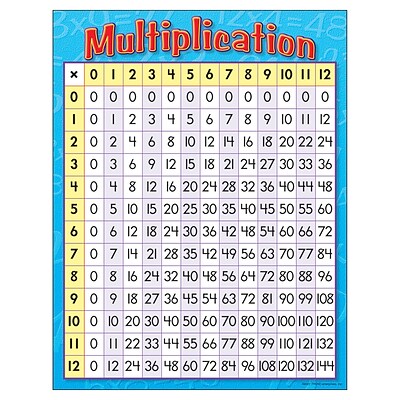 because I felt the boys were interested in multiplication and their brains were kind of yearning for it. (Although I deeply, deeply believe in rote memorization of multiplication, it is not going along with unschooling and I think they are going to end up with their calculators.) I do find the kids clustered around, studying it. They call me over and ask me questions. They notice patterns.
So a lot of interactions that could just be nice interactions where we enjoy each other's company end up being colored by a sense of "let me use this opportunity to teach xyz" or "to explain abc" and then there is an agenda.
Schools and educational philosophies have agendas. When I took an education course, it was full of educational goals and "the learner will..." And knowing our goals gives us the most chance of achieving them. I have advocated and still believe in taking a lot of time to think about what your goals are with regard to your children so that you can prioritize your time, energy, and educational efforts effectively.
But I admit it is mentally exhausting to be agenda driven when interacting with my children, and ironically, it's usually the times when I have no goals at all other than being fully present and spending time with my child that things go best. That is one of the points that unschooling makes (called "deschooling"). Quote: "Look directly at your child. Practice watching your child without expectations. Try to see what he is really doing, rather than seeing what he’s NOT doing. If you hold the template of “learning” up and squint through that, it will be harder for you to see clearly. Just look."
Strewing. When I first started unschooling, I read about this thing called "strewing" which means that you place educational objects around and the kids end up picking them up. I thought this was brilliant, because the kids learn when they want to. And strewing is a big part of unschooling.
But. It also can be agenda driven. And if I'm trying to relax and see what my child is interested in and not be subtly trying to direct his energy into "productive" and "educational" places, then strewing has the potential to mess with that vibe. So I did put up maps when they were requested and the Periodic Table when requested. And I put up body systems because I love that stuff. And the names of the Parshios. And a Jewish History timeline that keeps falling down for some reason.
Recently I bought a multiplication chart poster
Sunday, October 30, 2016
Extraordinaires Design Studio Pro: Review
I've been reading about "strewing" recently. Sandra Dodd, who is an unschooling guru, wrote a post about putting things around the house that your children might find interesting. I'm not a huge "strew"er. I used to, when I was trying to "get the kids to learn." But having a little more confidence with the process of unschooling at this point, I don't bother keeping maddening fraction manipulatives around to give them a feel for fractions, because cleaning them up drives me nuts. Fractions are cool and I imagine eventually they'll enjoy fractions inherent usefulness and interestingness. (Did you know that interestingness is a word, despite the red squiggle showing up as I write it? I just googled it hoping to find a synonym.)
This morning I read something that really hit me strongly. Someone asked about how much to get involved with being the initiator of ideas in unschooling (which is related to strewing) and this mom said that the simple act of saying "Yes" instead of "No" has been life-changing. Letting the kids go through old boxes and drawers, touch things, mix things ("baking") in the kitchen, take apart old electronics, jump and use furniture. She said things that she would have said "No" to because of inconvenience end up being tremendous fun and make up some of her best memories.
I still try to find trips that I think the kids will like and I still pull them out of the house to walk down the block to see a fat spider in an amazing web. And when Timberdoodle sent out a call for reviewers, I checked out their products and requested ones I thought were age appropriate to my children and in line with their interests.
Since my 15yo has always been interested in animation and art but has disliked official art lessons, Extraordinaires Design Pro looked interesting to me.

For some reason, I thought it was for the computer and she would be able to use it with or instead of the Paint program she uses for drawing her figures. This was an error. Note to self: read things more carefully.
It's a game. It is great to do with a few people together or alone. In addition to art, it promotes thinking, creativity, and I read in a few places that STEM teachers got it for their classrooms. Basically, it is a game that teaches product design. It assumes that you are the product designer and you are designing something for a client. There are 4 categories of cards: Extraordinaires, Design Projects, Improvements, and Sketching. You "meet your client" (choose a client card, called an "extraordinaire") who has some unusual qualities and unusual needs. Then you choose a design project card, which is what your client wants designed. Then the other cards guide you as you plan and execute your design for what the client "hired" you to create.
It's sort of like Writing Strands insofar as having a guided assignment with a lot of room for personal creativity.
Here is a summary of my tenth grade daughter's assessment:
It's a visual guide for drawing. You have the option of drawing digitally, but the guide itself is physical. I am disappointed it is not a program for the computer. It is structured, and is initially a bit confusing and seems to involve quite a bit of effort. But after sitting with it for a bit and playing around with it, it is basically a guide to help you visualize and draw a whole picture.
I think it could be useful for someone that does not know how to do that on their own. It provides questions to make you think of the history and small details of the character in the drawing.
It also helps when you don't know what to include in the backdrop.
The Extraordinaires are the characters. There is a selection of them to choose from and they each possess normal human attributes. For example, the Superhero looks like she is absolutely amazing, but even she needs a cup of coffee every once in awhile. It shows you that everything has more than one side to it. The design projects are little categorized cards, divided by objects (clothes, vehicles, buildings, etc.) that give you ideas on at least one thing from that category to draw. Improvement ideas are given with the help of Think Cards. These are also divided into the same categories as the Design Projects. They ask you specific questions that make you, well, think about what you drew. For each card within a category, it will give you three different topics to think about complete with three complementary questions corresponding with that topic. As an example, I have taken out the Think Cards for the category "Gadgets." One topic of the card is "Interaction" where it asks "How will the Extraordinaire interact with the gadget? How will their physical abilities influence your design?" I particularly like this question because it is more so something that goes over your head and/or seems a bit obvious. Say your character is a pirate and the gadget is a sword. What if that pirate lost his right hand? He would have to hold it with his left and, based on statistics, odds are his right hand was dominant, making it even more inconvenient for him. It also gives questions to make you think about design and structural ideas, such as "What if your gadget had to last 1000 years? What if it was disposable? How would you change your design?" Sketch and Present would be the full category. It says it on the book, you sketch and annotate your design to highlight specific features and details.
Obviously there are a lot more tips and such, but those are the basics. I think this could be quite useful for both people who want to pursue art as a hobby and people who are striving for profession.
Timberdoodle recommends Extraordinaires Design Studio Pro as the self directed Art class in their 11th grade curriculum.
This morning I read something that really hit me strongly. Someone asked about how much to get involved with being the initiator of ideas in unschooling (which is related to strewing) and this mom said that the simple act of saying "Yes" instead of "No" has been life-changing. Letting the kids go through old boxes and drawers, touch things, mix things ("baking") in the kitchen, take apart old electronics, jump and use furniture. She said things that she would have said "No" to because of inconvenience end up being tremendous fun and make up some of her best memories.
I still try to find trips that I think the kids will like and I still pull them out of the house to walk down the block to see a fat spider in an amazing web. And when Timberdoodle sent out a call for reviewers, I checked out their products and requested ones I thought were age appropriate to my children and in line with their interests.
Since my 15yo has always been interested in animation and art but has disliked official art lessons, Extraordinaires Design Pro looked interesting to me.

For some reason, I thought it was for the computer and she would be able to use it with or instead of the Paint program she uses for drawing her figures. This was an error. Note to self: read things more carefully.
It's a game. It is great to do with a few people together or alone. In addition to art, it promotes thinking, creativity, and I read in a few places that STEM teachers got it for their classrooms. Basically, it is a game that teaches product design. It assumes that you are the product designer and you are designing something for a client. There are 4 categories of cards: Extraordinaires, Design Projects, Improvements, and Sketching. You "meet your client" (choose a client card, called an "extraordinaire") who has some unusual qualities and unusual needs. Then you choose a design project card, which is what your client wants designed. Then the other cards guide you as you plan and execute your design for what the client "hired" you to create.
It's sort of like Writing Strands insofar as having a guided assignment with a lot of room for personal creativity.
Here is a summary of my tenth grade daughter's assessment:
It's a visual guide for drawing. You have the option of drawing digitally, but the guide itself is physical. I am disappointed it is not a program for the computer. It is structured, and is initially a bit confusing and seems to involve quite a bit of effort. But after sitting with it for a bit and playing around with it, it is basically a guide to help you visualize and draw a whole picture.
I think it could be useful for someone that does not know how to do that on their own. It provides questions to make you think of the history and small details of the character in the drawing.
It also helps when you don't know what to include in the backdrop.
The Extraordinaires are the characters. There is a selection of them to choose from and they each possess normal human attributes. For example, the Superhero looks like she is absolutely amazing, but even she needs a cup of coffee every once in awhile. It shows you that everything has more than one side to it. The design projects are little categorized cards, divided by objects (clothes, vehicles, buildings, etc.) that give you ideas on at least one thing from that category to draw. Improvement ideas are given with the help of Think Cards. These are also divided into the same categories as the Design Projects. They ask you specific questions that make you, well, think about what you drew. For each card within a category, it will give you three different topics to think about complete with three complementary questions corresponding with that topic. As an example, I have taken out the Think Cards for the category "Gadgets." One topic of the card is "Interaction" where it asks "How will the Extraordinaire interact with the gadget? How will their physical abilities influence your design?" I particularly like this question because it is more so something that goes over your head and/or seems a bit obvious. Say your character is a pirate and the gadget is a sword. What if that pirate lost his right hand? He would have to hold it with his left and, based on statistics, odds are his right hand was dominant, making it even more inconvenient for him. It also gives questions to make you think about design and structural ideas, such as "What if your gadget had to last 1000 years? What if it was disposable? How would you change your design?" Sketch and Present would be the full category. It says it on the book, you sketch and annotate your design to highlight specific features and details.
Obviously there are a lot more tips and such, but those are the basics. I think this could be quite useful for both people who want to pursue art as a hobby and people who are striving for profession.
Timberdoodle recommends Extraordinaires Design Studio Pro as the self directed Art class in their 11th grade curriculum.
Subscribe to:
Posts (Atom)
