Showing posts with label math. Show all posts

Friday, November 26, 2021

What Happens When Unschoolers Are 'Behind'

There's something I always say about homeschool:

There's no behind in homeschool; there's only where your child is at.

In homeschool, we have the luxury of teaching the child on their level, at all times. We can advance at their pace. We can teach the same thing over and over. We can slow down. We can stop. We can let it go for months or years and pick it up when they are ready.

In general, a lot of homeschoolers play more in the younger years than their classmate counterparts do. It's not that hard to "catch up" later. Especially because one-on-one learning is so efficient.

In unschooling, where the parent doesn't teach the child, and instead, the child learns what they want when they want, there is often a fear that the child will grow up and blame the parent for not forcing them to learn. After all, learning is unpleasant but needs to be done, and you should have made me do it, even though I fought it. And now I'm an adult and I don't know what I need to know and it's all your fault.

(Sure, homeschoolers worry about this too. But believe me when I say the fear is a little more stark when you've actually actively not taught your children [unless they asked] as a philosophy.)

I've written about "You Should Have Taught me X" at length (and it's worth rereading).

The more experience I have as an unschooler and as a parent, the more I realize that the unschooling philosophy of education is a radically different method of educating and is going to look very different. That's why testing doesn't actually give very good information about where an unschooler is educationally. 

Like if most kids (hahahaha as if) learn in a straight line, i.e. the older they get, the more math and reading they know


An unschooler can look like nothing, looks like nothing, looks like nothing, then BAM growth

the y-axis could be "math or reading"


Like a bamboo plant. 
A Chinese bamboo tree takes five years to grow. It has to be watered and fertilized in the ground where it has been planted every day. It doesn't break through the ground for five years. After five years, once it breaks through the ground, it will grow 90 feet tall in five weeks!

My point is that since unschoolers learn when they want to or when they feel they need to, they can often go for years without what society deems basic scholastic competency. (Or they work around it.)

But it's a mistake to think that they are "behind." They are actually perfectly aligned with the unschooling educational philosophy. Which says that the time to learn is when the child (person) wants to or feels motivated to because they need it for something they want. This could happen after childhood, once the person is an adult. 

I once heard my son explain: "Oh, you see, the way it works for us is that we learn it when we want to."

Unschooled children are never "behind." They are simply in a pre-state of "not knowing YET." And the happy state of "When I want to know it, I'll figure it out."


Wednesday, November 17, 2021

Testing Unschoolers

The pandemic was during a testing year for us, homeschool-wise. NY state has pretty strict reporting and testing laws, compared to, say, NJ, where you just let them know you're homeschooling and they don't ask what you're teaching or how it's going.

Despite the strictness, NYS still has laws that are considerate of unschooling. You aren't required to test until 5th grade. That means if your children haven't learned to read by age 10 or so (which is normal for unschoolers), that's not a problem. (Even in those cases, there are approved testers and tests that can work with that.)

With the pandemic, we haven't had to test in 2 years. So we haven't yet had to engage with the academic standards "the state" thinks children that age "should" have. 

This year, Jack, who is born in one of those "can go either way" months, decided maybe he wanted to be in the younger grade. When he was 5, he was reading, so I popped him to first grade. But in camp he chose to be in the younger grade, and now he wasn't sure which way to go. So I submitted that he'd be repeating the grade.

They asked me why.

So we decided to test Jack and see where he is. If he gets his 33rd percentile of his grade level, then we can keep him as is. If not, that is justification, and we'll hold him back. (You can still get under 33rd percentile and remain at grade level, but that's a different topic.)

A few observations about testing:

  • Jack didn't really know fractions before this test. So we took an hour and I taught them to him, and he understood it pretty quickly, even though he needs some practice doing them. As an unschooler, I think it's kind of silly and feel with a child like Jack, who is mathematical, then he can wait until he wants to learn it and it will be quick. (He wanted to learn it when he discovered fractions were on the test. But in terms of long term life skills, he'll probably really learn fractions when he needs them, later, and this was just more playing around and seeing a bit about how they work.)

  • My niece saw him taking the test and said, "I hope you don't fail!" Jack looked puzzled, like he had no idea what she was talking about.
    I realized that there is no failure in homeschool. There is no stress about failure, no thinking about failure, no worry about failure. It's just not on the radar. To Jack, testing is something we do for legal reasons and it gives no actual information on his true academic process nor progress, nor his value as a student or person. It got me thinking about all the times in school I worried about failing, how often I had that sick feeling during a test or after a test. And about children worrying about failing. 
    In homeschool, if you get the answer wrong or don't understand something, it just means you do it again until you do understand it or acquire the skill.

  • For the first section of the test, I peeked a bit at Jack's answers as he wrote them. I estimate he got about half of them correct.
    When he finished, I asked him if it felt like it was suitable for his grade level or not. Was it very difficult? Super easy? He said it felt appropriate for where he was. It wasn't so easy but it wasn't very hard. He said, "I think I did well."
    My college aged child remarked, when I relayed this to her, that in LIFE, getting 50% of something right with no preparation is considered "doing well."

  • I noticed a big difference in myself and my attitude regarding testing. I've been homeschooling for about 25 years now, and experience makes a huge difference in confidence and in philosophy. I remember so clearly worrying about every answer my kids got wrong and how, afterwards, I made a point of going over the question so that they'd have that so-important information about comma usage or decimals.
    But as I was looking over Jack's shoulder, watching him get the answer wrong, I kept thinking, "Meh, he'll have naturally learned that by the time he's an adult." or "No big deal, he can easily learn that when he wants."


Wednesday, September 2, 2020

Unschooling Math

 One of the bizarre things about unschooling is that the other day, when some of them earned some money, I was discussing ma'aser and asking them what 10% of their earnings would be, and they all got quiet and started thinking about it. 

They all had ideas about how to approach the calculation and they all knew something about percents. How? I'm not sure. It comes up.

And the other day, my youngest was staring at the clock and he explained to me a rather long and complicated process for telling the minute hand on analog. He said if you add a zero to the number and then divide it in half, that's the minutes. I did a few and sure enough, he was correct.

I find that with unschooling and with them playing all day and having the kind of slow paced life where there is time to daydream and they have unlimited video games and youtube, they end up pondering mathematical concepts in a way you just never have the time nor inclination to do with standard education.

Tuesday, March 10, 2020

"Done With Third Grade Math"

I have a homeschool friend who has been sharing photographs of her family's day.  The most recent one was humorously called "X is done with 3rd grade math" and it is a picture of a little girl standing and grinning with a spatula over a barbecue where her 3rd grade math book is on fire.

So many times as an unschooler I think I'm actually losing my sense of humor.  I had a visceral reaction to this.  Third grade math is basically multiplication.  That's pretty much it.  Since moving to unschooling, My kids do arithmetic and other math when it comes up.  My oldest eventually taught herself trig and is currently taking Calculus for Economics in college.  We'll see what happens to the rest of the kids, mathematically.  Right now they either play with math (thinking about interesting aspects of math) or use math when they need it to calculate things they want to know.

I'm so glad to have stumbled into the unschooling way of life, where third graders (just kidding--there are no grades) aren't burdened by a textbook full of things they want to burn when they finish. 

Thursday, August 15, 2019

"You should have taught me X"

It's one of the unschooling parent's nightmares that people tell me about sometimes.  What if, since I didn't "make" my kid sit down and learn xyz, they come to me when they are older and blame me?  What if they denounce me and say, "You should have taught it to me! You should have made me do it!"

Parenting is rife with stories from people who were grateful that their parents made them do things.  "I'm glad my parents made me leyn for my bar mitzva." "I'm glad my parents forced me to do my homework every night."  "I'm glad my parents forced me to..." Actually, I just went to google that to get some ideas: get a summer job; perform in musicals; swimming lessons; music lessons; restrict media...

Interesting.  As I'm reading, I see an equal amount of resentment at being forced to do things ("I still hate it and I hate it more because they made me do it") and I see resentment for being not forced to do things ("I wish I had more guidance and it didn't feel like they cared what I did or loved me").

I've heard more than once that parents are nervous about unschooling because what if the child grows up and "knows nothing" (obviously that's absurd because children are curious and can't help learning things if they aren't forced to learn things, but the fear is more if they don't know "basic" things like reading/writing/'rithmetic) and is then angry at the parent for not discharging their parental responsibility: I trusted you to handle my education!  Yeah, I fought you, but I was a child! You weren't supposed to let me do things that are not good for me!  If I'm a toddler and I want to run into the street into traffic, you aren't supposed to LET me!

First, I want to note that there seem to be two extremes that upset grown kids here: 1) being controlled and being forced to do things they don't want to do.  2) being uninvolved and not being pushed to do things or encouraged or given help and support to get out of comfort zones.

In general, people are familiar with unschooling being not about forcing.  But it is not the second option, either.  It is not neglect.  It is not letting kids find their own way with no parental support or supervision.  It is very hands on and very involved.  It's just that the parents don't decide what to do, they support what the child wants to do.

Next. (I think I wrote about this before, but I can't find the post.)  A big feature of unschooling is that the child learns something when it is interesting or when it is useful.  Therefore, if a child is concerned that they haven't learned xyz, you can simply reassure them that when it is interesting enough OR when they find they need it, they'll have the motivation to learn it and be willing to put in the time and effort to learn it.  And that time will be the right time, and there's nothing wrong with not knowing it until that point. 

In our society, we have a lot of social norms about what age people should know different things.  But that is actually pretty arbitrary.  There's something magical about a cheerful, energetic, and optimistic 25 year old who doesn't know something basic but assures their boss that they are prepared to learn it and should have a general sense of things in a couple of weeks.  And then walks back in with an excellent grasp and a sophisticated understanding of things.

Part of unschooling is a cheerful confidence that they have the ability to learn things when they want to

Finally, I'd like to quote Deb Rossing from an unschooling group (bold mine):
okay, and if he does 'blame' you, then what? Knowing that you've done what you could to support, encourage, facilitate what he said he wanted to do (or not do, or try and stop doing) all along the way, what does his 'blaming' do to you? It sounds like you're trying to line everything up perfectly so you don't get 'blamed' for anything - but reality is that you -could- do everything perfectly and STILL get 'blamed' because that is not something you can control, that is in the head of the other person, whether it is your child, your partner, or some other person. We can't talk a person out of their opinions and feelings. Best we can do is ask for feedback "How could I have done that better, in that time and situation?" Often, they don't know -because basically blame is trying to get out from under feeling badly -about themselves- not so much about you or what you did/didn't do.
I think Deb put her finger on a couple of important points.  One, we as homeschooling or unschooling parents are worried about all the responsibility--so we'd love to set it up so that whatever goes wrong is not our fault.  The fact is, homeschooling is scary.  Because nobody else is making the decisions about what to do with your children and how to educate them.  It's all on you.  The good, the bad, and the ugly.  It's sobering that this really is on us.

It's important to be open to feedback (heck, most of homeschooling is basically taking feedback from your children about how to teach them).

But sometimes blame is just them feeling badly about themselves and wanting to avoid the reality--when you want to learn it, you can and will.

An important distinction is that sometimes kids want the end result of having the knowledge or skill, but they do not want to put in the time and effort to get that result.  They want to be a great electric guitar player; they don't want to practice.  They want to know calculus; they don't want to spend hours working on it.  They want to build things; they don't want to start slowly and methodically.

And we as adults, often shame them for that.  Or worry that this demonstrates a future lack of ability to persist.

So when they say, "I want to play piano" for the hundredth time, we retort: "Practice, and you'll get better!" 

We lecture or we pressure or we let them know that there is something bad about them for not being motivated to put in that time and effort.

Unschooling really is radical in this sense.  It suggests trust.  Trust that you don't have to push.  That when the child wants to do it, it will come.  Either it will come easily, or your child will be determined and will persist.

Chen kept saying she wanted to take the ACTs.  But for a long while she didn't do much about it.  If I actually was stressed that she wouldn't be able to take the ACTs and that she had to take the ACTs and it would be terrible for her future if she didn't take the ACTs, my reactions and my interactions with her would have looked very differently than if I was emotionally neutral about her plans and just wanted to support her.  I bought her a curriculum.  She didn't like it.  I got her ACT books out of the library.  I offered to teach her but she didn't want that.  I researched and discovered alternative paths to college--going to community college without needing to take SATs or ACTs.  I told her about that.  Eventually, she started teaching herself the math.  She got a friend to teach her.  She asked for a couple of tutoring sessions, which I paid for.  I wasn't on top of her and to me it was not about what she was learning or not learning.  It was about supporting her choices.

If a child is blaming the parent, it could be:

  • You really did make a mistake.  In that case, be honest and apologize.  You can try to explain what your thinking was, but that only works if there are literally decades of trust between you and your child and your child is used to thinking of you as having the child's best interests at heart and not about pushing your own agenda onto the child.  If, as parents, we push our own issues and wants and dreams onto our children, then they may be suspicious that we haven't had their best interests at heart.  And would they be wrong?
  • The child is wrestling with self doubt. Nervous about lack of abilities or accomplishment.  Usually the parents seizes this opportunity to "teach" the child that what is needed is effort or motivation.  Instead, consider exuding trust.  Remind the child that learning is easiest when it is interesting or useful to the person.  Find things that are interesting and fun to the child, and give reassurance that it won't be hard to learn when they are ready.
It's kind of scary to take that leap and believe that it really is okay if they don't know things or have certain skills or are able to do certain things.  I remember thinking--but...but...what if they never learn math?!  What if they never want to learn Torah?  What if they can't do...things?

For an unschooler the answer when your child asks this is:  Okay, do you want to do it now?  How can I help?

And if they say: No...I just want to know what if I grow up and I don't know it?
Answer: Then you'll learn it when you want to!


Thursday, November 29, 2018

More Unschooling Magic

Aharon continues to drag the reader into my room every night at 10:24 or so, with just enough time before 10:30 to read.  Last night he read two pages.  His reading is not as fluent as a 2nd grader in "regular" school, but he's much faster than his older brothers.  The other day, while I was davening out loud, he came to look over my shoulder.  I slowed down and let him read the very last syllable, which he did.  He seems interested in getting his reading level to the point of being able to daven.

(Jack has stopped asking for Chumash, and Elazar and I are doing trup very spottily.)

Jack comes up for snuggle most nights in the early 10s, to get a snuggle before my 10:30 cutoff time.  Last night, I was hanging out in bed, talking to Chen, when he came in.  He asked what division was.

I explained it like I had explained it to Elazar about cookies and the amount of people who want cookies and to make it fair.  So we started with 15 and I said there are 3 people.  I gave him one of my hands so he'd have 15 fingers and could visualize it.

He spent a long time thinking.  A really long time thinking.  One might even say a ridiculously long time thinking. 

And he wasn't using my hand, and dividing into the obvious 3 equal parts.

What was he doing?

Eventually, he said "5."  That was right, and he was thrilled, and he asked for another.

Chen was extremely curious about how he had done it.  So we asked Jack to do the next one out loud, if he could.  To talk as he was doing it and to say what he was thinking. 

He was guessing what it might be, then counting by that number, to see if he ended up with the right answer.  So 24 divided by 6.  He guessed 4.  Then he counted.  4, 8, 12, 16, 20, 24.  That was 6 jumps of 4, ending with the right number.  Had he started with 3 it would have been: 3, 6, 9, 12, 15, 18.  Wrong.  We did a few more problems until Aharon came in to read.

A few things really struck me about this. 

  • He LOVED it.  He got so much enjoyment from thinking about this and figuring it out.  It was something he was wondering, he came to me and asked me about it, and was rewarded with the pure joy of figuring it out, discovering it, thinking about it. 
  • He took a really long time to think about it at every step.  He thought about what it means to divide.  He thought about how it might work.  He wrestled with how it works, and tried different things, and figured out a method of calculating it.
    In school, you don't have time to do that.  Firstly, you don't have time to wonder.  You are told what you are learning and that's that.  Secondly, you are told how to do it.  You aren't given the space and time to sit and really think things through.  You simply don't have the time to sit around thinking about how division might work.  You don't have time to play with it.
  • Division is going to be really meaningful to him.  He will understand it on a deep, gut level.  It will be part of him.


Oh, and last night Aharon forgot the ך and I told him to practice the sofises, since he stumbles over them.  I know he works on them in his mind at random times during the day, because last week he came to me, eyes shining, and told me that he mastered nun sofis (ן).

I had stuck an aleph beis printout onto the fridge haphazardly a couple of years ago, because I felt that having it in sight might incline them to look at it, and definitely showed the kids that Hebrew reading is a value of ours.  Although the kids use the multiplication chart I have on the fridge frequently, I don't see the aleph beis chart getting a lot of use.

But apparently Aharon has been using it.  This morning he came over to me, and with his eyes glued to the chart, told me that he's working on the ך and the ף.

Monday, November 26, 2018

Decision

I decided to do it.  Chen is understandably trepidacious (it is a word) about doing anything for 1.5 hours a day.  Kal V'chomer something that is reportedly "grueling."  But she agreed to try it, mainly because of the seductive possibility that she'll be able to read without rereading 4-7 times, and the possibility that she won't be mentally exhausted from reading, and that maybe she might actually be able to go to college full time.

They agreed that I don't have to commit to the full six months, since they themselves are not sure she is a candidate.  The program manager sounded pretty excited and seems to think she is a good candidate, and is extremely interested to see if the program will help.

So here we go. 

I was thinking how homeschooling (and unschooling especially) tells parents to pay close attention to kids' cues and to adjust the learning to the child.  All these years that Chen has been refusing to read have not been stubbornness, was not a personality thing.  It's neurological. 

Chen wants to start in a couple of days.  Today, when the program manager called to speak to us, Chen was at Dance.  I arranged for her to call back later.  When Chen came home and I told her, Chen was upset because she wanted to take her medication immediately and have two solid hours to work on trigonometry. 

Can you believe that?  My unschooled child, who dropped math in 2009 or so and later told me not to get involved in high school math--she's handling it herself.  Everyone always thinks: If I unschool, they'll just play video games all day.  Even kids themselves think: If I unschool, I would watch youtube and play video games all day.

And yet that is not the case.  Chen, age 17, is raring to go and is so jealously guarding her math time that she was reluctant to interrupt it with a five minute conversation.  (Instead of waiting for the call, she called the program manager right then, and was pleased with the conversation.)

I never cease to be astonished at the magic that is unschooling.

Wednesday, May 23, 2018

Testing

So this is Elazar's first year testing.  According to NYS homeschool law, the annual assessment must be from a list of tests every other year starting in 4th grade (and every single year in high school). 

The child must get 33rd percentile or above.

If the child doesn't get 33rd percentile, the child can demonstrate a "year of growth" by getting the same percentile the next year, on next year's test.  If he gets 10th percentile on the 5th grade test, and then 10th percentile on the 6th grade test, then he achieved a year of growth.

So the standards seem to leave a lot of wiggle room for unschooling.

I showed Elazar a sample question, which he didn't understand.  I told him it was like a riddle.  He said, "Oh! So tests are like a bunch of riddles."

The test is six sections.  He does one section a day, at the same time as Chen.  I sat next to him during the test.  Chen gets extra time from her 504, and Elazar needed extra time, too.  One of these days I have to call the special ed dept and see about 504 plans for homeschoolers.  Eventually, Elazar is going to have to get tested.  Right now I'm planning to wait until at least 7th grade, possibly 9th, so that he can actually sit through the tests.

He did okay reading.  Reading so much in a row is not something he is used to doing.  I could see that he definitely had some gaps in comprehension.  Not so much in the stories.  He more didn't understand what the questions were asking or what the choices were saying.  This didn't bother me much because he comprehended the gist of the actual paragraphs.  He didn't know some of the grammar, which I'm sure he'll pick up as he continues through life.  He didn't know some of the vocabulary. 

Math was interesting.  He's been 100% unschooled.  He has never been taught math.  The question was how to handle the test.  In theory, I could look at the test in advance and teach him the math beforehand.  But I didn't bother.  I did have to explain to him that 4/7 means "four pieces out of seven" and once I did that, he was able to do the fractions.  He understood immediately that meant he should add or subtract the numerator and leave the denominator the same.  He did have some trouble with 2 x 1/4.  I think he got that one wrong. 

Much of the test was subtraction of 4-digit numbers and division of 4-digit by 1-digit.  These drove him bonkers.  In the beginning, he was happy to do it.  But he was calculating it on his fingers and he got weary of it quickly.  I showed him how to use scrap paper.  Interestingly, he intuitively knew to carry the one.  But I did have to explain to him about borrowing 10 when he couldn't subtract a larger number from the smaller number.

All of the decimals were a whiz for him because they were all like dollars and cents, and most of his math is dollars and cents. 

He didn't know what the long division house was (I didn't know what it is called, and I just googled "what's the long division house" and it's called a viniculum).  So I just said the inside is the cookies and the outside is the amount of people who get cookies.  He did all right with those in the beginning and then he got worn out. 

It took him double time to complete the test and he was guessing the longer problems by the end. 

Interestingly, this kind of math will rarely come up for him.  In this society, he can use a calculator for these kinds of things.  I was able to see that he has a great mathematical mind, a good sense of how things work mathematically, and he'll get along just fine with a calculator. 

We have one more section left.  He didn't enjoy today's section, but until now he's enjoyed it to the point where he reminded me each day that we have to do the test.

Monday, May 7, 2018

Next year

We've been trying to figure out next year for Chen.  Should she take another college course online?  She was thinking maybe she has the stamina for two courses next semester.

First she thought of taking Business Math.  It's 4 credits and will probably be easier.  She wanted to take an easier course because she really wants to take Bio as a prereq for neuroscience, which is what she really wants to take.  (Coursera has a neuroscience course that recommends Bio first.)

Then we discovered coding bootcamps, where you learn intensively for 3 months and then get a job.  We read up on the pros and cons of a degree in computer science vs bootcamp, and based on it being extremely practical, just a few months, and very little lecture to very high ratio of projects, it seems suited to Chen's nature.  In order to apply, they assign you things to learn.  So in order to plan to do that, Chen decided against Business Math and to focus on programming.  I sent her a bunch of links so it's in her hands. 

She has not enjoyed her gemara class as much as I had hoped she would.  The girls in the class were not motivated and spoke a lot, and there was not classroom management.  So I'm looking into getting her a tutor for next year.  She tried to learn with Ari at one point, and tried to attend a class.  The class didn't work out because her processing speed and method were not the same pace of the class.  Learning with Ari isn't as consistent as getting someone to come in and do it. 

I still wish we could learn more together.  But I have always wanted to learn more with my children than they want to learn with me.  I've had way more success just being available as a resource if they want to ask me questions.

Chen seems to be taking her future extremely seriously.  She'll be applying to college next year, but maybe this coding camp is a better option.  It will be interesting to see how this plays out.

I feel like at so many stages with my kids, I find myself saying, "It will be interesting to see how this plays out."  It's kind of a mindset of being open to however things go and being prepared to adjust to it.  It's about not having an agenda and cultivating an enjoyment of the ride of life and parenting and the many wondrous moments along the way. 

Sunday, March 4, 2018

Math & Middos

Jack has no money left in his "bank account," the spreadsheet I use to keep track of their money. 

On Friday, we were driving.  He was angry and shaking my seat.  I said if he doesn't stop shaking it, he'll have to move to the back back of the van.  He didn't stop.  I told him to move.  He started screaming about moving.  I said that I'm counting to 5 and then I'm taking a dollar away from him.  He started moving.  I stopped counting.  He stopped moving and started screaming again about how he hadn't heard me warn him he'd have to move.  I finished counting and said he has to give me a dollar.  He started screaming that he didn't know I was counting.  I said I'm starting to count again, and then it's another dollar.

He moved.  He spent the next half hour screaming about how it isn't fair, he hadn't heard the first warning, he hadn't heard the counting.

He said that he was never going to give me any more money to put into his account, because right now it has negative one.  And if he puts money in, then I'll get a dollar from him.  But if he never puts money in again, it will always stay negative one and never get his dollar taken away.

I thought that demonstrated a pretty decent handle on how negative numbers work and I'll put that on the quarterly report.

On a side note, I may have mentioned (I looked for some posts but couldn't find--wait, I vaguely remembered something and searched "succos lollipops" and found this post) that Jack has a particular middah that I personally find challenging and end up getting into conflict with him about. 

My most recent attempt to deal with this was for us to talk in whispers when we begin to argue.  It's been pretty helpful because no matter how heated, it's difficult to escalate too much while whispering.

He gets into a mentality sometimes where everything is bad, or unfair.  He wallows, has a hard time getting out of being unhappy (he's always had trouble self-soothing from the time he was a baby and small toddler), and eventually he turns to grandiose solutions that are impractical or absurd, and gets even more furious when we won't implement them.  Or he focuses a lot of mental energy on the aspects of unfairness and how he is logically correct.

Because it triggers things in me, it's been difficult to parent this well.  I've tried valiantly and failed spectacularly on numerous occasions, often ending with me becoming verbally abusive.  My sister and I have gotten into more than one fight when she asked my why I was allowing him to carry on so aggressively and publicly.  (Note: she was right.  I got very defensive and we had more than one argument, but ultimately she stuck to her guns and I tried to open myself to what she was saying and she helped me process some of my conflicts and helped me focus on what types of boundaries were important to hold with him as he tantrummed and it was extremely helpful.  Having someone close to you watch you parent and give input, while painful, can be very helpful.)  Staylistening has been useful but has not addressed the basic middah.  I figured it's the kind of thing that hopefully if I don't make it worse, he'll eventually get the time and maturity to work through it. 

I've noticed an irony in parenting.  Lots of times as parents, we see a trait in our children that we think is negative.  So we try to "parent" it out of them.  But it's possible that if we just give them space and don't make it worse, then they'll end up being mature enough and emotionally healthy enough to manage it and navigate it as they grow.  (This I probably learned from radical unschooling.)  Shyness, for example.  Or "selfishness," I've seen, can be something that might need to be addressed, but it's also possible that selfishness is developed through a scarcity mentality and that being in a home with kindness and generosity will eventually lead to being kind and generous.  Or anger, which I used to think with my oldest that I needed to train her in self control, but it turns out that parenting with firm but kind boundaries and giving them space to have and feel the fullness of their feelings sort of ends up with them being able to manage their anger (well, the jury's still out on this one as my youngest seems to have an extra dose of my FOO's temper, and he's still young, so we'll see in ten years or so).

So I realized with Jack that it's important for me to be there as a loving presence while he goes through this complex wave of emotions.  And it's important for me not to "fix" it, and it's important for me to maintain the "no" while still being kind.  (That's where I often fail/ed.)  And it's important for him to have the experience of being so upset and grieving all the things that come up for him each time (life is unfair, his brother gets things and experiences he doesn't, he has no friends, his life is miserable, etc.) and to really have it be okay for him to be sad about all these things in a profound way, and for him to have the experience of it ebbing and him climbing his way out. 

I don't think it's useful for me to cajole him out of it, or coax him, or distract him, or try to fix it.  Those are all futile things we do in life with our own pain.  The best thing I can do for him is to be there for him as a loving presence that has confidence that these feelings will not destroy him and that he can and will feel them without the world ending.  And let him see that it does ebb and it is okay.

I had a recent epiphany.  I realized I was buying in to Jack's narrative.  I identify with him.  I agreed with him that it is a tragedy that his brother has more friends, has more fun, goes on more playdates, and gets more invites, more presents, more shalach manos.

It occurred to me that maybe it's not a tragedy.  Maybe it's just his chelek, his situation, and that learning to navigate his feelings and be able to tolerate the pain and pick himself up afterwards is actually a good thing.  Maybe even a better thing than having more playdates and more shalach manos.   

Wednesday, February 7, 2018

Unschooling Math

Jack, 3rd grade, was making chocolate milk.  I was standing next to him making cappuccino.  He noted that the suggested serving is 2 spoonfuls, and there are 38 servings in the container.  But said that he uses more than that, so the amount of servings it says is not the amount for how he makes chocolate milk.  I asked him how many servings it would be for him.  I thought it wouldn't be too tough for him to divide 38 by 2.  But he didn't want to. 

I did the math and told him it was 19.  This is something that I learned about unschooling.  As a homeschooler/educator, I was always trying to get the kids to be independent and figure things out.  But in unschooling, they always read to the kids and do the math (showing them how they do it if the kid wants to know).  And how will they learn if you always do it for them?

But the way it works is that the child sees that you know how to do it.  And they can't do it themselves, but they see you can do it.  And eventually they want to do it and are motivated to learn it.  But in the meantime, until they want to, you read things to them and do their math for them.  It's a bit of an attitude adjustment.

Back to our 38/19 servings, it turned out that I was assuming he was using double, and Jack said the math was harder because he uses about 5 spoonfuls.  So he was explaining to me about how using more gives you fewer servings.  This is one of the things I remember being SO confused about in math class.  The fractions are always going in the opposite directions.  Cutting things in half makes more; using double ends up giving you half the amount of portions, on and on until it used to make my head spin.  But here Jack and I were just chilling, and he was explaining to me how he was thinking about it.

He wasn't interested in "learning" or "doing" math.  It just came up and we were just talking about it.  Back when I was homeschooling, I would have taken the opportunity to do some actual math problems with him.  I would have tried to get him to do them or tried to get him to understand some of the concepts.  But in unschooling we were just chatting. 

It was something that came up organically and naturally, and these types of mathematical situations come up frequently.  (Something that I found hard to believe before I unschooled math; math was the very last secular subject I let go of.)   The kids actually enjoy pondering these things, thinking about these issues, playing around with them mentally.  It seems like they kind of carry these math "problems" (i.e. real world situations) around with them as they go about their day, and they think about them a bit, then do whatever, play, think about it some more, etc. 

It's a lovely relationship to math.

Tuesday, October 24, 2017

On Agenda vs Agenda-less Strewing

One of the very nice things about unschooling is that I'm no longer trying to get anyone to learn anything.  Any parent, but perhaps especially a homeschooling parent, feels a constant underlying stress of being responsible for how their children "turn out." 

So a lot of interactions that could just be nice interactions where we enjoy each other's company end up being colored by a sense of "let me use this opportunity to teach xyz" or "to explain abc" and then there is an agenda. 

Schools and educational philosophies have agendas.  When I took an education course, it was full of educational goals and "the learner will..."  And knowing our goals gives us the most chance of achieving them.  I have advocated and still believe in taking a lot of time to think about what your goals are with regard to your children so that you can prioritize your time, energy, and educational efforts effectively. 

But I admit it is mentally exhausting to be agenda driven when interacting with my children, and ironically, it's usually the times when I have no goals at all other than being fully present and spending time with my child that things go best.  That is one of the points that unschooling makes (called "deschooling").  Quote: "Look directly at your child. Practice watching your child without expectations. Try to see what he is really doing, rather than seeing what he’s NOT doing. If you hold the template of “learning” up and squint through that, it will be harder for you to see clearly. Just look."

Strewing. When I first started unschooling, I read about this thing called "strewing" which means that you place educational objects around and the kids end up picking them up.  I thought this was brilliant, because the kids learn when they want to.  And strewing is a big part of unschooling. 
But.  It also can be agenda driven.  And if I'm trying to relax and see what my child is interested in and not be subtly trying to direct his energy into "productive" and "educational" places, then strewing has the potential to mess with that vibe.  So I did put up maps when they were requested and the Periodic Table when requested.  And I put up body systems because I love that stuff.  And the names of the Parshios.  And a Jewish History timeline that keeps falling down for some reason.

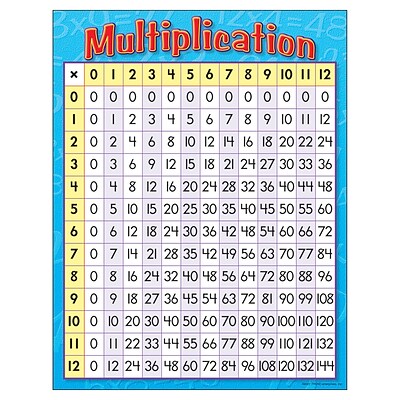
Recently I bought a multiplication chart poster
because I felt the boys were interested in multiplication and their brains were kind of yearning for it.  (Although I deeply, deeply believe in rote memorization of multiplication, it is not going along with unschooling and I think they are going to end up with their calculators.)  I do find the kids clustered around, studying it.  They call me over and ask me questions.  They notice patterns. 

Tuesday, September 5, 2017

Beginning of No School

Yesterday I finally filled out the paperwork for NYS and sent it in.  The 11th grade IHIP (individualized home instruction plan) was fairly simple--oddly, I find high school paperwork a lot easier than elementary school.  The boys all had previous year's paperwork that I could use except for 5th grade for Elazar.  I have done it 2x before with the girls, but apparently it was before things were in the cloud and so I had to make a new IHIP for him.  A tip that I use for Math and Language Arts is to google "5th grade curriculum" for the subject I want, and then copy the ones that are most likely to come up or that he already knows.
Excerpt from math:
- learn to choose, describe, and explain estimation strategies used to determine reasonableness of solutions to real-world problems.

- estimate quantities of objects to 1000 or more, justifying and explaining the reasoning for their estimates.

Examples from Language Arts:  
- Compare and contrast the varieties of English (e.g., dialects, registers) used in stories, dramas, or poems.
- Use context (e.g., cause/effect relationships and comparisons in text) as a clue to the meaning of a word or phrase.
- Use common, grade-appropriate Greek and Latin affixes and roots as clues to the meaning of a word (e.g., photograph, photosynthesis).
- Interpret figurative language, including similes and metaphors, in context.
- Recognize and explain the meaning of common idioms, adages, and proverbs.
- Use the relationship between particular words (e.g., synonyms, antonyms, homographs) to better understand each of the words.

Even though we unschool, Elazar is involved in these activities.  Mainly from youtube videos, which are pretty sophisticated and have introduced him to most of the above concepts.

Chana started college Russian.  Since she came home from Japan the day that class started and took a couple of days to recover, she only had about 3 days to do the first week's worth of work.  It was a bit overwhelming in addition to figuring out the online system but I think she got the hang of it.  She hasn't asked for any more help.  And yesterday she went to Gulliver's Gate Museum (#socialstudies) and there was Russian there and she was able to read it and look up some of it online.  So she's already happily using it.

I signed Jack up for engineering once a week and Jack and Aharon up for Science class once a week.  We also have parkour once a week.  Elazar adamantly refuses to go to science class (for the older grades there is more talking and sitting and less hands-on activity so I agree with him).  Chana started Gemara class 3x a week and has already asked me about Bahaaloscha and Dovid and Golyas in the last couple of days.  I also hope that she will continue her once a week math sessions with her friend.  The $200+ chemistry set that I bought at the beginning of the summer continues to be unopened.  I wonder if I should hire someone to do chemistry experiments once a month with her.  I'll ask her.

Aharon and I reviewed the aleph beis today and he only knows them in order.  When I pointed to them and asked him if he knew them, he doesn't know most of them.  He did not want to review nekudos and was not interested in learning more.  Aharon is somewhat unhappy socially.  This is not a new story and has been somewhat of an issue for years.  Because the boys are close in age, he doesn't have his "own" friends.  I would have sent him to preschool because of this except that he was a particularly aggressive toddler and I didn't want to send a biting and smacking preschooler to preschool.  Now that he has outgrown that, I did send him to camp this summer so that he could branch out on his own and make friends his own age.  But he wasn't happy in the second month.  And in fact, one of the boys in his bunk that he liked actually plays a lot with Elazar.  So I have to schedule separate playdates (because the boy only plays with Aharon if Elazar isn't there) and it often doesn't work out.  Elazar is extremely social and extremely proactive about making playdates.  So he often has already arranged a playdate before Aharon even thinks about playing.  So this is an ongoing issue that I am grappling with.  If I knew he would be happy, I would consider sending him to school.  But he was unhappy in camp.

I've been making some effort to daven out loud as many mornings as I can and sometimes I hear the boys humming the tunes.  

Overall, the boys are pretty proficient at English reading and doing basic math problems.  I want to learn with Elazar and start a daily seder with him but he is extremely uninclined.  As usual, I go back and forth between thinking I should just unschool and leave it all up to him.  And feeling concerned that I am not being mechanech him about how important Torah is by not doing it regularly when he is old enough.

Also, their playroom is utter chaos.  I think it's time to remove a lot of things that they aren't playing with anymore and revamp it.

That's my news.  Happy unschool!

Friday, June 16, 2017

4am fractions

Kiisu (that's Chana's Japanese name, which we have taken to using) took the CAT test this week.  As per homeschool regulations, 7-12 graders in our state have to be tested every year.

In my facebook memories from 2011, there was a post about testing reminding me why I unschool.

This year we were armed with a 504 and extra time.  (I don't know how to make this happen in homeschool.  It is only because she needed it for her 2 classes in yeshiva that she got this accommodation, which gives her extra time for testing, and since last time she took the timed CAT test she was unable to complete it in the alloted time, I applied it).  So when she needed up to double the time for reading comprehension because her preferred method is to read something slowly four times, she had it.

The Math sections drove her nuts a little.  The math was all things she's done and forgotten long ago.  Long division.  Fractions and decimals.  I'm pretty sure she got the required 33rd percentile but she was frustrated to tears.

To "study," we had reviewed some basic fraction-decimal-percentage facts.  She quickly remembered most of how to work with fractions with the reminder.  Some things she remembered the mechanics, but didn't "get."  The next day, she asked her friend (who is a homeschool high school senior and also tutors her in ACT math every week), who explained it to her.  But then the next day on the next section, when she encountered some conversion problems, she again struggled.

Last night I was awake in the middle of the night and Kiisu and I ended up hanging out for a bunch of hours until the sun rose.  (Yay for random insomnia and nocturnal teens.)

We were talking about converting fractions into decimals and she was telling me how her friend told her to do it.  And she didn't remember learning it that way from me.

"Yeah, that's not how I do it," I said.  "I think my way is easier and makes more sense."  I explained how the fraction line means "to divide" (which she's heard me say a million times during algebra) and how you move the decimal place over.

"That's what I don't get," she said.

It was pitch dark, and we were just chatting desultorily about fractions to percents.  There was no purpose, no lesson, no point.  No pressure because we weren't trying to achieve anything.

"You know, maybe you never really wrapped your head around the whole fractions thing," I said.  "You didn't get it in 3rd or 4th grade and while eventually you did understand how to do it, I'm not sure you ever really spent a lot of time thinking about how it all worked conceptually."

But as I said that, I realized that she did understand fractions, pretty much.  "You know what might help you?" I said.  "Maybe you aren't really getting the relationship between fractions, decimals, and percents.  And I think it's because I left something out.  I never taught you this--and I think it will all make sense."

And I told her about something that I did in school in first grade when I was a kid.  And spent many hours on, in many of my elementary school years.  I had never taught it to her because it hadn't really come up.  (Not because I didn't have a cardboard hands-on flip number chart that taught it that she never wanted to play with and that I eventually konmaried, because I did.)  I taught her Place Value of numbers.  Hundreds, tens, and ones I barely had to teach her because they were so intuitive and it was clear exactly how that worked.  (See? We said to each other.  Kids spend hours doing that in school but when you are older it's quite simple and quick to grasp and makes perfect sense.)  Then I introduced her to tenths, hundredths, and thousandths.  And working with 50%, 0.5, and 1/2.  And tenths being actual 1/10ths.  And 0.25 being 25/100ths and also 1/4.  And 1 being a whole and 100%.

We were just playing around.  Talking about it because she was genuinely grappling with trying to understand conversions.

And when she understood it, it was so enjoyable for her.  She was absolutely delighted about how it all fit together and how it all made sense and how they were all talking about the same relationships.

I looked at the clock.  "It's 4:30am," I said.  "We've spent a half hour in the middle of the night learning math for fun."

Then she told me about how her friend was teaching her derivatives and how interesting it was.

Unschooling math looks really different than how I thought math would go.  It's a process of learning to trust and learning to let go.  I thought that since she loves math, she would learn geometry, learn trig.  Instead, she loves fiddling with math.  

I have so many things that I want to teach my children, that I want to share with them, that I want to give them.  But so often trying to do that causes friction, conflict, and stress.
And it's amazing what happens when you make space for what they want to learn and follow their lead.


Tuesday, January 17, 2017

January update

Elazar and I finished the second Pippi Longstocking book, which he loved.  Last night I tried reading The Time Machine.  He found the beginning boring, which I remember from when I was a kid finding it overly technical.  So tonight I will skip forward a bit to the time travel and see if that helps.  Otherwise I'm not sure what to do next.

The boys have been doing a lot of math.  I wish I paid more attention because I'm sure a lot of people wonder how unschooling works with math.  Let me say that they spend lots of time pondering math concepts.  I mean weeks.  Aharon (5) will ask about google or what comes after google over and over once a week for a month.  Jack (7) asks questions like "Is 3 hours 213 minutes?"  And I'll say, "No, an hour is 60 minutes."  And about twenty minutes later he'll say, "120 minutes is two hours?"

It's an amazing thing watching them play around with numbers and think deeply about it.  And all three of them are able to do basic arithmetic and real life word problems, that come up all the time, most days.

I've been paying attention to the kinds of words they ask me to spell for them during the day.


ELAZAR (9):
passage, what, suddenly, down (thought it was "a"), turn (thought it was e), stone (wasn't sure if has an "e" at the end), was (thought maybe "whas"? No, that's what), now (a?), new, spaghetti, pizzeria, dragEn? would.
What is after "h" in "hours"? I said "ou" and Jack said "r"
What's after "b" in "burger"
Wanted confirmation of spelling of outer star
ocean, kraken, cheetah, cowboy outfit (Aharon and Jack both helped him), somebody, roll, extreme, garden, vortex (we argued over whether or not there is a "T" at the end), missile

JACK (7):
Jack actually doesn't need a lot of spelling help and can mostly spell what he wants to write.
nation, version, count (I said "cou" and then Elazar took over), want, allowed

AHARON (5):
Is this how you spell "I'm recording"
How do you spell "do it"? I said "d-o. space. What do you think?" Elazar took over
"we are the goblins", lego universe (found it when I was up to r), treehouse tycoon (found it after treeh), get eaten
eaten
eaten a 3rd time and I said,  "You know how," and he did, "come in,"
"youtube tycoon.  I know how to spell tycoon"

So you can see that they spend a lot of time helping each other out and that I don't go to them to practice but they are finding that they want to know things because they are searching for games or videos.

Wednesday, February 17, 2016

high school chumash and other high school subjects

Chana has been expressing discontent with going to school for a while.  She doesn't like sitting in class for an hour, she finds a lot of it boring, she doesn't like the kids.

This is not exactly how I've been experiencing it.  The girls seem very nice and eager to be friendly to her.  When I've helped her study, I've been very happy with the material she has been learning.  She has spoken about topics that were discussed in class, and I love that she was thinking more deeply about those issues.  There were a lot of things that I don't think we would have done together if we were learning ourselves.  And of course there is no "class discussion" when it is just us.

However, she has been complaining about going in every day and saying that she doesn't want to go.  This has been a source of tension between us, and a source of great pain to her.  It was getting to the point where she was crying when I dropped her off nearly every day.

I was in a lot of conflict.  I am in a lot of conflict.  I still feel like she needs socialization (ha! The dreaded "s" word!  And I'm a homeschooler speaking such!) and that she needs more time to get used to the girls and to hopefully find someone she can become closer with.  On the other hand, it certainly occurs that people go through high school without making close friends or really feeling like they belong with those people.

I went to speak to the principal, and as she has been all along, she blew me away with her kindness and flexibility.  She offered that Chana can try other classes, can switch around classes, can try classes in other grades if we think that will work.

When I told Chana she can stop going, she was so grateful that she agreed to do all my favorite Rambans with me, since I can't rely on school any more for her skills work.  So I have to compile a list of those to go through.  I'm beginning to have that giddy feeling of so many possibilities (Abarbanel, Nechama Leibowitz), which I always feel when I embark on a new homeschool adventure.  This usually being way out of touch with reality.  I remember drawing up a whole schedule for the first year I was doing two grades, 6th and 1st, for Sarah and Chana.  Our schedule ended up being nothing like that.  I had to drop a lot of things that I wanted to do (most memorably Mishna) and really prioritize.

When I asked Chana if she could pick any class in high school, what would she want, she asked for a math class.  She has not been delighted with my math teaching.  (Nor was Sarah before her.)  Since I really want her to experience Judaic studies in high school, I decided to purchase Teaching Textbooks.  Chana originally said that we could finish up geometry and get it for Algebra II.  But I am struggling a bit with geometry and this is made for homeschoolers and is specifically designed to talk straight to the student and leave the mom out of it.  Sounds perfect (though I do love learning Math with her and sharing my joy in it, I am really not a clear teacher and she's suffering for it).  It was pricey at almost $200, but that is a lot cheaper than a tutor and I hope she likes it.  I was considering buying a version off ebay for $75, but I wasn't sure if it was the version that grades itself.  I consulted with Ari and he voted for the new version.
Chana will have to do it every day and be in charge of herself.  I assume if she likes it and it is interesting, she'll do it.

Up until now, Chana was point blank refusing to take any classes in the high school next year.  But now that she is dropping one class (she is continuing with Torah she'baal Peh), she is so much more relaxed and cheerful.  She will look at the schedule come June and choose a class to go to.

So I'm feeling pretty sad that she dropped Chumash and sorry that she won't be learning all the things she was learning that I thought was good for her.  I'm concerned that she won't have the opportunities to make friendships and relationships with the girls in her grade.

On the up side, Chana is hugely more relaxed and happy.

On another note, Chana and my study of Eisav has been going nicely.  I'm not doing heavy mefarshim and often we are left with more questions than answers and she doesn't like the answers I give to the questions we ask, but it's fun and that's what is important.

Questions:
Why is Eisav called Edom just because he wanted red soup?
(We talked about how it showed a character trait to trade everything for soup and how he didn't even call it soup, but "that red stuff" but she wasn't convinced.)
What did he mean when he sold it because he is dying?
(We talked about that he took risks and figured he'd die before his father [unconvincing] or that he felt what is the point anyway, since he's dying.)
Why did Rivka's argument "the curse will be on me" if Yaakov got caught convince Yaakov?  Yaakov was still responsible because he agreed to it.  And if Yaakov gets fired from a job, his mom saying, "It was my idea" isn't going to convince the boss not to fire him.

Tuesday, February 2, 2016

One of the things I really love about homeschool is that there is no especial rush to get something done.  That means that when we happen across a problem like this, we can chill out and spend over an hour fooling around with it, solving for every single angle in the diagram in terms of x, and then taking our time solving it, so that it's an exploration of the principals we've been learning.

And, as we were working on it, Chana asked if we can please revisit it in a few days to see if she can do it herself and more smoothly.


And I just have to say, yet again, how astonishing and wonderful it is that Chana enjoys playing around with math like this.  And how having the freedom to leave her alone when she was struggling with math for over three years and then pick it up when she wanted to has given her the delight of enjoying math and the confidence that she is mathematically inclined.

I think in school there is often a rush to get through the curriculum.  And it would probably be fun for students to do challenging problems "b'chevrusa," working it out together.  That's assuming that they aren't petrified and stressed by math.   There but for the grace of homeschooling go we.

Wednesday, December 30, 2015

Back to Chemistry for a couple of days

Well.  So much for skipping some of the more mathematical parts of Chemistry and just moving on to Biology.  Chapter 3 in the AP Bio textbook is all Chemistry.  Luckily, the work we did in chemistry this summer provided an excellent foundation and it gave us no trouble.  But now we are up to molarity and molality.  I skipped a few of the more mathematical topics in Chemistry specifically because we couldn't find an enjoyable book.  So today I was scouring the internet for websites that would explain moles in a fun way.  It took me a few tries, and I consider myself a champion googler.  I can't remember which search finally hit jackpot.  I was searching "fun chemistry moles" "easy chemistry molarity" "chemistry is fun" but nothing gave me that perfect blend of technical math and clear explanation like I discovered with Mr. Parabola Guy.

I gave up and went back to the textbook, only to turn back to the internet for another attempt.  This time we got lucky and found this site, which looks like it will be helpful with the math.  But it wasn't fun and basic enough so I bookmarked it for after we finish with this, which looks fabulous, but it sent us to an even more basic page about what a mole is.  We did half of that today after scientific notation, and I'm looking forward to using it to explain the relationship between moles and atomic mass tomorrow.

I love how all the sciences are interrelated and we can just pause in the middle to spend some time digging a little more deeply into some background information in another branch of science.

I love that we have no time pressure and no test pressure and are exploring what Chana wants to know.   I love that we can take 2 years to learn Biology and take detours into chemistry and physics.  I love that we found a great website for explaining the chemistry we were looking for.  I love the internet.  I love how Chana's mind has expanded.  I really would like to start thinking about how to introduce her to Torah on a deeper level.  We are in Nitzavim now.

Tuesday, December 1, 2015

Two really frightening gaps in unschooling education

Last night, Jack (almost 6) mentioned to me that he figured out a lot of ways to make 10.  6 and 4, 3 and 7, 8 and 2, 9 and 1.  He explained to me how he took both the fives, and then took some of the five and gave it to the other five, so that he got different combinations.  I just loved how he was playing with numbers, the way I've read about.  And I know that leaving Chana alone about math had no long term negative effects and, in fact, was only wonderful.  She asked for a year's break after Algebra but recently told me that she thinks she will be ready to start Geometry in January.

Elazar is in 3rd grade.  I thought that he would eventually wonder how to borrow and regroup.  But he is still plodding through addition the long way, adding one by one in his head.  When I want to show him to juggle numbers around, he doesn't listen.  He likes doing it the way he is thinking about it.  I wonder if, with calculators all around, he may never study the nuances of borrowing and regrouping or long division.  I don't teach square roots anymore, even though I learned how to do it in elementary school (thought it was cool, and promptly forgot it).

I wonder if he will learn his multiplication tables.  I've already seen in the past decade that most students don't know them.  I drilled the girls.  Will I drill the boys?  I believe it is good to know them at your fingertips.  But do I believe it enough to prioritize it?  I'm not sure.

But the craziest thing that the boys are skipping is writing.  They type.  They know their letters.  They are learning to read and can communicate in writing (if by writing we are referring to email and text and storywriting on the computer).  But they don't physically write.  I wrote a (physical) letter to my friend a few months ago.  It was excruciating trying to keep my handwriting legible as I can't write as quickly as I can think (or type).  My hand ached.

Unschoolers learn what is useful and what is enjoyable.  It's a little scary.

Friday, November 13, 2015

In Praise of Homeschooling

I don't usually rave about homeschool.  I love homeschooling for a lot of reasons.  I love how relaxed it is, I love how fun it is, I love being with my kids all day (despite that being just about the #1 comment I get: "How can you be home with your kids all day?")(To which I always respond, "How do you get them out in the morning and do homework?"), and I love the educational aspects.  I love child led learning.  I love hands on learning.  I love learning that is real and meaningful and motivated.

But all that aside, those are all about my personal feelings about homeschooling.  Today I want to talk about the absolutely miraculous thing that homeschooling did for my child.  Today I want to talk about Math.

If you search for all the Math blog posts I wrote you'll know that Chana was completely unschooled until 3rd grade, when we started doing Chumash.  Everything else was unschooled.  A lot of math came up naturally, but Chana got stuck at fractions and simply didn't understand them.  Every few months I would try, and she just wouldn't get it.  So we just stopped doing math.  It was very terrifying for me to not be teaching math.  But I just felt she wasn't conceptually ready to understand it for whatever reason.  So for three years, no math except an occasional lesson or discussion that came up.  (For example, today Jack, first grade, saw an itunes gift card set with three cards at $10 each.  He asked how much all of them were and I asked him what he thought and he said $30 and I showed him where it said $30 in the top corner and it was very exciting.  An hour later he asked me how many tens made 60 and 50 and then figured out that two tens are twenty.*  He might ask me more questions and we might not talk about math for months.)

Although I was concerned, I also felt that pushing fractions when she didn't understand them was not an option.  As it turned out, in 7th grade, Chana decided she wanted to go to high school, and I said, "Then we'd better do math."  And all the magical things I had heard about unschooling were true.  In three months, Chana easily learned three years worth of math.  It was gaspingly, shockingly, astonishingly easy.  It was fun.  It was pleasant.  It was wonderful.

But the best, best, best part was what didn't happen.  I didn't watch Chana's self esteem erode.  I didn't watch her struggle and fail at math.  I didn't watch tears and misery and hatred of math emerge.  I didn't even watch her dislike math, plod through math, or be bored by math.  She wasn't intimidated by math or stressed out by math.  She doesn't think she's "bad" at math.

Why?  Because when she was having trouble understanding it, there wasn't a class to keep up with.  She didn't have to learn on a schedule.  There was no rush.  We had years to play around with.  We had the luxury of flexibility and the luxury of waiting.

The reason I'm bringing this up now is because Chana was in class today (she attends two classes at the local Yeshiva high school, for Chumash and Torah sheba'al peh) and one of the girls asked her, "Are you good at math?"

"...Sure," Chana replied.  (When she told me this story, I thought, "Sure?!  Sure!?  Do you have any idea what the answer to that question could have been if we hadn't been homeschooling!?"  No, she has no idea!  And I'm glad.)

So the girl asked her for help with an algebra problem.  Chana told me that the problem was very easy.  She showed the girl how to do it, and the girl didn't understand, so Chana explained why it worked that way, and went into some more detail, and the girl was so happy that she now understood it.

Wow.  Just wow.

_________________
* We are such a homeschooling cliche.  Doing math at the post office.