Showing posts with label siblings. Show all posts

Monday, February 4, 2019

basement take a bazillion


So Elazar was pretty happy with the no clean up policy.  And they've been crafting like fiends very happily.

But then.

Shabbos came.  And I didn't want football upstairs.  (Even though there is Yes Ball Playing in the House.)

But there was no place to play downstairs.  Because the floor is FULL of...garbage? Craft ingredients?  Whatever it is, it's not clear for ball.

Image may contain: food

A friend of mine suggested I partition the basement so they can both have their needs met.  Great idea! 

So today, I asked Aharon what kind of space he needs for tossing the football.  And then I told Elazar I'd be moving all his craft stuff to one area and he has to confine his crafts to that area.  He does not have to clean up his craft area.  But Aharon's football space must remain clear.  We duct taped Aharon's space (from one end of the room to the other, lengthwise).  

Hopefully this will work.  And if not, I'm getting used to adjusting to different needs in different phases.  We'll keep trying.


(The duct tape in the middle and the right is my path.  I'm graciously allowing my path to be included in the football area.  All crafts shall (hopefully) stay 
to the left of the line.)

Wednesday, December 19, 2018

Quality of Life

Despite unlimited multimedia, I saw Elazar playing with these earlier today.  When I walked by later, I noticed he had left a little design.  Every time I walk by it, I smile.

I realized this morning that hassle of getting Chen's paperwork in to apply to college aside, my life is pretty calm these days.  Around three or four years ago, when my youngest was leaving toddlerhood, life took a turn for the easier.  The constant, unrelenting childcare began to ease.

But today I was thinking that I can't remember the last time one of them cried.  In fact, I think I've cried more recently than they have.  Considering that most of my day used to be spent with little people crying and throwing things at me.  I remember when the first two hours of my day, from 5:30-7:30am, were of my two little ones tag teaming me crying. 

Even when the older two boys edged out of the constant crying, my youngest was quite a crier.  Walking to shul always entailed him collapsing in the middle of the street screaming.  We thought of him as the hulk--usually pretty even tempered, but "you won't like me when I'm angry."  I couldn't understand how my youngest child's temper tantrums were wiping me out when I could remember juggling three (sometimes four) tantrums at the same time.  But after age 4, his tantrums became more...robust, I guess.

Then there was the stage where the older boys went to bed late and the little one just couldn't keep up.  Either bedtime was excruciating as he fought it, and/or the next day was difficult as he was too tired, and thus more prone to irritability (read "the Hulk"). 

Then, one day, he grew up.  He could tolerate going to sleep late.  He began sleeping later in the morning.  I let him go to bed when he wanted to and many days he put himself to sleep when he was tired, knowing if he wants to, he can stay up with everyone.  Even if he was tired, he functioned the next day.

Like I said, I haven't heard them cry in ages.  They have disagreements.  I try to be there on hand to help them talk through it.  The tactics we use are:

  • Eye contact.  Look at the person as you express your complaint
  • Take turns.  Don't interrupt.  Wait until the first person has completely expressed everything he wants to say.  Then it's your turn
  • If someone says Stop, or Don't do that--respect that.  (That often doesn't happen in the course of roughhousing or teasing or sublimated aggression.  When they bring me into it, I am the superego who reminds them that verbal communication is ideally listened to on the first try.)
  • פשרה, Compromise.  A lot of times the solutions they come up with are not what I would have thought of.  I'm thinking "fair" but they think about working it out.  
  • Don't leave the conversation until both parties are satisfied
My main point?  Life is more pleasant when you're not being cried at all day long.  Perhaps this is an obvious point.  But a stay-at-home mom with small children may not even realize how much emotional energy is sapped by being cried at constantly.

(Irony--as I was writing this, Elazar started crying because his plans for buying a sushi making kit [which he'd been planning for a few hours] didn't work out.)  
(Update--he sobbed in my lap for 5 minutes, then went out of the room and figured it out.)

Wednesday, November 7, 2018

Full Steam Ahead

Aharon, age 7, has been asking to read the aleph bina every night. He's making good progress. I think his motives are to catch up to or be ahead of his older brothers, who only read at avos u'banim. Elazar still dislikes reading at age 11. Moral of the story: unschooling seems to work if you are a little brother in competition. Can't speak about the rest at this time.

Sunday, November 19, 2017

Lazy Sundays and the Baby/Toddler Years

I once spoke about unschooling and said that our every day is like Sunday.  Meaning that relaxed day of the week where you wake up and have no responsibilities and obligations and can relax, take your time, and do whatever you want.

Today IS actually Sunday.  I woke up early and read in bed for an hour.  Aharon (6) is finally sleeping late.  He came in to say good morning and went downstairs, leaving me to lie in bed a little more.  I came downstairs and davened out loud so Aharon could hear me.  It's Rosh Chodesh, so every time I saying "beis Aharon" I paused and pointed to him and he filled in "Aharon" to give him a little thrill that davening has his name.  Just as I finished singing, Elazar came in from a sleepover.  He davened (Ari's been working on him reading the first line of birchas hatorah, baruch she'amar, ashrei, shema, and shemona esrei) and then had breakfast and went to another playdate.  During breakfast he asked me why he has a hard time realizing when he's hungry.

Jack found a k'nex set and is sitting with the neighbors doing it.  Aharon is watching.

I watched a chemistry video song parody and noted which parts K and I have learned together and which parts she doesn't know yet.  I sent it to her to enjoy.  We'll probably go on a long walk later.  Maybe we'll try to time it with sunset.  We finished Pride and Prejudice and watched the BBC miniseries, and we are planning to watch the movie, the 1940s movie, and PPZ (Pride and Prejudice and Zombies, which I hear is surprisingly decent).  We have to pick something new to read.  I have The Most Dangerous Game and Lord of the Flies.  I'm also thinking about Mila 18.  But it would be nice to find something funny.  She wants to reread The Importance of Being Earnest.  I already know that her personality is that she likes to go deeply into things rather than study many things. 

Then I looked up Wales because K and I were looking at the map yesterday and couldn't find where in England it was.

A homeschool friend of mine expressed this week that she is putting her preschooler into preschool and she feels like a failure.  Aside from the fact that I know homeschoolers who davka put their preschoolers in school so that they could teach the older kids.  And aside from the fact that there is nothing wrong with doing things for your sanity or for the benefit of the family as a whole.  And there is nothing wrong with having some kids in school and some kids homeschooled.  (Or putting your kids back in school, if that's what you decide for your family.)  I realized that I never really was in that situation.  I had very large spaces between my two older ones.  So I was usually only teaching one older child when there was a baby/toddler.  And the boys are kind of growing up close together so there are no babies/toddlers now.  I remember when homeschooling was a blur of trying to teach one older child while having a baby and two toddlers.  But one older child doesn't take that much time to teach.

Homeschooling with no babies and toddlers is a really different time of life.  I have a full night's sleep (except when my worry about my teenager gives me insomnia).  My house isn't as messy.  Things are more relaxed.  A friend of mine, a veteran homeschooler with six children, told me that every year a baby is born is a lost year homeschooling.  And I tried to remember that piece of wisdom as I lost years.  I lost months to nausea, months to tiredness, months to doctors and medical situations, and months to being not optimally functional.  And I worried, how will my children learn if I am always too busy or tired or overwhelmed to teach them?  It was a constant, in-the-background kind of worry for those years.  Unschooling did alleviate a lot of that for me because the focus is more about spending time and being mentally present with your children and less about "teaching" them.  I suppose eventually the kids grow up or you have enough older kids to form some sort of rotation of childcare while you teach.  Every family juggles it differently, but there is no question it is a juggle.

Have I mentioned that the kids are really enjoying the multiplication chart on the fridge?


Thursday, September 28, 2017

Sometimes it's nice to acquire more tools for the toolbox

So you think you settle on an approach, and then kids change, or what worked for one kid isn't working for the next, or you change, or you understanding things differently.

Lord knows I moan about being conflicted about unschooling vs teaching until even I am sick of hearing myself.

I want to talk about sibling rivalry for a bit.  When my kids were 5 or 6 years apart, there wasn't that much sibling rivalry.  When my kids were 2.5 yr and 17 months apart, sibling rivalry became part of my daily existence.  I've waxed eloquent about the bullies2buddies methods and how useful they are.  He gives actual scripts to use, which have been very helpful.  I've even written to him with questions and he has helpfully written back.  I stand by this method and I really love it.  I combine it with playful parenting, which means that I try to take aggression as a cue that they need active and playful wrestling/roughhouse type attention.

I have found this to be more robust and more fun and efficient than what I used to do in my twenties, which was to sit the kids down and have them make eye contact and share their feelings and take turns speaking and make sure they both have a chance to talk and feel they are being heard and brainstorm for solutions. (It even is exhausting to type that up.)

And then.  

I'm in a radical unschooling group.  You think I'm unconventional? :-D I don't qualify as a radical unschooler.  These people are fully committed to unschooling not just academically, but as a way of interacting with their children in every way.  This affects bedtime, meals, discipline, and all sorts of areas.  Some of the underlying principles are abundant generosity and respecting your child as a human being.

So I'm reading with interest, and they start talking about sibling rivalry.  Here is a link (with further links on the bottom of that page).  What sparked my interest is how many of them expressed that leaving the kids to deal with things on their own was not something they would do.  A lot of unschooling (contrary to popular assumption) has pretty hands-on parental involvement, having the parent there coaching, helping, empathizing.

Since this is exactly not what bullies2buddies advocates, and since I am apparently exceedingly defensive and a glutton for punishment, I kept reading.

The truth is, even using bullies2buddies I do keep a fairly close eye (looking for these factors).  But I have heard many people speak about how they felt that they were brutalized by unequal sibling situations (my own sister included, with me being the manipulative and obnoxious older sister), so I wanted to see what advice there was.

What I got from it (though it generally astounds me how much I don't grasp in the first few readings of things) is, like the other radical unschooling principles, to approach their conflicts with a genuine desire to hear both children's needs and a strong desire to help them get their needs.

Obviously, in a sibling rivalry situation, two sets of needs are in conflict.

And I still use bullies2buddies in the sense that I don't go to them or stop them while they are fighting.  I'm usually sitting in the same room or close by, and they know they can come to me.  I still use a lot of the same scripts from bullies2buddies.

But now there is an added component.  I really try to understand what is deeply upsetting to each child (as opposed to in the past, where I was mainly focused on finding solutions.  Yes, I empathized, but I never get really worked up about lego like they do).  I hope this attempt to understand naturally gives them the sense that their needs are valued by the family.  I think it gives a different tone to the arguments.  There is a sense of "both of your emotional/practical needs are important.  What can we do?"

This played out a bit yesterday when (naturally, just about 10 minutes before I had to get ready to go to work), Jack came in screaming that he had a lego set that he couldn't build last year, but THIS year he can, but Elazar made a fidget spinner with an important piece.

Basic bullies2buddies script, I didn't get involved, I agreed with Jack that he has rights over that piece.  Jack left.

In comes Elazar, blazing in fury that Jack just took his fidget spinner and broke it.  No warning, no discussion, just grabbed and broke.
Well.  I agree with Elazar that this, too, is unfair and upsetting.

Looking at this in the framework of the radical unschooling, I perceived that both of them make perfect sense.  Both of them have claims.  Our goal is a peaceful, happy home for all members of the family.

Perhaps this is obvious.  It was not obvious to me.  It was not clear to me to view conflicts or sibling rivalry in the framework of a goal of having a peaceful, happy home for all members of the family.

As I said before, obviously not all members of the family can be peaceful and happy at all times.  By definition, if there is more than one person, then there will be conflicts.

But I don't know that it was ever so clear to me to enter conflicts with the idea that each person's peace and happiness is a priority to us.  So if there is a way to work it out and that increases your peace and happiness, that's what we are trying for.

When that is the goal, peace and happiness becomes an abundance mindset, not a scarcity mindset.  Everyone becomes more generous because there is a security that the family goal is as much peace and happiness for every individual as we can work out.

So Elazar agreed that Jack had the rights to take the piece back.  He objected to the manner in which it was done.  I asked Jack to look at Elazar and for Elazar to say how he feels while looking at Jack.  Because Jack knew that his claim of the piece was protected, he was able to look at Elazar and hear his pain and see the effect it had on Elazar that he took the piece so abruptly and without discussion.

Part of the abundance mentality is that Jack readily agreed to rebuild Elazar's fidget spinner.  And to even improve on it so that it worked.

A follow up blow-up occurred when Elazar was not satisfied with how Jack fixed it.  (I even overheard Elazar say to Jack, "Should we work this out later?" because they were in the middle of cleaning up the neighbor's playroom when this argument went on.)

Again, the goal of peace and happiness for everyone is such that Jack agreed to keep trying until he found something that satisfied Elazar.  But it was also agreed by everyone that the original piece--belonging to Jack--was not an option and if that was the only piece that would satisfy Elazar, Elazar would have to compromise.  Jack did try and Elazar did graciously accept a lesser vision of his fidget spinner (albeit one that functioned better).


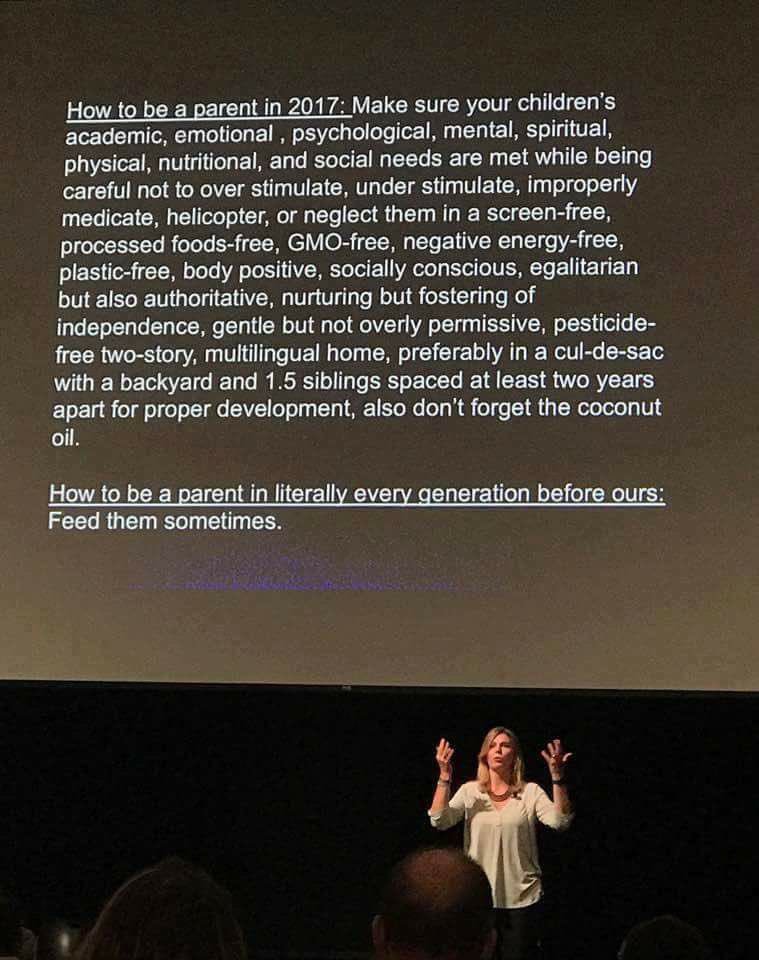
Wednesday, March 2, 2016

day 3 of not nagging

It's 6:45 and I haven't brought up schoolwork with Chana.  She was out today so she's probably recuperating (#introvert) so she might not think about schoolwork until I'm in the middle of bedtime with the littles.  It's Wednesday night when we usually read Dracula together, so we'll probably do that at about 9:30.

Either Chana and I will get into a better dynamic where she takes charge of time management and arranging when we will work together.  Or I will crack and probably speak to her in an irrational and ineffective manner.  I'm aiming for when I do crack, to speak calmly and just ask her to pick a time to work with me that day.

I am trying to avoid me being the timekeeper because a) it's no fun and then I'm the annoying meanie who interferes in her life and b) she's not doing things for her own sake.

The reason I'm in conflict about that and still dragging my feet on 100% unschooling is because deep down, I worry that she will not hit the books as hard if she doesn't do it regularly and frequently.  But as I write this, I wonder why I worry.  Do we really need to do Bio so frequently?  If she likes it and it is interesting, she will want to learn it.  Why hassle her?

Yes, I worry about the Torah piece.  But our recent learning has been very pleasant together.

Tuesday, April 7, 2015

seder 2015

I want to preface this by saying that Ari thought the sedarim went great.  The following is my perception.

I found the chinuch aspects of the seder difficult to manage this year.  And I think this is relevant to homeschooling multi-age, multilevel children.

We started off with good preconditions for the seder.  I was remarkably relaxed.  The cleaning and cooking and prep seemed very manageable this year.  (Having to do with no Shabbos Chol Hamoed and no 3 day yontif, I think.)  We were having company for day meals (18 ppl both days) but the sedarim were just us.  That meant that we didn't have to take anyone else into consideration and we could do what was good for the children.

Elazar routinely stays up until 11ish.  No problem.  Jack can easily stay up until 10 or 10:30.  Aharon, age 3, fades around 8.  Just when the seder is starting.

Both nights, I was profoundly glad that we were in our own home and that we had no guests.  Ari said that sippur was great with the boys.  I was fielding the tantrums and the fights.  The boys were high energy, wild, active.  Just the sort of behavior that three boys ages 3-7 have past their bedtimes.  That in itself was okay.  Like I said, I'm glad we were home and their behavior wasn't inappropriate or disturbing to others.

But there were two other parties at the seder.  Sarah and her husband, and Chana, the teenager.

And here is where I felt like I was in one of those homeschool situations, trying to teach too many levels at the same time and simply being unable to.  In theory (back when I wasn't unschooling and used to teach) in a homeschool day, I choose the divide and conquer approach.  Older children do what they want or help with the youngers until it is their turn while I work one on one and rotate through the subjects and the children.  In this case, at the seder, I actually had help because Ari was doing half the "teaching."  But I was left with five very disparate situations: 1) a young man who was having his first seder away from home, and who was used to long and technical drashic discussions, 2) a young woman whose mind was awakened to knowledge and who thirsted to have the story discussed in the framework of our history and our current lives, and 3) a teenager who was bored out of her mind, 4) fighting children and 5) a tantruming 3yo.

I simply felt unequal to the task.  I felt like there were needs that I couldn't fulfill.  I felt that tonight is THE night charged with passing on the mesorah to the children on their level, and that it was simply not working.

I must say, that as a homeschooler for a decade and a half with large gaps between my children, this feeling was not an unfamiliar feeling.  I was sorry it was happening at the seder.  I want the seder to be a special, exhilarating night, that resulted in the littles having fun, the medium learning something new, and the olders experiencing growth, wisdom and understanding.

Perhaps I am too focused on the frustration.  Ari said that telling the story went beautifully to the boys.  Aharon asked about every single change and we had the joy of seeing him realize that something very special and unusual was happening.  Chana decided to tell me the story, and she remembered a lot of the details.  We did not come to a satisfactory resolution about why she should go over the story again when she clearly knows it.  I wanted to convey to her:

  • just because you know the facts of the story doesn't mean there is not a lot to learn about the nuances
  • now that you know the facts, you can move on to thinking about the purpose and the themes of the story
  • you can try to understand the story on a more sophisticated level
I was frustrated in attempting to explain or demonstrate these points to her by her intense boredom and by the boys needing me so much.  This, too, is a familiar feeling from homeschool, where I am trying to work with an older child and the younger ones are fighting or crying or needing me.  

The first night, was, I believe, frustrating for Sarah and Moshe.  On the second night ("second chance seder shel galuyos," I think of it as), I put Aharon to bed quickly, in order to prevent meltdowns.  And soon after, I sent Jack and Elazar up to bed, since they were extremely wild (knocking chairs down wild) and loud, even though they could have stayed awake.  Even in that case, I felt like Chana got the shaft this year.  The seder ideally would have been at her level, trying to bring her to a new level of understanding, while going quickly enough to not bore her.  Alas, she was very bored.  I felt like I was trying to navigate the needs of both parties, and ended up doing a mediocre job of both.  It was emotionally unpleasant and disheartening.

Ironically, I belong to a group called "One positive action one day at a time" and the one small action I chose was to   to let the seder unfold however and be in the moment and not have preconceived notions of how it "should" go..  I think expectations are an enemy.  I think they cause people to feel bad about themselves for not conforming to something that is in the imagination and to lose sight of the perfectly adequate and good things that are happening.  However, despite my desire to have no expectations, I did indeed have unconscious expectations, and, expectations aside, I was simply overwhelmed with the many things that were happening.  Like I said, this was a familiar feeling.  I think had I not been hoping for a grand educational experience, I wouldn't have been so bummed out by how the seder went.  But it still would have been chalked up to "one of those homeschool days."  

I believe (but don't quote me, since Chana tells me my memory is notoriously unreliable) that when Sarah was this age, the first seder we talked until she was finished, and then she sat on the couch while Ari and I went through the rest of the seder very quickly without discussion.  And the second seder (where we hosted Ari's family) she begged to be excused and reread Harry Potter.  So I know I have to be patient and be understanding of Chana's emotional and intellectual level. 

Not every day goes well.  Not every dynamic is great.  I try to think about what aspects didn't go well and if there was anything I could have done to improve it.  And keep doing my best.  

As I sit here writing this, Aharon is putting bissili on his fingers and doing arithmetic, subtraction, comparing and contrasting (all things I see in workbooks, except he's making up his own problems and figuring it out himself and thinking it is tremendous fun).  

Wednesday, December 24, 2014

Sibling Rivalry II

In addition to the techniques discussed here, there is a theory underlying many of my reactions to sibling rivalry:

I assume that a great deal of sibling rivalry is due to fighting for love of the parent.

It seems to me that children often fight with each other or resent each other because they are under the impression (and there is some truth to it) that a parent's time and attention are limited, and they are competing for their share.  Although parent love does certainly stretch (I grew up the oldest of six with this on our fridge:)
the fact is, caregivers do have limited emotional and physical resources.

There is a psychological principle that humans behave differently in an abundance mentality than in a scarcity mentality.

In an abundance mentality, there is always enough resource to go around.  People tend to be generous when there is abundance, because giving doesn't take away from their needs.  A child will share candy when there is plenty of candy.  A child will share a ball when there are plenty of balls.  I will generously let everyone eat my cereal when I know I can easily get more cereal.  There is no danger/pain/stress/negative consequence associated with giving, because there is always more.

In a scarcity mentality, there is fear, tension, and aggressive competition.  People must hoard their resources because they don't know when they will get it next, they don't know if they will have enough for themselves, and they don't know if they might have to steal from someone else in order to get their needs met, or if they might have to defend what they have against others trying to take the precious limited resource away from them.  This makes them extremely miserly about what they have and very unwilling to share.  Instead of being friendly and generous, they view others with suspicion, as competition, and as a threat.

With siblings, I always strive to create an abundance mentality.  I want to make it as easy as possible to "share" Mommy, since there is a sense that there will always be "enough Mommy."  As this is a homeschooling blog, I will note as an aside that homeschooling can make this easier, since I am home with the children for many, many hours.  People often ask, "How can you be home with your children all day?"  I find that since I have hours with them, there is a lot of opportunity to nurture the parent child relationship and to be available for the children. (This doesn't mean I don't experience burnout or that I don't sometimes feel like a wrung out dishrag by the end of the day.)  This is a conscious and underlying goal that I have as I am with my children.

In addition to being aware of the abundance and scarcity mentality and the ramifications, I have a few practical tips.

if seeing aggression, remove and give attention/love
I mentioned before how I move the child away and how I usually scoop them into roughhousing play.  But now I want to add that although it may seem counter-intuitive, instead of having an emotional response of "this child is 'bad' or 'misbehaving' or 'aggressive' or 'annoying'" or whatever negative association, maybe you can think of it as "this child is showing a need for love and attention."  Try to make loving eye contact.  Snuggle.  Roll around on the floor.  Pretend to be growling monsters.  I can't tell you how often I grab a child and pretend to growl and battle because I am trying to give them a positive outlet for the aggressive energy (and if I'm annoyed, too, it gives me a positive way to "be mad" by playing and "pretending" to be mad), and the game evolves into Mommy and Baby monster and involves a lot of cuddling and cooing and stroking and snuffling.  

Play "Mommy and Baby" with young children
A very popular game with my 5 and 3 year olds is me wearing a giant T-shirt and them climbing under it to make a pregnancy tummy, and me giving birth and then cuddling and nursing them (I give them my finger to suck on).  I speak to them in baby talk and I gaze at them like I gazed at my adored babies.  

special time
Here are articles explaining Special Time.  I have a lot of trouble with this and usually only manage to do it (if I manage to do it at all) with the child who is in the most difficult phase at the moment.  But the experts say it works and I'll add that it is extremely effective.  It also is onerous for an overwhelmed Mama to add to the list.  But the payoff is enormous.

when you are playing with one child and another comes over
I have two different approaches, depending on which child is needier.  Both use the abundance mentality.

  • I always try to welcome the newcomer as if there is infinite love and room on my lap and room for them to join

OR

  • I take turns.  If the one I'm playing with will resent the intrusion of the newcomer, I put up firm boundaries. "It's not your turn, now.  It's his turn." (I can see the one in my lap preen with happiness when I do that.) "In 5 (or 10 to 20) minutes it will be your turn." And then I enforce that.
    Ideally, the one in my lap will naturally have enough time and leave of his own accord, at which point I will go and find the next one and tell him it is his turn.  If the newcomer is hovering, then I switch turns, 5 minutes and 5 minutes.  With each switch, I try to convey that there is "enough Mommy."  You have your turn and you will get your turn.  You will get enough time.


sibling rivalry I

In Pirkei Avos 5:21 it says "ben chamishim l'eitza," age 50 is the time to dispense advice.  I've noticed that in any given scenario with a suggested action, there is a scenario which is almost exactly the same except that the ideal thing to do is the exact opposite of the suggested action.  So although I have found certain things useful and I share them in the hopes they might be useful to you, bear in mind that they might actually not work at all in your case or be the opposite of what would be ideal for your situation.

My daughters are 5.5 years apart.  There wasn't much conflict.  I dutifully read Siblings Without Rivalry before Chana was born.  It wasn't such an issue, though I'm sure I integrated the advice and that helped.  Likewise, there are 6 years between Chana and Elazar.  (Ironically, Chana played with Elazar more than Sarah ever played with Chana.)  Then we were blessed rapidly with two more boys.  Now we had three boys in row.  Age differences: 2.5 years, and 17 months.  I knew I had to get on top of my game regarding sibling rivalry because no longer was it going to be "I'm leaving the baby on the floor next to the computer while you play and going to take a shower."

This is looking like it's going to be a two part post.  First I'll discuss techniques that I've been using, and then the next post will be the main thing I've been thinking about recently.

tandem nursing
This is not usually practical or relevant to a lot of people, but I mention it because when I was about to give birth and my toddler was still nursing, I read up on it and saw mentioned, over and over, how it affected the sibling relationship positively, how close the children were from it.  And since I, too, have noticed this, and I do think tandem nursing affected my first two boys' relationship positively, I bring it up now.  My middle boy weaned himself while I was pregnant, and I am sure that had he had the experience of breastfeeding while holding the hand of his little brother and gazing into his eyes, it would have cut down on his aggression.  Unfortunately it was not an option.

hovering, blocking, teaching "gentle"
These are the tried and true techniques of teaching a toddler to handle his infant sibling.  Hover over the toddler whenever he comes near the baby; do not assume he will not hit or be rough.  Be on standby to block any hits, pinches, squishing, etc.  Take his hand and have him stroke the baby and make "nice."  I think a lot of irritation and agitation can be cut out with proper vigilance, supervision, and prevention-- which is practically difficult and exhausting to do.  But when I make it a priority I don't regret it.  It's not fair to the older one to get angry at him for being unable to control his aggression when out of the two of us, I'm the one who is mature enough to control myself. ('Cept when I'm not...)

moving away without speaking or giving off disapproving body language
When the older sibling attacks the younger sibling, intervene by scooping up the aggressor and moving away.  I don't say, "Don't hit your brother" or "we don't" or "it's not nice."  I've found they know all that already and either they want to be aggressive or they can't control themselves.  I don't bother to "teach" them not to.  I just stop it.

bullies2buddies
I've written about these concepts and techniques a few times.  It mainly involves only stepping in when there will be harm (blood, bruises etc.) and when the aggressor is not responding to genuine distress signals by easing up.  I see my last post was about 2.5 years ago, and I am reporting now that they don't fight that much, they do get into physical conflict that ends pretty quickly, and the smacks are, from my observation, usually with a careful amount of force.

Playful Parenting
When I move the aggressor away (without criticizing or scowling or negative body language) I often ask if they want to wrestle or roughhouse or play out their aggressive energy.  This has been hugely helpful in navigating their feelings.

assuming that a great deal of sibling rivalry is due to fighting for love of the parent
To be continued in the next post.


Thursday, July 31, 2014

Just an average homeschool day

"Vayedaber Hashem el Moshe..."

"Mommy, the sauce is finished!"
"Great."
"And Hashem sai--"
"I'm putting it in recycling."
"And Hash--"
"Wash the jar out first."
"And Hashem spoke to Moshe in Midbar Sinai sayi--"
"Hey, look! It made like a very thin, lot of sauce!"  He's jiggling with excitement and the very thin lot of sauce is bouncing accordingly.
"Cool.  Pour it out before you recycle it."

Chana continues reading and translating.

"Where is a new sauce?"
"In the pantry, bottom right."  Chana continues.

"Where is the sauce?"
Chana pauses. "Does he forget right when he goes in?" she asked.
"Pantry, bottom right."  Chana continues.

"I can't find the sauce in the fridge."
Me: "Pantry, bottom right."
"Oooooh."  Chana continues.

"Mommy, I put my pizza in the toaster.  Can you turn it on?"  I get up and turn it on.

Chana continues reading and translating.  Elazar hanging literally on my shoulders like a baby koala waiting for pizza.  Pizza dings.  Chana pauses.  I get pizza.  I return.  Chana continues.

Jack says he wants pizza cooked second and the neighbor said that his little sister gets cooked second because they're cooking them in age order.  I say ok.  Chana continues.  Jack says, "Tell them!"  Chana is reading around him.  I nod.  Chana reads more.  "Tell them!!!" Jack insists.  I tell Jack to bring in his pizza.

Chana keeps translating.
"Mommy, where is the pizza cutter?" Chana pauses.
"Dishwasher."
"Which one?"
"Milcheg."
"Black or gray?"
Chana gets exasperated.  "Elazar, I'm doing chumash now!"
"Gray."
Chana says, "How do you say black?"  I say, "Shachor."  She said, "Afor and Shachor sound similar."  "Yep."  Back to Chumash.

Aharon brings in his pizza.  He spilled the cheese.  I go get him new cheese.  I cook it.  Chana continues.
Jack comes in screaming, "Is Aharon's pizza second?!  Is it?  IS IT?!"
Chana: "I'm trying to do chumash!"
Jack is screaming.  Chana's reading.  It's hard to hear.  I tell Jack that I told him to bring his pizza, and he didn't.  Aharon did, so it's cooking.  Jack screams and Chana reads loudly, screaming over him.

Aharon's pizza dings and I give it to him.  Jack races after him, screaming, "Nooo! Don't eat it.  Mine has to be second!"  Aharon hesitates.  I say, "No, Aharon is allowed to eat it.  Aharon, take your pizza."  He does.  Jack starts racing after him.  I hold Jack.  He's shrieking.  I hold him until he says he will let Aharon eat his pizza.  I come back to Chumash.  Chana has disappeared.  I call her back.

Aharon brings in Jack's pizza for him.  He spills the cheese all over the floor.  I dump some of it back on.  Chana says, "Hey, you got up again."  She leaves again.  I put Jack's pizza in the oven.   I call Chana back.  We do Rashi.  Jack's pizza is done.  Chana says, "One more!  One more!  Just finish the Rashi!  Don't walk away!"  But I do or else I'll forget about it.

Wednesday, September 18, 2013

there are no bad kids, just unsuitable environments

I had one of the most difficult homeschooling days of my life this week.  I've been homeschooling for fifteen years.

We went on a homeschool trip.  Trips are a vital and vibrant part of homeschooling.  Rather than being at home all day learning from books, a great deal of homeschooling occurs by hands-on learning, especially by trips to museums and classes and being out and about in the world, exploring it.

I've been to Poppenhusen Museum before, back when Sarah and Chana were younger.  I remember it being a wonderful 2 part program that taught us history of Queens, history of what schools were like in "the olden days" via an actress pretending to be the original teacher, and very hands on activities about what the Native Americans did and how they lived.

Well.  This was back when Sarah was about 9 and Chana was almost 4.

It is not the same at all when the children I am dealing with are 6, 3, and 2.  I didn't realize just how much lecturing there was until Elazar got increasingly wriggly, restless, loud, active, and inquisitive.  When he had to restrain himself verbally, his body started moving more.  When I stopped him from running, he began tumbling.  When I stopped him from tumbling, he began exploring and touching.  It has been quite a long time since I've been someplace that garnered me and my children so many dirty looks.  And these from fellow homeschoolers.

I haven't really done that many trips in the last three years.  Ever since the Cradle of Aviation museum when I was nursing a newborn Jack and the rambunctious 2-year-old Elazar left me in the dust running all over the place, I realized my life had changed.   But now Aharon can walk around under his own steam, and Elazar is six, and I thought... I thought we could do it.

I once saw a homeschooling conference speech topic called: ADHD?  And does it matter?  That really resonated with me.  Might Elazar need medication if he was in school?  He might.  I recall that one of my brothers, very energetic, had a tough time sitting in school.  The good teachers allowed him to pace quietly in the back when he needed to.  I remember my mother rejecting Ritalin twenty years before it was common for teachers to suggest it.

Leonard Sax, in his book Boys Adrift, discusses an epidemic of medicating children, especially boys.  He makes an interesting point that the majority of kids diagnosed with ADHD in kindergarten are in the younger half of the class.  This is why, he says, it makes sense to hold boys back a grade.  Many of the younger boys are incapable of doing what they are being asked to do.

My feeling is that I'd rather set aside the issue of ADHD* and tailor my children's education to their nature.

Many complaints about homeschoolers when they matriculate is that they are too egocentric about their education.  They demand answers to their questions and don't seem to grasp when the class needs to move on.  They "take over" and expect more interaction from their teachers.  They expect the work they are given to have a good rationale behind it.  They expect the work to be interesting.  They stubbornly refuse to do it if they don't agree with it.  They are vocal about their opinions.  And these are the non-ADHD kids.  They just have a strong stake in their educations.

The environment that Elazar and I were in this week was so awful for him that the word ADHD was running through my head over and over.  I was getting irritated at him because he wouldn't sit (even though he did sit, first for almost 10 minutes out of a TWENTY minute gently spoken introduction, and then for 7 minutes in what was supposed to be an interactive program, at which point he left.  We didn't even attempt the last part of the program, which was supposed to be where you handle all the Native American artifacts and crawl in a wigwam, because when I peeked into Chana's group, they were... SITTING and passively LISTENING).

It's very possible that at age 6, Elazar can handle a program of this nature.  IF I shadow him.  If I help him.  If I stand next to him and whisper to him and focus him and restrain him.

However, I am blessed with Jack, age 3.5, extremely introverted and nervous standing by himself in new surroundings, and Aharon, age 2--well, that age speaks for itself.  It was impossible to help Elazar out while tending to the needs of his younger brothers and be quiet enough to not distract everyone else.  I was tense, stressed, fielding dirty looks, and just about crying.  And upset at my energetic, sweet, well-meaning Elazar.

Imagine if he and I were dealing with this every day.  Imagine if Elazar were in an environment which did not accept his physicality, his energy, his need for movement.  Imagine dirty looks and frustration on a daily basis.  Imagine me not knowing what to do about him every single day.  Imagine him being in an environment with demands on him that are so against his nature that his nature never gets a chance to shine.  Imagine his intellect rarely being activated because he was using all his efforts to conform to an unnecessary system.  Imagine if he were not allowed to learn by experiments and by hands-on exploration.  Imagine him being told don't touch, don't move, stop it, don't, stop, no, no, no all day long.

I'm very grateful that he is homeschooled.  I'm grateful I don't have to face the difficult decision of medicating or not.  I'm grateful to have the opportunity to make my own mistakes and try to set up a learning environment where his curiosity and energy are assets, not something to be numbed so he can sit in class.


* (Elazar does actually have the capacity to sit and focus on things, despite the rule of thumb I learned in an education course to do one type of activity for only as many minutes as years of age the children are.  So for 10 year olds, lecture for 10 minutes, not more, then change the activity to have them write something, then change the activity etc.)

Sunday, September 1, 2013

unschooling limudei kodesh

It was Friday night and Ari went to shul, and I was looking forward to sitting down and relaxing with a book.

This was not to be.  Elazar pulled out his Chumash, and Jack pulled out a flip book with aleph beis given to us by a friend.  It has two books in it, and he gave Aharon one.

People often ask how to teach all the kids at the same time.  The fact is, I usually don't.  I usually teach each child individually, at different points during the day.  But Friday night was pretty much what most people ask about.  Elazar was reviewing Chumash.  Jack and Aharon were clamoring about the letters.  (Aharon, although only age 2, spent numerous hours a day watching Team Umizoomi and somehow learned all of the numbers.  So he has the capacity for letter recognition, and he kept asking me "What's this?")  Elazar then asked about rashi, and I started showing him inside rashi, but then went upstairs and pulled out the memory matching Rashi game that I have that has all the letters, and we spent some time matching rashi letters to print letters.  We were setting up the squares, and Jack kept undoing the set up, etc. etc.  He read the Hebrew word "רש"י" and saw it was the same in the Chumash.  He picked up one card and laughed, "This is a funny one!  What is this?"  And it was the aleph.  He thought that was wild and completely unexpected.  We went back to the Chumash and found a few alephs in rashi.  It's possible he might have done more, but Jack was crying that I wasn't helping him learn, and Aharon was also getting insistent.

I was basically exhausted at the end of the hour, when Ari came home.  It was a relentless hour of them pushing and pushing and insisting that I teach them.

One of the things I have found about unschooling that I really like is that the children are inclined to walk by it, see it, and pick it up.  In mainstream school, or at least my own personal experience of it, it was a rare phenomenon to pick up something that was school-y and want to learn it outside of being obligated to do it.  I really enjoy when my children don't see learning that way.  Although I spent many hours learning in school as a kid, I also equally wanted nothing to do with schoolwork when I didn't have to be there.  And I was considered a pretty self-motivated kid who loved learning.  I just really like when my kids want to learn just because they are interested in the subject, and for no other reason, with no other pressure, and no expectations, and no goals.*


________
*Which reminds me of an article I reread last week about expectations being the enemy of creativity.

Monday, May 6, 2013

one of the downsides of homeschooling--when siblings are around during a lesson

chazara of mishpatim did not start on a great foot.  chana didn't do chumash until i was putting the boys to bed.  so i'm on the couch, reading a book and doing bedtime routine, and chana is on the other end of the couch, asking me for words.

some of them i remembered.  but a lot of them i didn't.  (remember, i didn't really know a lot of pshat of mishpatim?)  so i keep saying to chana, "i don't know" or guessing and she says it doesn't make sense. maybe some of them did make sense.  the boys are kind of jumping all over me and talking and it's hard to hear her.

chana: what is mmmphgreebrrmph?
jack (at exact same time): can you take us up the stairs?
me (to chana): what?
jack (thinking i'm talking to him): can you take us up the stairs?
chana: what is mmmphgreebrrmph?
me: What??

jack (thinking i'm talking to him): can you take us up the stairs?
chana (at same time): WHAT IS mmmphgreebrrmph?
me: WHAT?
jack (thinking i'm talking to him): can you take us up the stairs?
chana: WHAT IS mmmphgreebrrmph?!!!!

ultimately, chana frowningly skipped over the words she didn't understand.  i wanted to tell her the words but the boys were jumping all over and talking.  she was also grouchy.

afterwards, i said she should look up the words she doesn't know.  she said if I don't know them, why does she have to know them?  i'm the teacher, and i am supposed to be teaching them to her.

i felt that was chutzpadik, but also felt that i was in the middle of bedtime routine and couldn't address it well.  (i also have found, with teens and preteens, chutzpa is best addressed 24 hrs later and not in the middle of the dispute.)

when we discussed it today, i brought up that she said that she doesn't need to know it if i don't know it, with the intention of asking her if my not knowing it AND her not knowing it gives us the result of her understanding the parsha.  but she clarified that she felt that it was not her job to look it up, and she wanted me to look it up.  she suggested that she review rishon again, this time with me looking the words up.

personally, i'm pretty frustrated that she's asking me what pesukim mean and i don't know what they mean.  i find that even if i look up the english and understand what each word means, i often do not understand the pshat of the pasuk.  example: 21:30: if a ransom was put on him, then he will put a redemption of his life, like everything that is put on him.
huh??  it's talking about something about the ox that gores.  what exactly it's saying, i'm not sure.  i have had this experience numerous times in this parsha, and i guess it should keep me humble.  this is how a student probably feels a lot when trying to translate chumash.


Wednesday, March 6, 2013

not for the ADHD

It often happens when Chana and I sit down to chumash, that suddenly Jack and Aharon begin bouncing on us, jumping on us, sitting on our laps, pulling our hair, pinching, pulling, playing, needing something.  It's hard enough for Chana to work her way through difficult passages and Rashis, and having the little ones squirming on top of us, vying for attention, does not help!

That is one of those homeschool things.  I used to do Chumash only when the littlest one was napping.  Now, although Aharon still naps, he's old enough to play happily by himself during the day, so I don't rush to do it during naptime.  And to be fair, today it was Aharon, but just as frequently it is Jack, who is 3, who suddenly needs to be snuggled and talked to and played with.  Sometimes it is both of them.

Sometimes there is a LOT going on when we are trying to do Chumash.  What I usually do in those cases is take a little break (often with Chana), and we all wrestle around on the floor, roughhousing and giggling and giving them lots of attention.  And then they go off and we can go back to Chumash.  If we don't do that, we usually do Chumash with them hanging off of me (or her) and interrupting every few seconds.

Sunday, November 11, 2012

Observation about sibling rivalry

It's been a rather insane 2 weeks with power out from the hurricane.  One thing that we homeschoolers joke about is that we didn't have off from school.  After a couple of days, though, Chana went to sleep at her cousins' house and that was the last I saw of her until erev Shabbos.  But she did double chumash the next week.  For a while, we took a break from new pesukim.  The rashis and pesukim were too complicated and adding even one new one every day was getting overwhelming.  So we took a week to really pound those pesukim and rashis, and just started adding new pesukim yesterday.

Aside from noticing that the sibling rivalry ratchets up in response to my own stress level, I noticed something about how the boys fight.  I saw this happen quite a few times.  One boy does something to another.  Something aggressive or destructive (e.g., he breaks a train track that his brother is building).  The victim gets angry at the aggressor.  There is a sense of outrage and a sense that there was a wrong that needs to be righted.  Justice needs to be done.  The victim goes over and wallops the aggressor.  Usually one good wallop, but sometimes a few sharp *whap*s.  Then, it seems like the sense of outraged justice has been satisfied, and there is a sort of deflating.  The aggressor seems to agree that he deserved it, and although he grunts in pain, he doesn't attack back, which is a tacit acknowledgment that he deserved it.  Then they move on to something else.

It's fascinating that it doesn't escalate beyond that.  Initial act of aggression, cry of outrage on behalf of the victim, victim puffs up and belts aggressor, aggressor responds to pain but doesn't attack back, both settle down like two chickens with ruffled feathers clucking and then calming down.

  • it fascinates me that there seems to be an innate sense of justice operating here, and both parties agree.
  • it's interesting how it settles down and doesn't escalate.  And yet, there are definitely other types of sibling rivalry interactions where the violence does escalate.  I'm curious to observe what causes the escalation and in which situations it occurs.

Friday, August 17, 2012

bullies2buddies experimentation


Last post I described an intriguing theory to manage sibling rivalry and my concerns about it. 

A few months ago, Jack was sitting on Aharon and beating him up, and Aharon was screaming (Jack 2, Aharon crawling).  My usual policy when that happened was to merely lift Jack off of Aharon.  Don't blame, don't expect self control, do separate.

Testing the theory that the boys love each other, and although Jack is clearly under the grip of aggressive desire, he doesn't truly want to hurt Aharon and will respond to his distress, I let the cries get worse and didn't move him.

Jack watched me, puzzled, sitting on Aharon, not getting off of him, and clearly wondering why I wasn't stopping him.  Aharon cried.

I waited more.  Jack didn't get off.  Aharon cried louder.  I couldn't take it and I moved Jack.

***

This week, Jack (2.5) started bothering Aharon (14mo).  Jack pushed Aharon.  Aharon cried.  Jack kind of glanced at me, waiting for me to show some sort of disagreement with that decision or to comfort Aharon, which is what I would often do.  I looked away (feeling kind of sick).  Then Aharon went over and pushed Jack!  Hoo, boy, I thought.  Bad idea.  Then Jack started crying.  Then Jack pushed Aharon.  And Aharon smacked Jack.  And they were fighting and crying.  I was pretty uncomfortable.  The yelling was getting pretty loud.  Then it hit a pretty intense point, and they both backed away from each other, crying pretty badly.  I was profoundly uncomfortable.  Then they stopped crying and started playing with each other.  I blinked.

****

Elazar was on the beach, drawing a big circle with Xs in it for buried treasure.  Jack kept on deliberately stepping into the circle and on the Xs.  Elazar said, "Jack, stop."  "Jack, stop."  "Jack, stop!"  "Jack, STOP!!"  Jack was doing it on purpose to provoke him.  My wont was to step in and move Jack away.  Don't blame, don't expect self control, do separate.

This time I let it continue.  Finally, Elazar, exasperated, gave Jack a *thunk* on the chest.  "Jack, STOP!"  Jack stopped immediately.

****

Aharon was playing duplo.  Elazar started building a tower taller than himself.  Ordinarily, my policy is that the child who is building builds in a location that is blocked off from the destroyer, so the destroyer has no access.  Don't blame, don't expect self control, do separate.  However, the destroyer was playing first, so it wouldn't be fair to pull him out of the room.  Even with some legos, he'd still feel upset.  Naturally, he went over and knocked down Elazar's tower.  Elazar was upset.  "Aharon knocked down my tower!  I'm so angry at him!  Aharon, I'm angry at you!  I'm so angry!"  Even all of this verbalization was not sufficient to cool his anger, and although I could see him striving to control himself, it burst out and he thumped Aharon on the chest: "Aharon!" *thunk* "Do NOT break my tower!"  As soon as he hit him, justice was restored in his mind, and the anger drained out of him and he went to rebuild.  Aharon began crying hard and came over to me, muttering and he hit me.  (Either he was passing on the aggression or he was telling me what happened.)  He muttered more and hit me again.

I was in a lot of conflict about this.  Clearly Elazar tries verbal communication first.  Clearly, Elazar feels better once he's hurt the person who has hurt him--but is that something I want to teach my children?  The animalistic law of the jungle?  If someone hurts you, then hurt him back?  Then you'll feel better?  I sat there, holding a crying Aharon, feeling conflicted.

Elazar looked up.  He said, "Aharon!" and he did a silly jump and flip so that Aharon would laugh, which he did.  He coaxed Aharon over and gave him a hug, and patted him, and said, "Don't break my tower, ok?" and Aharon said, "Ya."

***

So I think I will try to continue observing with this and see what happens.  I'll keep you posted!

***
PS.  As I was walking today, Jack and Aharon were in the umbrella stroller (Aharon sits and Jack stands behind him), and Jack started rat-a-tat-ing on Aharon's head, and Aharon started mildly complaining.  According to the theory, am I supposed to just leave that alone?  See if it gets bad, if Jack will back off?  I opted for my usual: "Gentle, Jack, gentle."  Jack started rubbing him gently, and I praised him.  I don't know if I would have left it alone, if they would have ended up fine.  But I also don't know how they would learn to be gentle if it isn't taught.  Would it come naturally?  

bullies2buddies and sibling rivalry

For the first 11 years that I was a parent, I had two children 5.5 years apart.  It wasn't no effort to raise them, but I did not deal with the classic "sibling rivalry."  People talked about their kids fighting, and I had no experience.  Periodically they argued or fought or annoyed each other, but it was basically nothing.  Then I was blessed with 3 children in under 4 years.  I still haven't had that much sibling rivalry to deal with until now.  Part of it may have to do with the fact that the older two did tandem nursing, which people say helps cut down the sibling rivalry.  A huge piece of it is the personality of my middle son, who by nature is peaceful and obliging.

So I read Siblings Without Rivalry by Faber and Mazlish.  And I've been using Playful Parenting techniques by Larry Cohen, which I am sorry I didn't know about when the girls were little.  When I see aggression brewing, I sweep the aggressor into wrestling or some type of fighting play, and it works miracles.

But as far as an ideology regarding sibling rivalry, I've been thinking for a while about bullies2buddies principles.  I read about it a couple of years ago, before I had 3 children close in age, so it was still pretty theoretical.  Some of the concepts (from my faulty memory) include:

  • Hitting that doesn't draw blood or leave a mark is not really "hurting" between two people of about equal power.  It is actually a pretty effective way for them to navigate conflicts.
  • Children don't usually want to badly hurt each other, and if left to their own devices, the majority of the time they will respond fairly quickly to a cry of true distress and back off immediately.  On the contrary, when adults get involved, it leads to children ignoring each other's signals and focusing more on the authority's cues and getting parental attention.
  • It is useful to distinguish between bothering and annoying and hurting
Overall, he urges a policy of general non-involvement, on the theory that the great majority of what is going on is not true hurting that leaves marks or does damage, and on the theory that siblings generally love each other and will be responsive to a true cry of distress and will back off, and on the theory that they will thunk each other a few times and that is an acceptable way for them to work out their conflict.

I find this extremely logical.  There are a few points that cause me great discomfort:

  1. What if it isn't quite so benign and one sibling is torturing the other.  Shouldn't that be stopped?  Isn't that damaging to the psyche of the one being tortured?  
  2. Is encouraging/not stopping hitting and other mild forms of aggression something we want to teach our children?  Isn't growing up a lot about being able to control impulses, especially aggressive impulses?  Is this counter chinuch?  Do I really want to imply by my non-involvement that it's OK to hit?
Despite these hesitations, I am very intrigued by the theory and I have been eager to test it out.  The trouble with testing it out is that if i sometimes get involved and sometimes don't get involved, I am not sure if I am exacerbating the situation.

My next post will describe some situations where I tried it out.

Monday, August 13, 2012

what if we only did chumash when it was an optimal time?

in case anyone was wondering, chana is up to shlishi in bo and so far we have done 12 rashis.  elazar mostly forgets to wear his kippah and i mostly forget to remind him.  he's very busy playing outside.  our conversations have been including more halacha and parsha and hashkafa, but he hasn't asked to learn inside.

i was discussing with my friend channie about the conflict of doing chumash when it isn't really a good time, and then being less than patient and relaxed because it's not a good time (like before we have to go out, or when the little ones are awake).  the other option is to only do it when it's a good time, but that sort of ends up being... well, close to never.  for example, we've done 2 navi stories this summer.  if that gives you a feel (which is what i always worry unschooling will turn out to be--basically no skills). 

(though i must interject that the theory is that at a certain point, they become motivated, and then BOOM they work hard at it.)

anyway, we were wondering is there any happy medium?  we don't feel like we can wait until it's convenient, because it rarely is a good time.  but if we do it when it's a terrible time, that is a recipe for conflict and anger and negativity.  and even if we skip it when it's a terrible time, well, we might be skipping it 4x a week..

i've learned by now that certain things should be avoided at all costs with chana.  do not do chumash while she is hungry.  do not do chumash when we have to leave the house soon.  do not get all blame-y that we haven't finished yet when someone wakes up from a nap in the middle of chumash (i obnoxiously still have trouble with that one, but luckily, chana calls me on it, so i'm improving).  chana is pretty good about doing it the night before or the night after or double the next day if we aren't going to make it.  it's just that I find it exhausting to do it at night like that.

channie suggested doing it when it's not a good time, but being super nice with lots of love and hugs and play.  naturally, although i wholeheartedly agree, i've found that in practice, it is difficult to dredge up love and hugs and playfulness when you are feeling on edge because you are being torn in different directions.

but i feel it really negatively impacts giving over a love for learning when i am teaching with gritted teeth and impatience and radiating stress and wanting to be done and, horror of horrors, exuding disappointment that she didn't remember something or couldn't translate something. 

so, in looking for a happy medium, i'm thinking about the following solution.  during times when things are really busy, i don't want to skip chumash because i want to convey that it is a priority-והגית בו יומם ולילה--that we immerse ourselves in it daily.  but precisely during those times when i'm feeling a time crunch, i'm going to try to set aside only 15 minutes for chumash.  and during that 15 minutes, i'm going to have only 2 goals. 1. to do a "mashehu" of chumash.  a smallest amount.  2. to have it be an enjoyable learning experience.

will i be able to do this?  we shall see.  if it doesn't work, then i'll do what i always do: look at what happened, look at what i did, look at the result, reevaluate, form a new approach, and try again.

Tuesday, May 15, 2012

Shmos!

During chazara, it was our practice that chana not use her new computer until she did chumash.  (This did not include rashi, since she often took an hour or more break between chumash chazara and rashi chazara.)  This means, basically, that every morning during chazara, Chana bounded down the stairs and pushed me to do chumash.  I was tempted to make this the rule every morning, except that I, too, have grown used to having that hour after "morning rush" when jack and aharon wake up and need to be fed to just chill.  Also, although I suggested to Chana that maybe we would make it a practice not to go on computer until we did chumash, I just felt that isn't in the unschool spirit.  However, two days ago she did say that she liked doing chumash first thing, and maybe she would do this all the time.

Chana bounced in this morning that today we are starting Shmos.  She wondered what "shmos" means, she looked at how many pages were in the entire chumash, she looked at how long rishon was, she saw a bunch of names and got excited (she loves translating names because she flies through them).  She looked at the pictures of the keilim of the mishkan, and wondered what they were.


Anyway, as a demonstration of why I don't think it's ideal to wait: This morning, for example, Chana came down and asked to start Shmos just as aharon woke from his nap just as jack was stirring for the morning, and jack needs to be cuddled for about 20 min after waking or else he tantrums for an hour.  and aharon needs to be nursed and then pottied and then fed immediately when he wakes up or he's very cranky.  (so I had to make a choice, and I chose nursing aharon while jack waited in bed, then bringing a cranky aharon to cuddle jack.)  Chana had to wait.

She chose when to stop (13 pesukim), and didn't mind the rashis.  Ah, crisp new beginnings :-)  chazak chazak!

chana sees the position of rav, more than shmuel.  pharoah loved yosef; how could he do this. 

Monday, May 7, 2012

chazara bereshis cont. aka a typical day

yesterday we did vayera.  because chana remembered the general gist of the akeida, plus there is a strong likelihood she'll be revisiting it in the future, we skipped it.  today we did chaye sora.  it's been really nice to be doing chazara in fast forward because chana is getting a nice over-arching picture of the sefer.  for example, when yaakov died, there were a whole bunch of pesukim talking about how avraham bought maaras hamachpela.  and now, just a little later, we reviewed that story.  chana saw lavan and asked about him, and i know in a few days we'll be hitting that section and it will all fall into place just a little bit more.

we haven't been doing rashis because there haven't been that many.  chazara will change tone a bit when we hit them, and if chana isn't prepared, she might get cranky.  i may have to do it piecemeal: 30-45 min chazara (that's how long it has been taking us to get through the parsha), then break for a few hours, then 30 min for rashi.  (my problem is once i break, it's really hard to get back to it.  yesterday we stopped at chamishi because i had to go out and it was bedtime/witching hour when i realized we hadn't finished).

we had to stop in the middle today (we always have to stop many times in the middle) because i was informed that elazar made a bowel movement behind the couch.  why?  because he doesn't want to use the toilet.  we stopped for cleanup and discipline.  he told me he peed there, too.  he rebuffed my suggestion that he use the potty.  said he prefers behind the couch.  i hope we are not at an impasse on this.  afterwards, he took some spray and sponges and happily cleaned the bathrooms til we were done.