Sunday, December 31, 2017

Every day is vacation when you unschool

No automatic alt text available.
This was a funny one.  Since we are unschoolers, and I've often mentioned that every day is like a Sunday or vacation day, this is our every day!  Haha.  Also no Santa.  And no early bedtime, since I've somehow lost the grip on bedtime and it's around 10:30pm these days.

We actually don't have a tremendous amount of fighting these days (As long as I don't try to leave the house with them.  Still building up to that trip to the Museum of Natural History with K and the boys that I think we might be ready for this year).  I was trying to decide if it was because we homeschool and we have lots of time together and the days are relaxed and peaceful, or because we are just lucky based on the different developmental levels that they haven't been fighting so much.  I think b.
For example, 6yo just shrieked that 10yo should stop singing.  And 10yo did.  And there was no physical eruption of violence.  Weird, right?

I note that there is no dinner on this list.  Just like my house!  I have actually been thinking that I have to set up some type of dinner plan.  What I used to do with the girls was have them tell me 5 meals they were willing to eat for dinner and then I would either have them available or actually make them.  Jack is getting hungry every night (I know, shocker--but since my other kids eat like birds or live on lebens or make their own food this is an adjustment) and asking for 2nd and 3rd dinners.  I'm wondering if it's time to move out of wacky macs and pizza bagels and over to real people food.

Friday, December 29, 2017

Roblox is a great game. & internet safety

Aharon, first grade, is playing Roblox and is manager of a pizza store.  He plays this for hours a day.  Apparently, he just wrote this sign for all his employees (who are other real people; it's a multiplayer game):

We need more cashiers and cooks
less suppliers


So in addition to spelling and written communication, he also is practicing employee management and economics.

He tells me that after he wrote this, people stopped being suppliers and staffed the jobs he needed.

I was going to end there, but after a conversation I had recently, it's a good place to discuss my approach to filters and internet rules.

We have no filters on our computers or tablets.  I (at this point in time) really appreciate access to information and value their ability to search online for all sorts of things.  I think that access to information is important.  And I hope to discuss moderation and self regulation with them as the antidote to multimedia issues.

All desktops are in the main area of the house, for easier adult awareness of what's going on.  At this age, no tablets or laptops are permitted in their rooms.  My daughters began having their devices in their rooms at around 14, which is also when they began choosing to watch content that I thought was a little too adult for them and they disagreed with me.  I don't know what will be with the boys at that age because of the pornography issue, and we will have to give some thought to an approach.

We allow unlimited screen time and if they watch something where I feel uncomfortable, we talk about it or I ask them to please turn it off (if the content has a lot of cursing or sexual talk).

Regarding Roblox or games where they can chat with other players who are not known to them in real life.  (And now we just got an xbox live account so they can game with their uncle.)  Basic internet safety:
  • don't tell your real name
  • don't tell your age
  • don't tell your location
  • don't tell your time zone (this can give them hints about your location)
  • assume that the person you are talking to might be a 35 year old man, even if they say they are a little girl or a little boy
  • if someone says something, does something, or shows you something that makes you feel uncomfortable, walk away and tell me immediately
  • don't put people on your xbox friends list (or facebook, back in the day) if you haven't met them personally (as kids get older, they do "friends of friends," but we talk about the risks that may be involved in that)

My goal is not to prevent them from being accosted or shown uncomfortable or sexual things.  My assumption is that they will come across that on the internet, and they should be comfortable and confident about what to do when it happens.

Sunday, December 24, 2017

When Strangers Quiz Your Children

I just drove a half hour with my three boys in the back seat.  They got along pretty decently, no major fighting.  Lots of arguing and tussling.  Why don't regular cars come with that limo glass panel that slides open and closed so the driver can't hear what's going on in the back!! 

Last week, I took Jack (2nd/3rd grade) to an allergy doctor.  The doctor was a frum guy, and when he saw me speaking Hebrew to Jack, he spoke to him in Hebrew, too.  Happily, it was one of those situations where my kids actually understand Hebrew--he spoke with a strong American accent. 

Upon discovering that Jack was homeschooled, he proceeded to do what so many doctors have done--he began quizzing Jack about what he learns and knows.  Jack can actually read and do math somewhat on grade level--which has not always been the case with unschooling.  He hesitated about Chumash, and actually blanked on the question "Do you know how to say elephant in Hebrew?"  (It's so much easier to translate "pil" than to be asked to produce the Hebrew word...)

I let most of it play out, keeping a pleasant smile on my face.  Afterwards, I asked Jack how he liked the doctor (he's introverted, so the major achievement here was looking the doctor in the face and answering his questions in a decibel the doctor could actually hear) and Jack commented on how the doctor asked him so many questions.

And it's true, as a homeschooler, I've found that doctors often ask my children questions.  They want to "make sure" my kids are being educated.  Or maybe they are just curious.  And, since I unschool and the younger grades are frequently spent mostly playing, my kids very often don't know the answers.  I've sat there placidly as my children didn't know Judaic bekius, simple math problems, geography, history, science, you name it--and my kids have not known the answer to it.

The only time we had slight vindication was when Chana told the pediatrician she was planning to go to Japan in the summer and he asked, somewhat satirically, how her Japanese was.  And he was absolutely floored when she said, "Well, it's mediocre; not as good as I would like, but I hope that the trip will improve it."

I used to be incredibly stressed out when my kids were being quizzed.  I worried that they didn't know the answers.  I worried homeschooling was failing.  I worried they'd feel bad about themselves for not knowing.

As I got more confident about homeschooling, I trusted that it was OK that they didn't know the answers at age 10.  I also felt that if I didn't exude stress that they don't know the answers, the kids probably wouldn't be unduly disturbed that they don't know the answers.  (And the doctors always told them the answers, so it was kind of like having a mini homeschooling tutoring session thrown in for free in addition to the doctor appointment.)

Wednesday, December 13, 2017

Interesting Development

K and I are still not sure about what we will read next.  We finished The Most Dangerous Game, which she didn't love.  She wants to reread The Importance of Being Earnest, and I'm thinking maybe we should try some of his other plays.  I also thought maybe Little Women.  Is it witty?  I don't know.  We want a strong character to identify with.  And humor, if possible. 

Most interesting is that last week, K said that she was disappointed that I no longer speak Hebrew with her.  But that my vocabulary isn't so good, so what would be the point.  I said, actually, my vocabulary is not bad.  I know vastly more words than I end up using. 

I had stopped speaking Hebrew to her about a year or so ago, because the topics we were talking about were complex and our relationship had the fragility that teen-mom relationships go through, and I felt that it was a priority to communicate as optimally as possible, which meant using English.

But now, as she is very interested in languages, it turns out that she is motivated to put in the time to try to understand me as I speak in Hebrew.  She wants me to use words she doesn't know, to increase her vocabulary.  I don't have to try to work out my Hebrew so that she'll understand what I'm saying, or worry that if she gets too frustrated that she'll give up.  I can speak how I want to, and she desires to make the effort to understand. 

So now I'm back to Hebrew.  With the goal of speaking as quickly and sophisticatedly as I can (and with the accent).  So we are all upping our Hebrew game.

Thursday, November 30, 2017

an unschooling quote

Parenting a teen in addition to the boys now that they've gotten over the tantrumy, crying, messy, screaming years gives me a hearty appreciation for the quiet peaceful life.  But I just read this quote and it's nice:

Sandra Dodd has a quote “Unschooling should and can be bigger and better than school. If it's smaller and quieter than school, the mom should do more to make life sparkly.” 

Sunday, November 19, 2017

Lazy Sundays and the Baby/Toddler Years

I once spoke about unschooling and said that our every day is like Sunday.  Meaning that relaxed day of the week where you wake up and have no responsibilities and obligations and can relax, take your time, and do whatever you want.

Today IS actually Sunday.  I woke up early and read in bed for an hour.  Aharon (6) is finally sleeping late.  He came in to say good morning and went downstairs, leaving me to lie in bed a little more.  I came downstairs and davened out loud so Aharon could hear me.  It's Rosh Chodesh, so every time I saying "beis Aharon" I paused and pointed to him and he filled in "Aharon" to give him a little thrill that davening has his name.  Just as I finished singing, Elazar came in from a sleepover.  He davened (Ari's been working on him reading the first line of birchas hatorah, baruch she'amar, ashrei, shema, and shemona esrei) and then had breakfast and went to another playdate.  During breakfast he asked me why he has a hard time realizing when he's hungry.

Jack found a k'nex set and is sitting with the neighbors doing it.  Aharon is watching.

I watched a chemistry video song parody and noted which parts K and I have learned together and which parts she doesn't know yet.  I sent it to her to enjoy.  We'll probably go on a long walk later.  Maybe we'll try to time it with sunset.  We finished Pride and Prejudice and watched the BBC miniseries, and we are planning to watch the movie, the 1940s movie, and PPZ (Pride and Prejudice and Zombies, which I hear is surprisingly decent).  We have to pick something new to read.  I have The Most Dangerous Game and Lord of the Flies.  I'm also thinking about Mila 18.  But it would be nice to find something funny.  She wants to reread The Importance of Being Earnest.  I already know that her personality is that she likes to go deeply into things rather than study many things. 

Then I looked up Wales because K and I were looking at the map yesterday and couldn't find where in England it was.

A homeschool friend of mine expressed this week that she is putting her preschooler into preschool and she feels like a failure.  Aside from the fact that I know homeschoolers who davka put their preschoolers in school so that they could teach the older kids.  And aside from the fact that there is nothing wrong with doing things for your sanity or for the benefit of the family as a whole.  And there is nothing wrong with having some kids in school and some kids homeschooled.  (Or putting your kids back in school, if that's what you decide for your family.)  I realized that I never really was in that situation.  I had very large spaces between my two older ones.  So I was usually only teaching one older child when there was a baby/toddler.  And the boys are kind of growing up close together so there are no babies/toddlers now.  I remember when homeschooling was a blur of trying to teach one older child while having a baby and two toddlers.  But one older child doesn't take that much time to teach.

Homeschooling with no babies and toddlers is a really different time of life.  I have a full night's sleep (except when my worry about my teenager gives me insomnia).  My house isn't as messy.  Things are more relaxed.  A friend of mine, a veteran homeschooler with six children, told me that every year a baby is born is a lost year homeschooling.  And I tried to remember that piece of wisdom as I lost years.  I lost months to nausea, months to tiredness, months to doctors and medical situations, and months to being not optimally functional.  And I worried, how will my children learn if I am always too busy or tired or overwhelmed to teach them?  It was a constant, in-the-background kind of worry for those years.  Unschooling did alleviate a lot of that for me because the focus is more about spending time and being mentally present with your children and less about "teaching" them.  I suppose eventually the kids grow up or you have enough older kids to form some sort of rotation of childcare while you teach.  Every family juggles it differently, but there is no question it is a juggle.

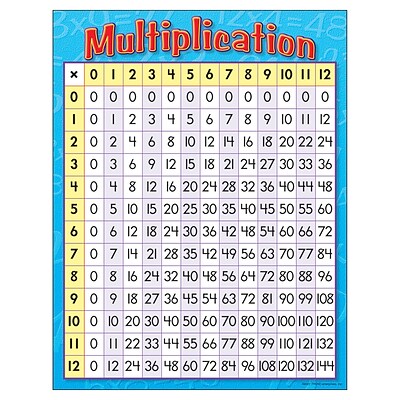
Have I mentioned that the kids are really enjoying the multiplication chart on the fridge?


Tuesday, October 24, 2017

On Agenda vs Agenda-less Strewing

One of the very nice things about unschooling is that I'm no longer trying to get anyone to learn anything.  Any parent, but perhaps especially a homeschooling parent, feels a constant underlying stress of being responsible for how their children "turn out." 

So a lot of interactions that could just be nice interactions where we enjoy each other's company end up being colored by a sense of "let me use this opportunity to teach xyz" or "to explain abc" and then there is an agenda. 

Schools and educational philosophies have agendas.  When I took an education course, it was full of educational goals and "the learner will..."  And knowing our goals gives us the most chance of achieving them.  I have advocated and still believe in taking a lot of time to think about what your goals are with regard to your children so that you can prioritize your time, energy, and educational efforts effectively. 

But I admit it is mentally exhausting to be agenda driven when interacting with my children, and ironically, it's usually the times when I have no goals at all other than being fully present and spending time with my child that things go best.  That is one of the points that unschooling makes (called "deschooling").  Quote: "Look directly at your child. Practice watching your child without expectations. Try to see what he is really doing, rather than seeing what he’s NOT doing. If you hold the template of “learning” up and squint through that, it will be harder for you to see clearly. Just look."

Strewing. When I first started unschooling, I read about this thing called "strewing" which means that you place educational objects around and the kids end up picking them up.  I thought this was brilliant, because the kids learn when they want to.  And strewing is a big part of unschooling. 
But.  It also can be agenda driven.  And if I'm trying to relax and see what my child is interested in and not be subtly trying to direct his energy into "productive" and "educational" places, then strewing has the potential to mess with that vibe.  So I did put up maps when they were requested and the Periodic Table when requested.  And I put up body systems because I love that stuff.  And the names of the Parshios.  And a Jewish History timeline that keeps falling down for some reason.

Recently I bought a multiplication chart poster
because I felt the boys were interested in multiplication and their brains were kind of yearning for it.  (Although I deeply, deeply believe in rote memorization of multiplication, it is not going along with unschooling and I think they are going to end up with their calculators.)  I do find the kids clustered around, studying it.  They call me over and ask me questions.  They notice patterns.